
There Is No Single Best London Showroom for Everyone
London has more designer furniture showrooms than most buyers realise, and more variety than any single top-ten list can do justice to. The question worth asking before you plan a single visit is not “which showroom is best?” but “which showroom is best for me?”
A buyer furnishing an entire home from scratch has different needs from someone hunting for one statement sofa. A design-conscious shopper still building their visual language needs a different environment from someone who already knows exactly which Italian brand they want to sit in. And someone who wants a guided, service-led experience will find a 135-showroom design centre thrilling or deeply overwhelming, depending on where they are in the process.
This guide takes a different approach from the usual roundup. Rather than ranking London showrooms against each other, it maps them to the kind of buyer and project they genuinely suit. That makes the list shorter, more honest and considerably more useful.
What this guide covers:
- The criteria used to assess each showroom recommendation
- London’s best designer furniture showrooms, grouped by what they are best for
- A neighbourhood-by-neighbourhood planning table
- A practical checklist for buyers before booking a visit
- When to use an expert sourcing partner instead of going it alone
- FAQ answers on access, areas and how to choose
The right showroom visit saves time, reduces expensive mistakes and builds the kind of design confidence that turns a beautiful room into a considered one.
How We Selected These Showrooms
Every showroom on this list was assessed against the same set of criteria. The goal was not to identify the most famous names, but the most useful destinations for different types of buyer and project.
The selection criteria:
- Design point of view – Does the showroom have a clear aesthetic identity, or is it a generic aggregator of brands?
- Brand depth and quality – Are the brands represented genuinely premium, with strong maker credentials and material standards?
- Showroom experience – Is the space staged in a way that helps buyers visualise furniture in a real home, not just on a showroom floor?
- Advisory service – Can staff help with specification, fabric selection, dimensions and lead times, or is it self-serve browsing only?
- Customisation options – Does the showroom offer meaningful choice in finishes, configurations and bespoke sizing?
- Practical accessibility – Is the showroom open to the public, or does it require a trade introduction or appointment?
- Suitability by buyer type – Who does this destination genuinely serve best?
No showroom scores perfectly across all seven. The honest answer is that each excels in some areas and is less strong in others, which is exactly why the “best for” framing matters.
The Best London Showrooms for Designer Home Furniture, by Need
Best for one-stop luxury inspiration: Design Centre, Chelsea Harbour
Best for: Buyers who want to cover serious ground in a single visit, or those working with an interior designer who needs trade access to premium international brands.
Design Centre, Chelsea Harbour is the largest concentration of designer furniture showrooms in London, with over 135 individual showrooms and more than 600 international brands under one roof. Italian heavyweights, Scandinavian makers, bespoke upholstery studios and specialist lighting are all represented, which means a single day here can cover more ground than a month of individual showroom appointments elsewhere in the city.
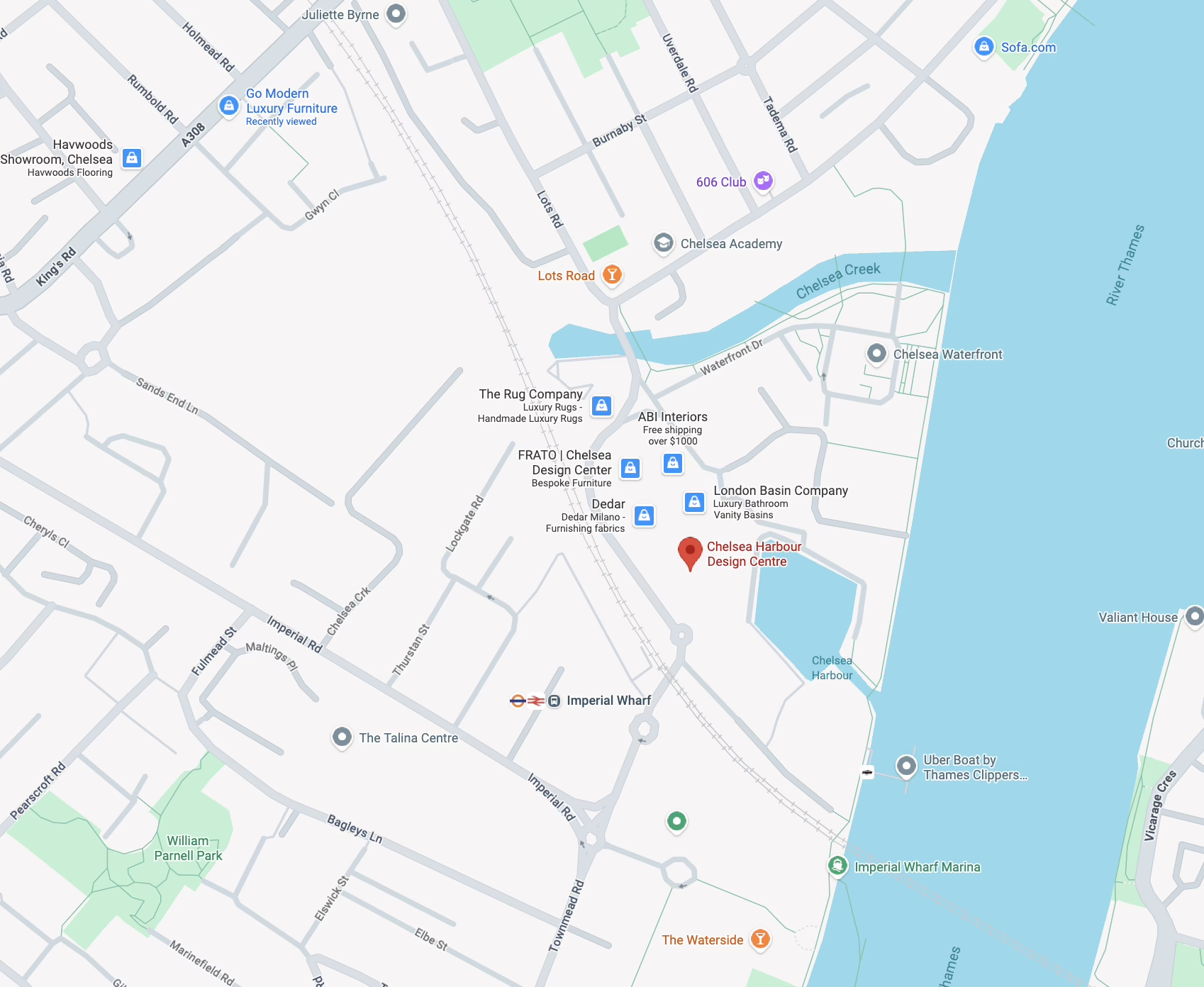
The scale is the point and also the caveat. For buyers who arrive without a clear brief, Chelsea Harbour can feel more like a trade fair than a shopping experience. It rewards those who come prepared. If you know the style direction you are working towards, the concentration of options is unmatched anywhere in Europe. If you are still in the early stages of building a visual language, start somewhere smaller first.
Practical note: The Design Centre is open to the public, though many individual showrooms are trade-facing and operate best when visited with a clear project brief or alongside an interior designer or sourcing partner.
Best for modern design icons: Aram, Covent Garden
Best for: Buyers drawn to modernist heritage, iconic 20th-century designers and a gallery-like browsing experience that rewards design literacy.
Aram has been one of London’s most respected design destinations since 1964. Spread across two Victorian buildings in Covent Garden, its four-floor showroom brings together pieces by Eileen Gray, Jean Prouvé, Charles and Ray Eames and a carefully chosen roster of contemporary makers. The atmosphere is closer to a design museum than a retail floor, which makes it one of the better London destinations for buyers who want to understand the lineage behind a piece, not just its appearance.
For those investing in designer furniture as a long-term commitment rather than a trend-led refresh, Aram’s depth of provenance is genuinely useful. Staff tend to be knowledgeable rather than sales-led, which makes the experience more consultative than transactional.
Practical note: Open to the public. Browsing without an appointment is welcome, though the space is best used with time to linger.
Best for contemporary furniture on a central London day: Heal’s, Tottenham Court Road
Best for: Buyers who want a broad contemporary selection in a single accessible location, particularly those combining a visit with other central London errands.
Heal’s on Tottenham Court Road is one of London’s longest-established furniture destinations, and its multi-floor flagship remains a reliable benchmark for quality contemporary design. The brand mix spans established European names alongside newer British makers, which gives it a breadth that suits buyers comparing styles rather than committing to a single aesthetic.
As Wallpaper* notes in its London furniture shopping guide, Tottenham Court Road functions as a natural furniture-shopping corridor, with Heal’s as its anchor. It is not the most rarefied destination on this list, but it is one of the most useful for early-stage comparison shopping without the commitment of a trade-facing appointment.
Practical note: Open to the public, no appointment needed. Good for a first visit when you are still narrowing down style direction.
Best for statement-led luxury and experiential design: Brompton Road and South Kensington
Best for: Buyers seeking immersive flagship experiences from major European design houses, particularly those investing in statement pieces for living rooms or primary bedrooms.
The stretch of Brompton Road and South Kensington running through Chelsea and into Knightsbridge has become one of London’s most concentrated zones for flagship design showrooms. Baxter opened a major new London flagship here in 2025, combining a furniture showroom with a ground-floor art gallery and a basement lifestyle concept, reflecting the broader shift among premium furniture brands towards experiential retail rather than product display alone.
Other significant names in the area include Poliform, Lema and Giorgetti, each offering high-end Italian furniture with strong customisation programmes. For buyers who want to sit in a sofa, test a dining chair and discuss finish options in a properly staged environment, this corridor delivers a quality of experience that online browsing cannot replicate.
Practical note: Most flagship showrooms in this area welcome public visits, though booking ahead for a proper design consultation is advisable for serious buyers.
Best for personalised sourcing and design-led service: RB.Twelve, London Victoria
Best for: Buyers who want expert guidance rather than another showroom list, particularly those furnishing a full room or entire home and wanting a more focused, service-led route through London’s premium furniture landscape.
RB.Twelve operates from London Victoria with a focus on curated modern European brands and emerging makers, selected for craftsmanship, longevity and the kind of design intelligence that makes a home feel considered rather than assembled. The offering spans luxury furniture, home accessories and bespoke options, with UK-wide delivery and white-glove service for larger projects.
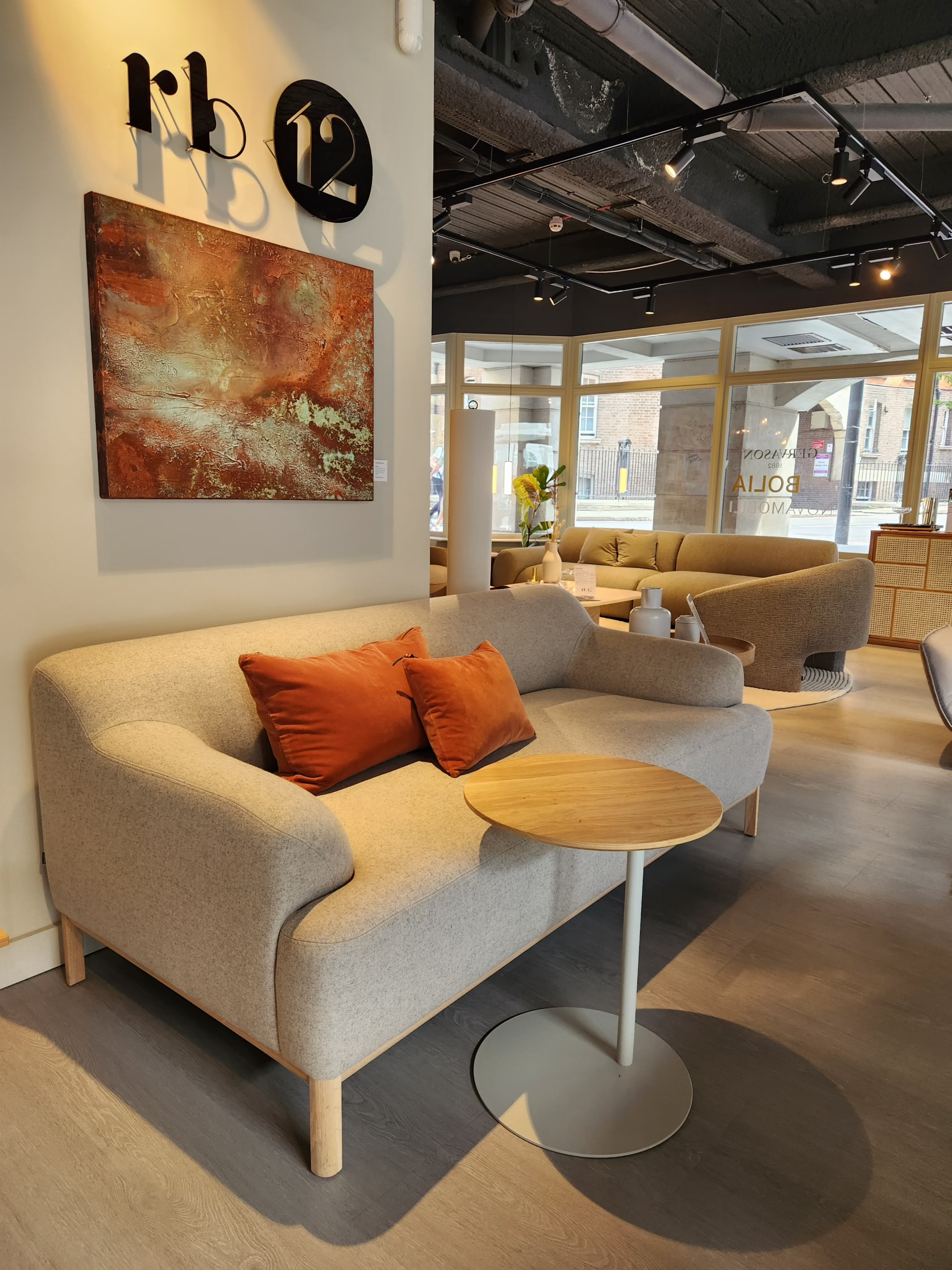
What separates RB.Twelve from the destinations above is not scale but service. For buyers who find large multi-brand destinations time-consuming to navigate, or who want someone to translate a mood board and a budget into a coherent shortlist, a conversation with the RB.Twelve team is a more efficient starting point than a full day at Chelsea Harbour.
Practical note: Showroom visits and sourcing consultations available by appointment. Particularly suited to whole-home projects or buyers who want high-end furniture with a more personal advisory layer.
Quick-glance comparison
| Showroom | Best for | Public access | Style direction |
|---|---|---|---|
| Design Centre, Chelsea Harbour | Breadth and luxury inspiration | Yes (trade-facing inside) | All styles, international brands |
| Aram, Covent Garden | Modern design icons and heritage | Yes | Modernist, 20th-century classics |
| Heal’s, Tottenham Court Road | Contemporary comparison shopping | Yes | Contemporary, mixed European |
| Brompton Road flagships | Statement luxury and immersive visits | Yes (book ahead) | Italian and European luxury |
| RB.Twelve, Victoria | Personalised sourcing and design service | By appointment | Curated modern European |
Where to Go by Neighbourhood
London’s designer furniture scene is geographically clustered, which means smart planning can turn a scattered list of showrooms into a logical day or two of visits. As Wallpaper*’s London furniture shopping guide maps out, the city’s premium design destinations fall into a handful of distinct zones, each with its own character.
| Area | Character | Best for |
|---|---|---|
| Chelsea Harbour (SW10) | Trade-facing design complex, 135+ showrooms | Buyers with a clear brief, interior designers, whole-home sourcing |
| Brompton Road / South Kensington (SW3/SW7) | Premium flagship corridor, immersive brand experiences | Statement pieces, Italian luxury, experiential visits |
| Tottenham Court Road / Fitzrovia (W1) | Accessible central furniture strip | Early-stage browsing, contemporary comparison shopping |
| Covent Garden (WC2) | Design-led, gallery-like atmosphere | Heritage modernism, design-literate buyers, unhurried browsing |
| Victoria (SW1) | Curated boutique showrooms | Personalised service, design-led sourcing, bespoke projects |
| Clerkenwell (EC1) | Contract and contemporary design hub | Architects, specifiers, buyers interested in contemporary European makers |
Planning a multi-stop visit
The most efficient approach for buyers covering serious ground is to pair Chelsea Harbour with the Brompton Road corridor in a single south-west London day, then treat Tottenham Court Road and Covent Garden as a separate central visit.
Victoria sits apart geographically but is worth a dedicated appointment if personalised sourcing is a priority. Clerkenwell rewards buyers with a more contemporary or contract-leaning brief.
Key insight: Proximity does not always mean compatibility. Two showrooms on the same street can serve completely different buyers. Use area as a planning tool, not as a quality signal.
What to Look for Before You Book a Showroom Visit
The biggest mistake buyers make is visiting showrooms before they have answered a few basic questions about their own project. A beautiful showroom is not useful if it does not match what you actually need.
According to Homes & Gardens’ 2026 furniture trend coverage, buyers are increasingly moving away from matching sets towards more collected interiors, where pieces are chosen individually for character and longevity rather than bought as a coordinated package. That shift makes the quality of advice and curation more important than sheer volume of stock.
Before you visit any London designer furniture showroom, ask yourself:
- What is the scope of my project? One statement piece, a full room or an entire home each require a different type of showroom and a different level of advisory support.
- Do I have a clear style direction? If not, start with a more accessible, broad-range destination before committing to trade-facing appointments.
- What is my realistic budget band? Premium showrooms vary significantly in price positioning, and knowing your range saves time for both you and the showroom team.
- Do I need customisation? Fabric, finish, dimension and configuration options vary enormously. If bespoke matters, confirm it before visiting.
- What service level do I need? Some buyers want to browse independently. Others need specification help, delivery coordination and project management. The right showroom depends on the answer.
- Am I ready to buy, or still researching? Both are valid, but they lead to different types of visits.
Arriving with clear answers to these questions turns a showroom visit from an inspiration exercise into a productive step towards a finished room.
Need Help Narrowing the Options? When to Use an Expert Sourcing Partner
Some buyers do not need more showrooms to visit. They need someone to help them make sense of what they have already seen, or to shortlist the right options before they invest a weekend crossing London.
This is particularly true for whole-home projects, buyers comparing multiple premium brands across different price points, or those who want the confidence of expert guidance before committing to significant spend. The scale and variety of London’s designer furniture scene is a genuine strength, but it can also be a source of decision fatigue for buyers without a clear framework.
When a sourcing partner adds the most value: whole-home projects, buyers without an interior designer, anyone comparing five or more brands, or those who want to avoid the risk of expensive mismatches between pieces bought from different showrooms.
RB.Twelve offers sourcing consultations for buyers at exactly this stage. The team works across curated modern European brands and emerging makers, with particular strength in helping clients translate a visual direction and a room’s practical requirements into a coherent, well-specified furniture plan. Whether the project is a single living room or a complete home, the starting point is a conversation rather than a catalogue.
For buyers who want bespoke furniture options or need help navigating lead times, delivery logistics and finish decisions across multiple pieces, a sourcing consultation is a more efficient route than visiting showrooms speculatively.
To discuss a room or whole-home project, contact the RB.Twelve team directly.
FAQ: Best London Designer Furniture Showrooms
Chelsea and the surrounding area, including Chelsea Harbour, Brompton Road and South Kensington, is the most concentrated zone for premium designer furniture in London. It combines the breadth of Design Centre, Chelsea Harbour with a high density of flagship showrooms from major European brands. For buyers who want a central, more accessible starting point, Tottenham Court Road is a practical alternative. For gallery-style, design-led browsing, Covent Garden is hard to match.
Yes. The Design Centre, Chelsea Harbour is open to the public, and visitors can walk the complex without a trade account. However, many of the individual showrooms within it are trade-facing and operate most effectively when visited with a clear project brief, an interior designer, or a sourcing partner who can facilitate introductions. Arriving with a specific brief significantly improves the experience.
Design Centre, Chelsea Harbour currently hosts over 135 showrooms representing more than 600 international brands, making it the largest design destination of its kind in the world.
It depends on your buying stage. If you are still building a visual language and comparing styles, a large multi-brand destination like Chelsea Harbour gives you the broadest possible reference point in a single visit. If you already have a clear brief and want a more focused, service-led experience, a curated boutique showroom or a sourcing consultation will be more productive.
Whole-home projects benefit most from a service-led approach rather than destination-hopping. The risk of buying multiple pieces across multiple showrooms without a coherent brief is visual inconsistency and expensive mistakes. A sourcing partner or design-led showroom with strong advisory capability, such as RB.Twelve, is typically a more efficient and lower-risk route for buyers furnishing at this scale.