Design Advice • Bedroom
A bedside table may be one of the smaller pieces of furniture in a bedroom, but it has an outsized influence on how the room looks and feels.
The best luxury bedside side tables combine useful storage, considered proportions, beautiful materials and a strong enough design identity to complement the wider bedroom without overwhelming it.
Shop Luxury Bedside TablesWhat makes a bedside table feel luxurious?
Quality materials
Natural woods, marble, leather, cane and refined finishes bring depth, texture and longevity.
Thoughtful details
Soft-close drawers, beautifully formed edges and carefully engineered storage elevate the design.
Perfect proportions
The right height and width create better visual balance and make the table easier to use.
Practical storage
Drawers and open shelving keep essentials close without making the bedroom feel cluttered.
Featured Designer Picks
Explore our designer bedside table collection →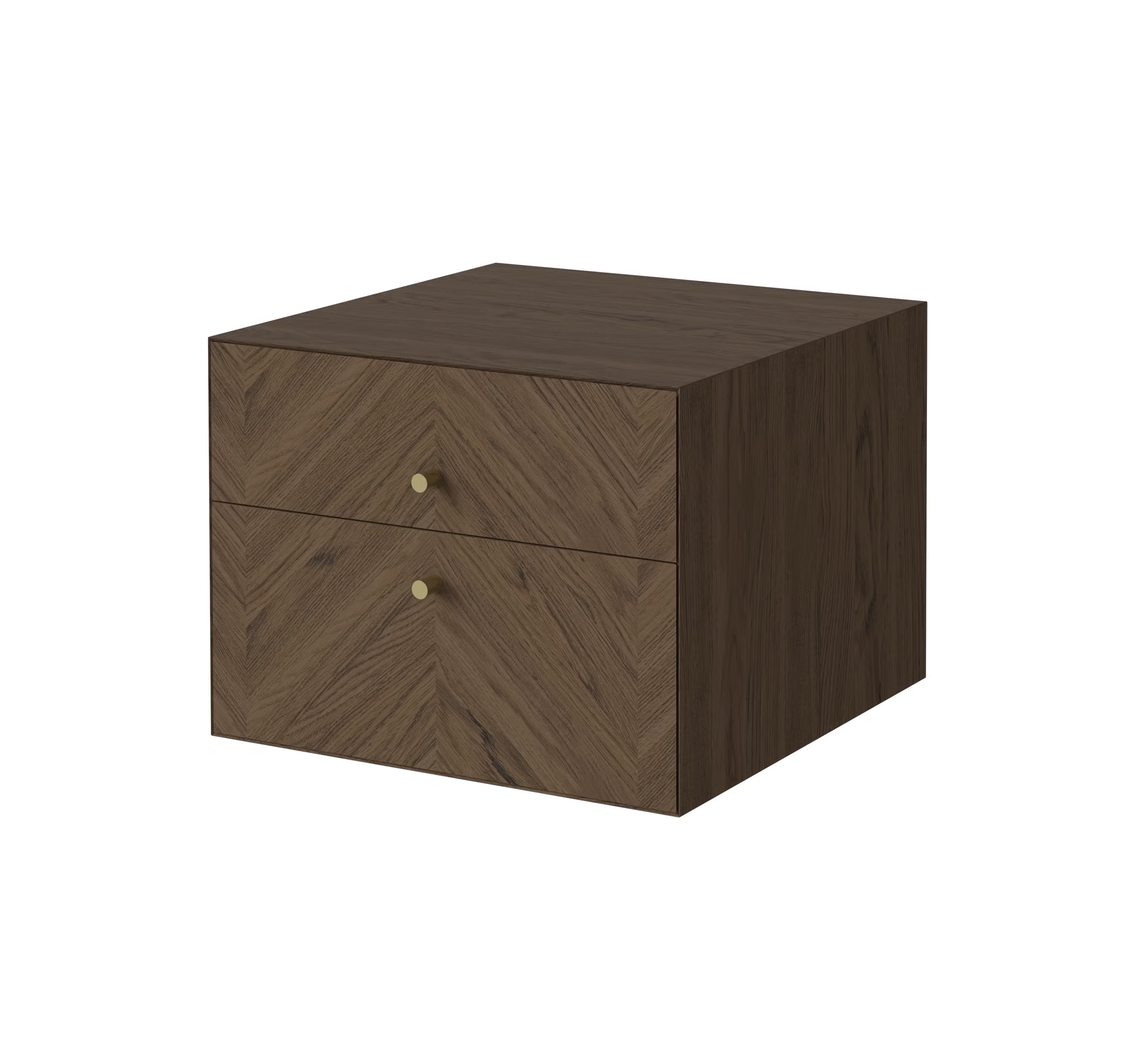
Bolia Luxe
Wall-mounted oak storage with distinctive herringbone detailing and soft-close drawers.
View Product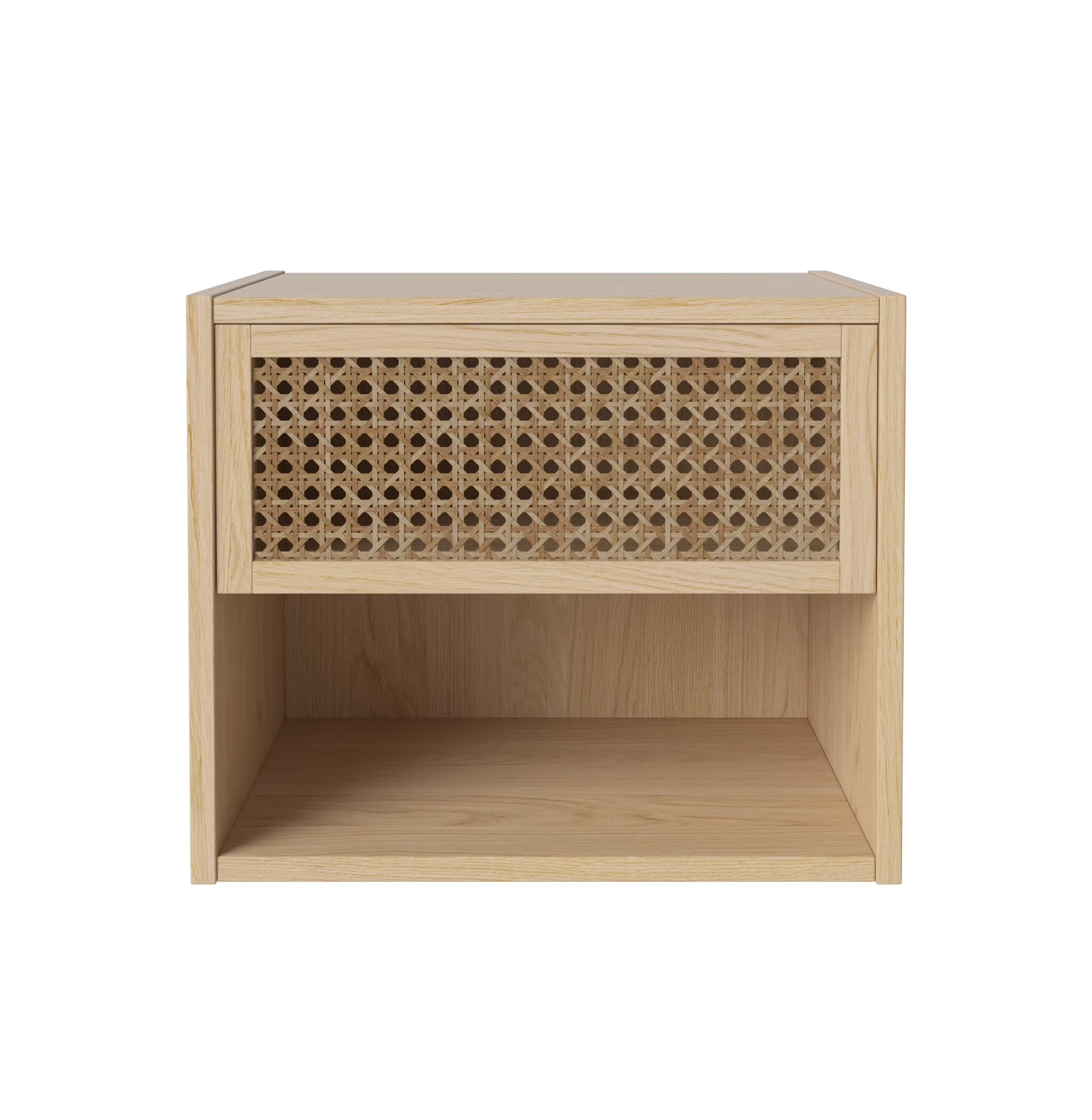
Bolia Cana
Scandinavian storage combining natural wood with tactile woven cane detailing.
View Product
Novamobili Norman
Refined Italian bedroom furniture with wood, leather and Carrara marble options.
View Product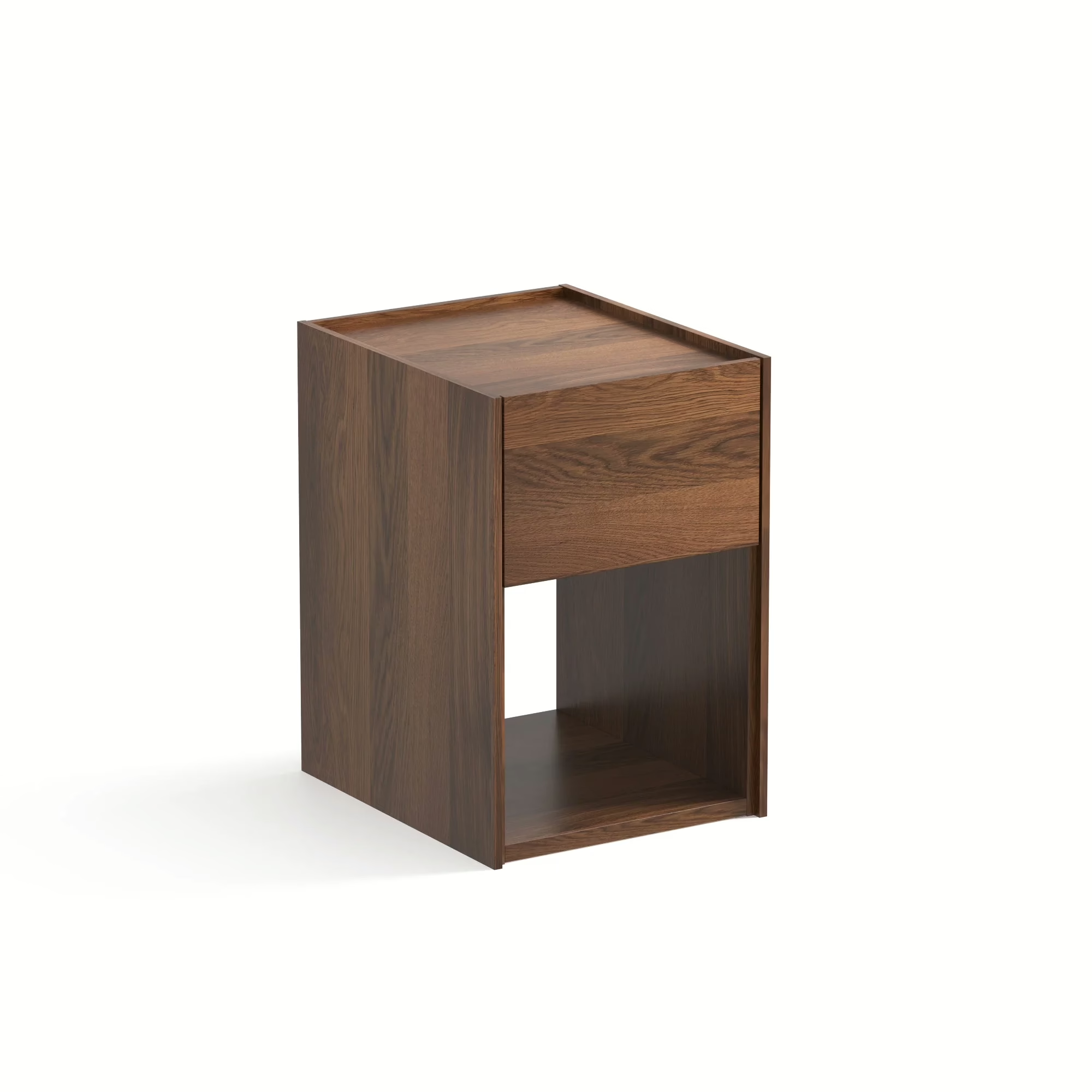
Tamo Design Kari
Solid oak construction with both concealed drawer storage and an accessible open shelf.
View ProductHow to choose a luxury bedside table
A beautiful bedside table can still feel wrong if its dimensions, materials or storage don’t suit the bedroom.
Before choosing a design, think about how you actually use the space. Do you want somewhere to hide chargers, books and personal items? Would you rather keep everything visually minimal? Do you need a generous surface for a table lamp, or is floor space more important?
Start with the height of your bed
As a general guide, the top of the bedside table should sit somewhere around the height of your mattress. Too low and reaching for a lamp or glass becomes awkward. Too high and the table can visually dominate the bed.
Think about width as well as height
Compact bedrooms often benefit from narrow or wall-mounted designs, while a king or super king bed usually has enough visual weight to accommodate a more substantial bedside cabinet.
Choose storage around the way you live
If you prefer completely clear surfaces, drawers allow books, chargers and personal items to disappear from view. If you regularly read in bed, an open shelf can make more sense. In a deliberately minimalist bedroom, a single floating drawer may provide everything you need.
Scandinavian bedside tables
Scandinavian furniture typically places natural materials, simple forms and practical details at the centre of the design.
Look for
Oak, cane, soft neutral finishes and clean architectural forms.
Best suited to
Calm bedrooms built around timber, linen and warm neutral tones.
Italian bedside tables
Italian bedroom furniture often introduces richer finishes, sophisticated material combinations and greater customisation.
Look for
Marble, lacquer, leather, walnut and carefully considered detailing.
Best suited to
Design-led bedrooms where furniture forms part of a complete interior scheme.
Designer Pick
Bolia Luxe: refined, floating bedroom storage
The Bolia Luxe Bedside Table demonstrates how a small piece of furniture can introduce detail without creating visual clutter.
Designed by Michael H. Nielsen, Luxe is wall-mounted, leaving the floor visible underneath and creating a particularly light architectural appearance.
Its herringbone-patterned wooden surface provides the visual detail, while soft-close drawer storage keeps everyday essentials hidden.
Best for: contemporary bedrooms, smaller rooms and anyone looking for floating bedside storage.
Designer Pick
Bolia Cana: Scandinavian design with natural texture
For a softer interpretation of Scandinavian design, the Bolia Cana Bedside Table combines natural wood with distinctive woven cane detailing.
Designed by Danish duo Steffensen & Würtz, Cana works particularly well in bedrooms using linen, warm neutrals and other natural materials.
Best for: Scandinavian bedrooms, natural interiors and relaxed, material-led schemes.
Floating bedside table or freestanding bedside cabinet?
Floating
Wall-mounted bedside tables create a lighter visual appearance and keep more of the floor visible.
Particularly suitable for smaller bedrooms, contemporary interiors and schemes where minimalism is the priority.
Freestanding
Freestanding nightstands generally provide more storage and a stronger physical presence alongside the bed.
Particularly useful for larger bedrooms or when you want drawers, shelving and greater flexibility.
Explore the Complete Bedside Table Collection
Discover luxury bedside tables and designer nightstands from Bolia, Novamobili, Tamo Design, Bonaldo and more.
Shop the CollectionFrequently Asked Questions
What height should a bedside table be?
As a general rule, look for a bedside table with a surface somewhere around the height of the top of your mattress. This makes items easier to reach and generally creates better visual balance.
Are bedside tables and nightstands the same thing?
The terms are commonly used interchangeably. Nightstand is particularly common in North America, while bedside table and bedside cabinet are widely used in the UK.
Are floating bedside tables good for small bedrooms?
Yes. Keeping the floor visible underneath the furniture can make a smaller bedroom feel lighter and less crowded.
Should bedside tables match?
They don’t have to. Matching tables create symmetry, but different designs can work beautifully if they share proportions, materials or related colours.
What materials work best for luxury bedside tables?
Solid and veneered woods provide warmth, marble introduces visual richness, lacquer offers colour and a contemporary feel, while cane and leather add texture.
Bonaldo Dorian Dining Table – Available in Showroom, London, Vauxhall Bridge Road, SW1 1AU
The Dorian dining table by Bonaldo combines modern elegance with timeless architectural inspiration. Its generous oval tabletop — available in ceramic, marble, or wood — creates a refined focal point for any dining space.
The table rests on a striking sculptural base formed by an elongated cylindrical column, reminiscent of classical Greek architecture. This elegant yet bold design creates a beautiful contrast between geometric simplicity and artistic form.
The result is a statement piece that blends contemporary Italian craftsmanship with timeless design, bringing sophistication and character to both modern and classic interiors.
The Dorian dining table is available to view at our London Victoria showroom, located at 230 Vauxhall Bridge Road, SW1.
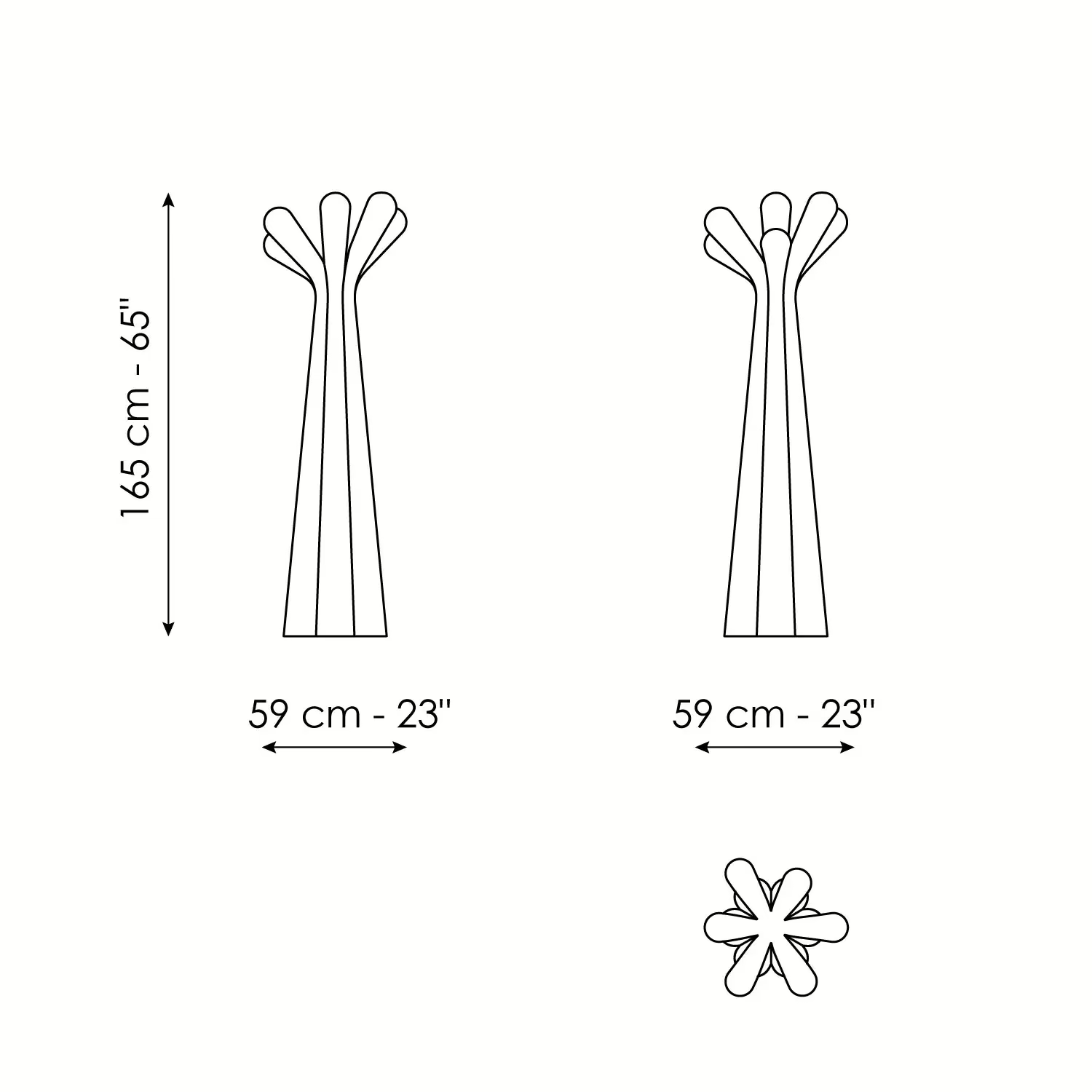
The Anemone designer coat rack aims to go beyond mere shape and functionality and focuses on the textured aspect too, in keeping with the painstaking care that Bonaldo has always reserved for materials and finishes. Anemone is available either in polyethylene, or totally covered in fabric, and it can be placed anywhere at home, in hotels and offices.
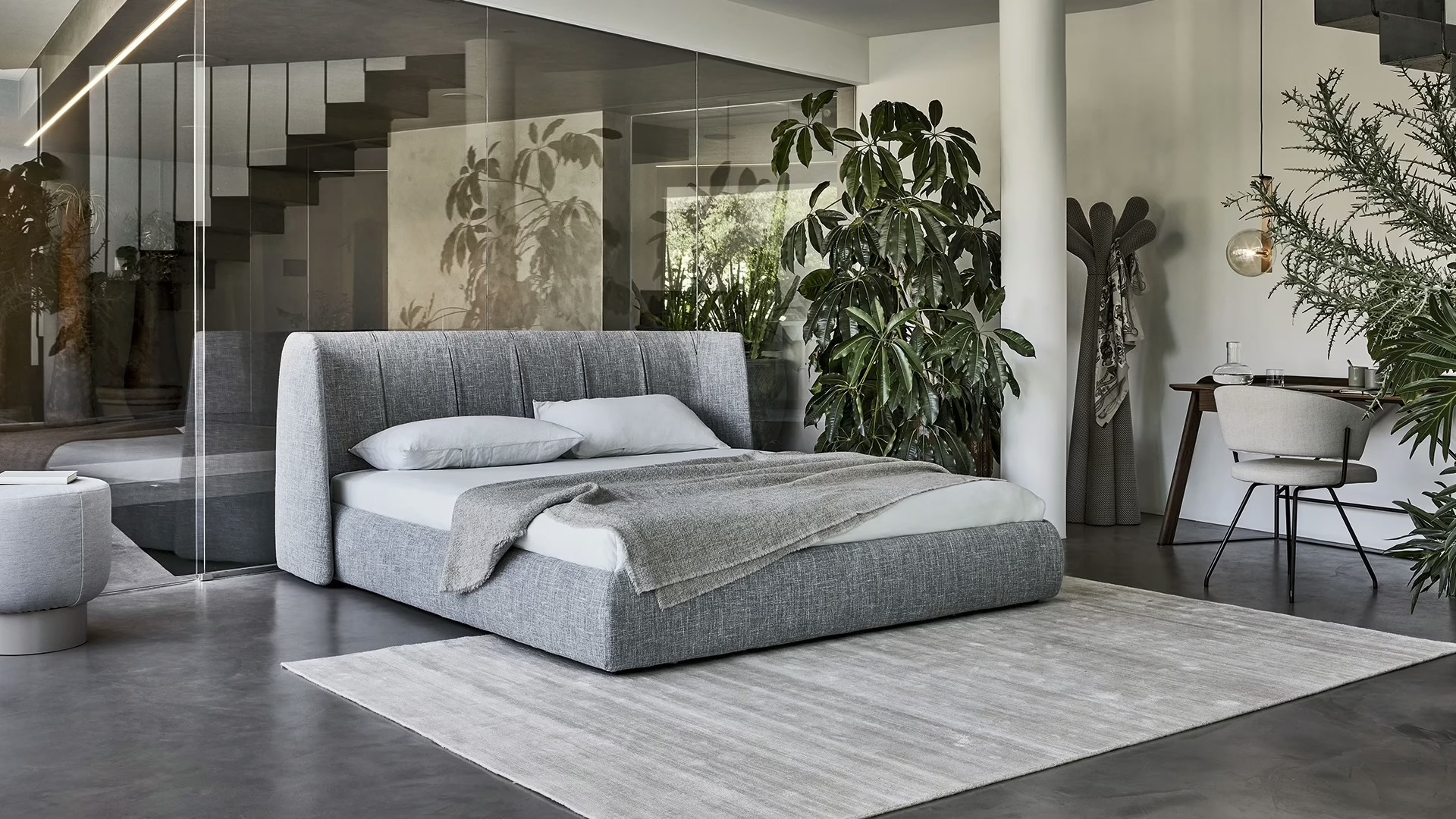
The modern bed reaches its maximum expression in the version with the side unit, thanks to which a real oasis of relaxation is obtained. Numerous versions are available in terms of the sizes and configuration of headboard and bed frame, in order to offer the utmost in personalisation. The sleeping area can be completed, finally, with poufs and a bench coordinated with the bed.
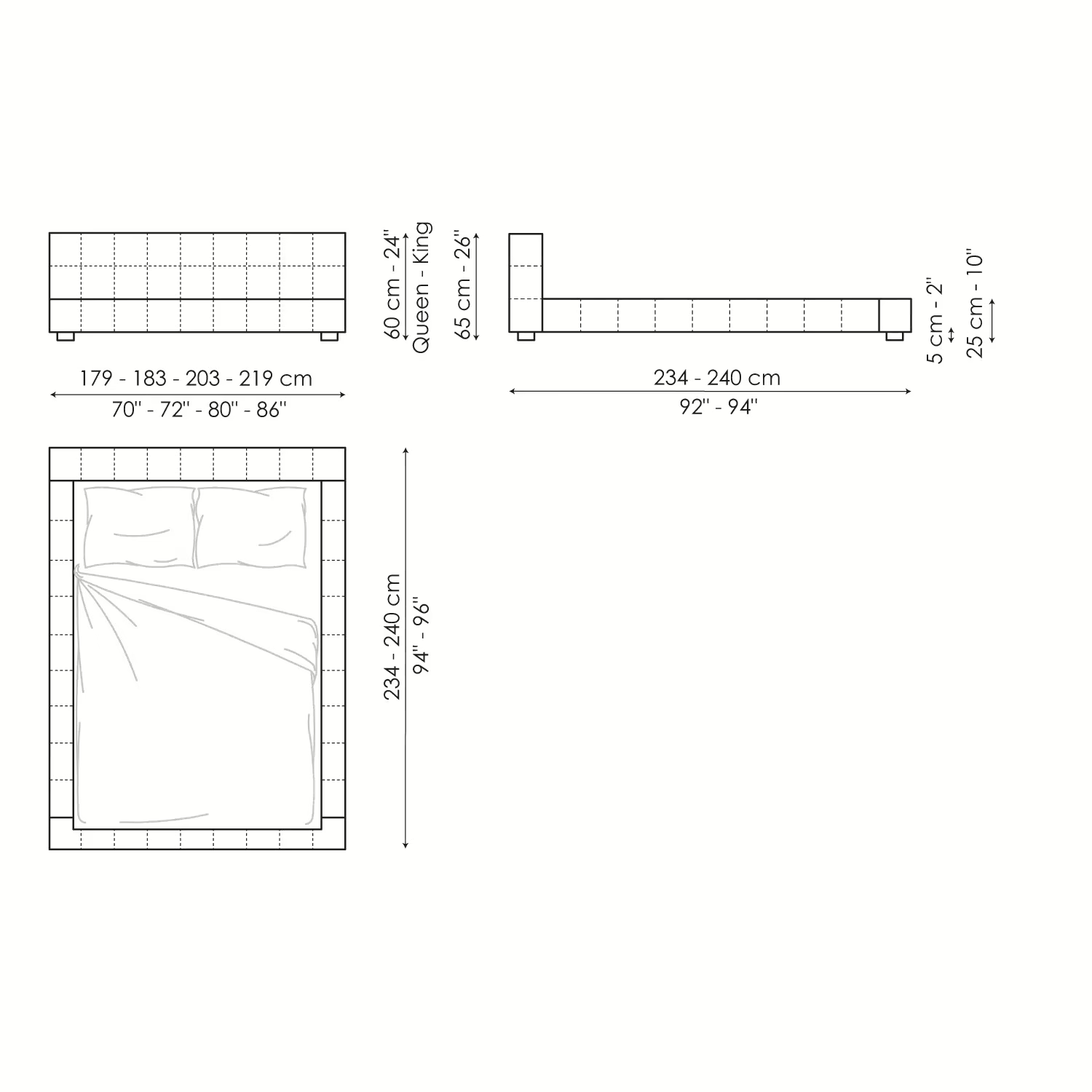
Basso
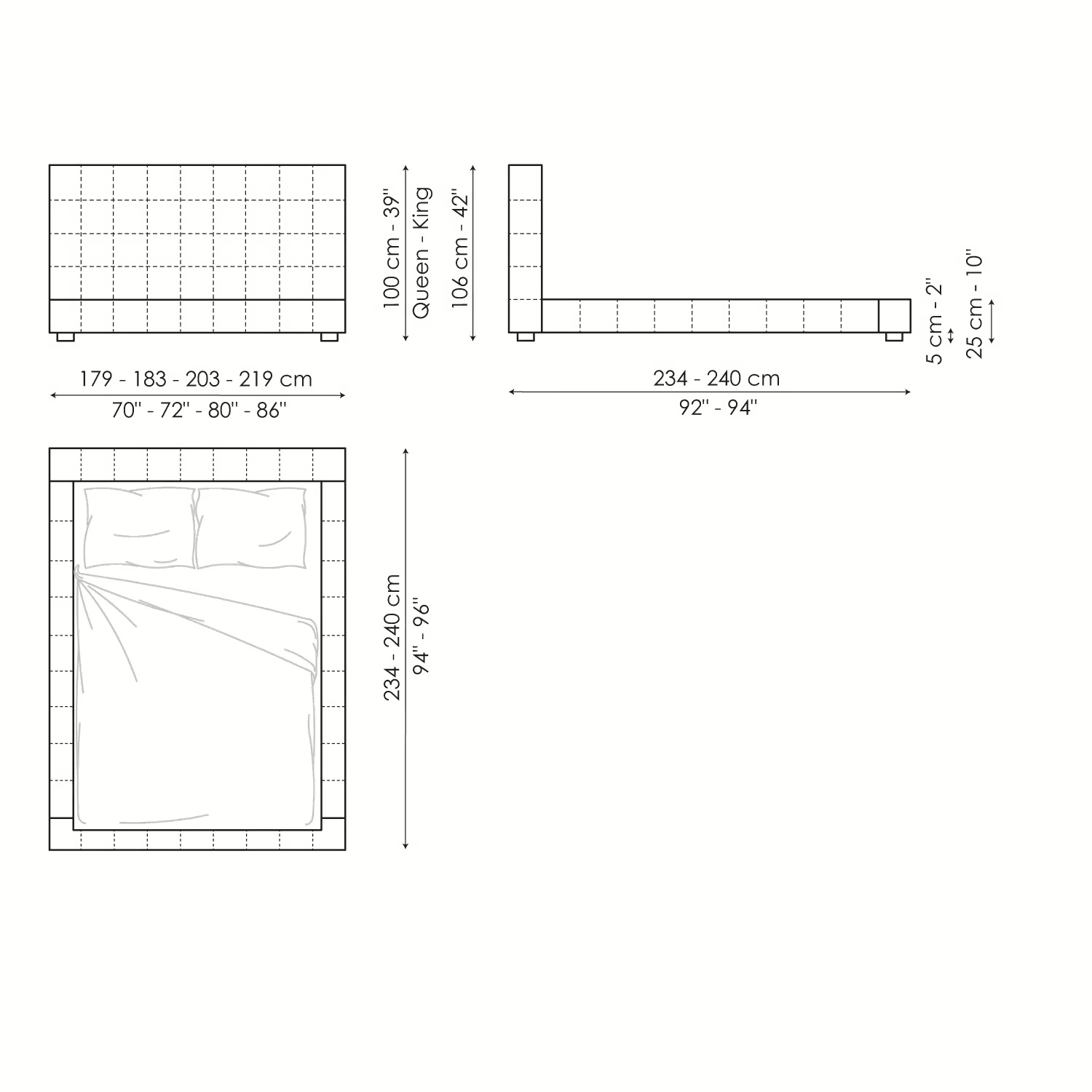
Alto
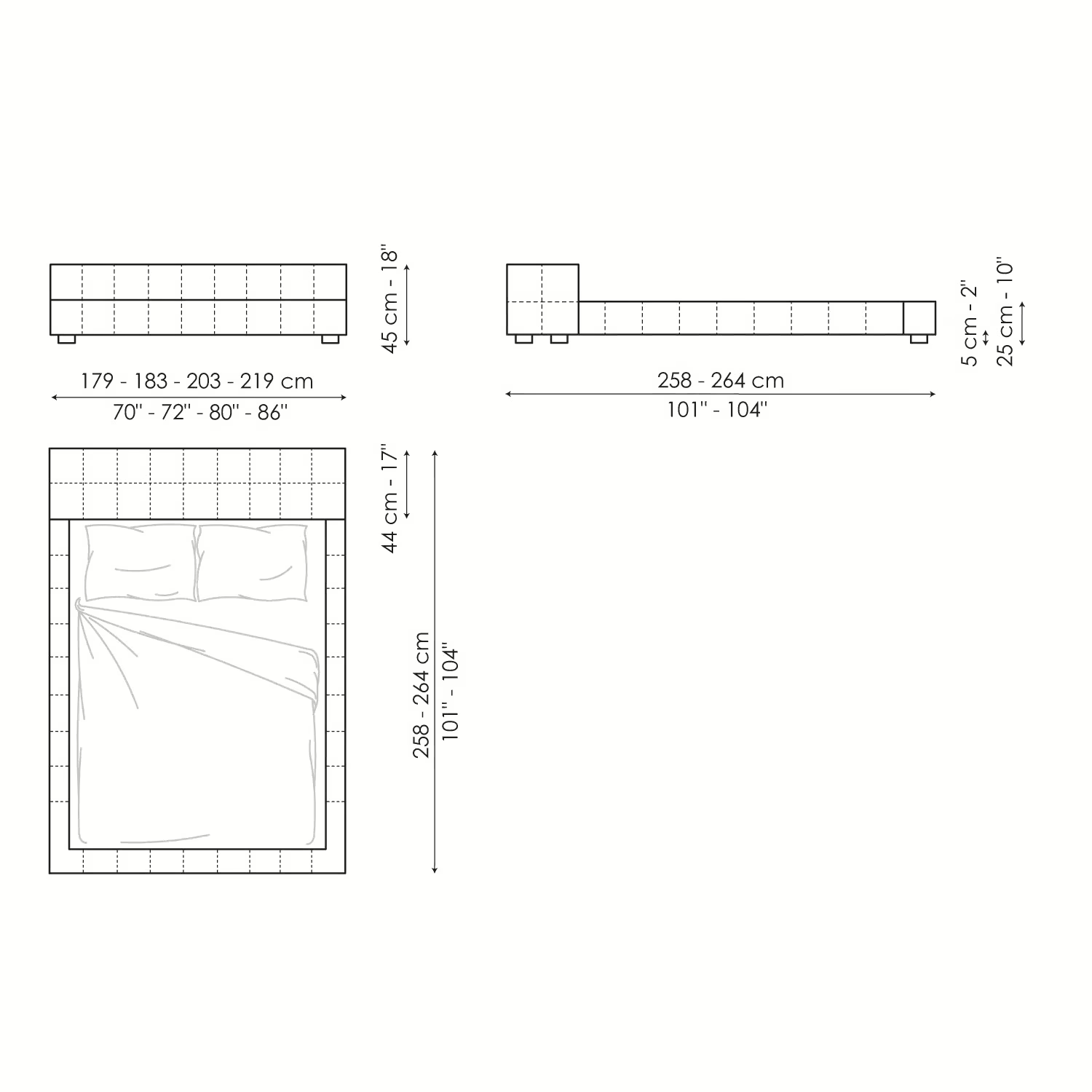
Isola Alta Variante A
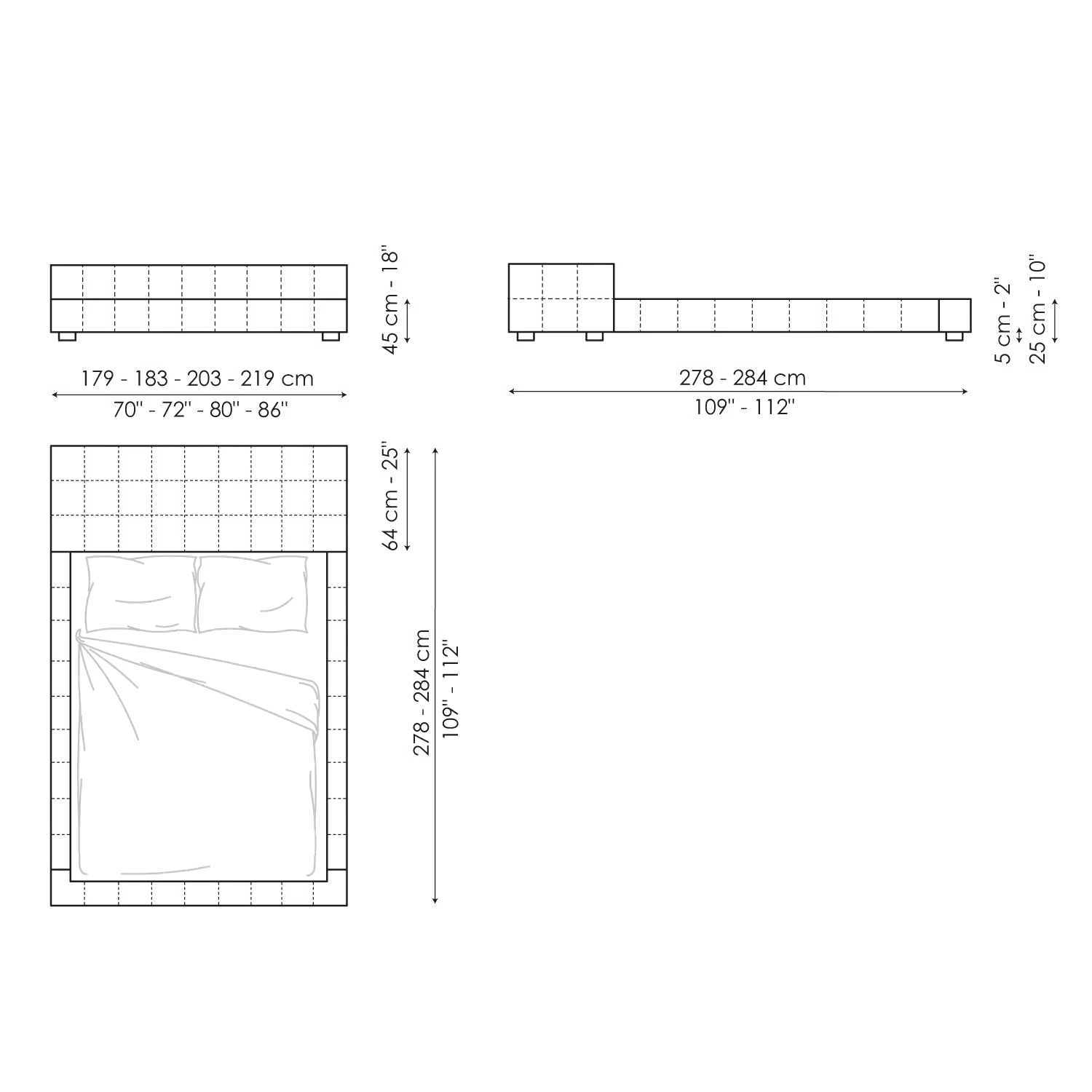
Isola Alta Variante B

Penisola
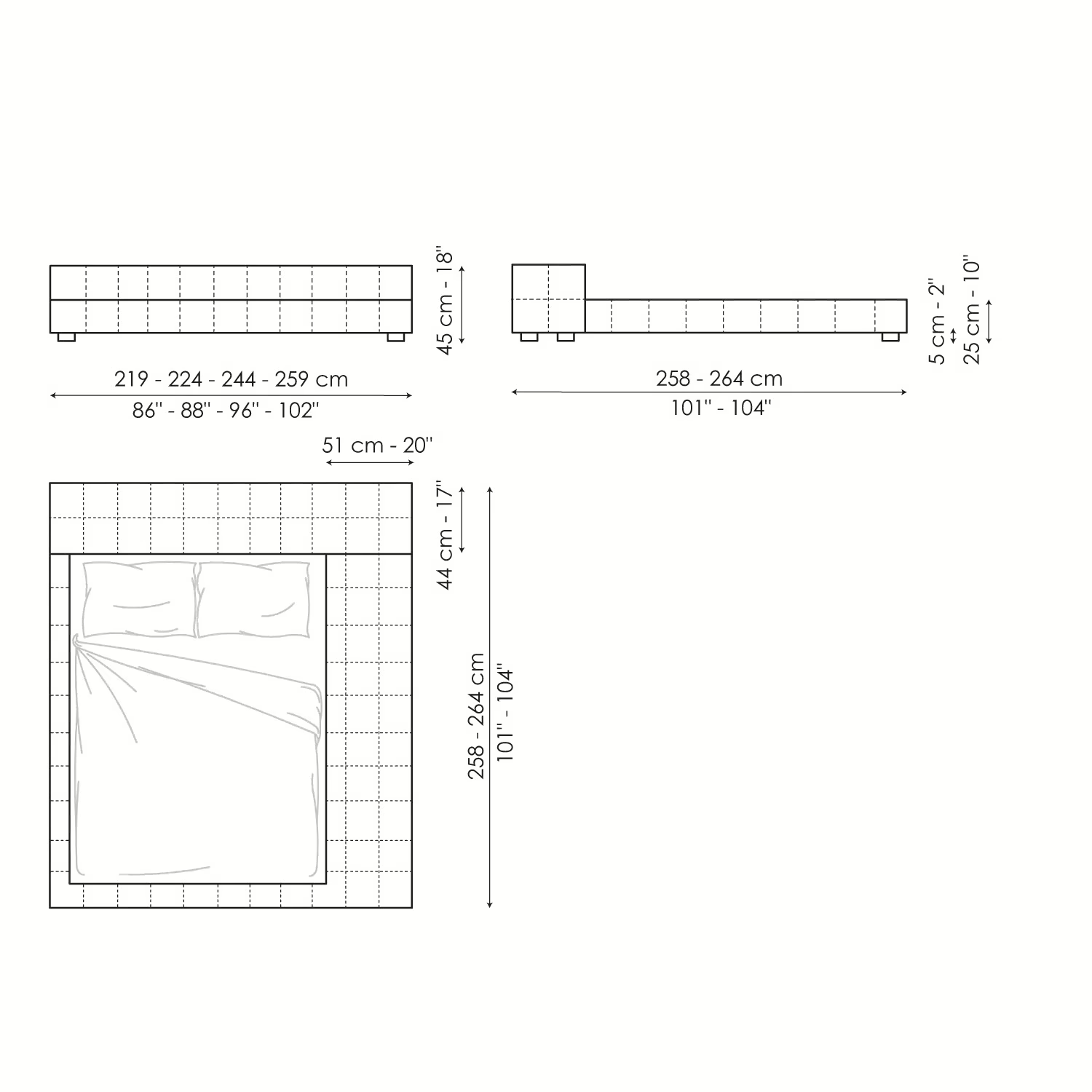
Penisola Variante A
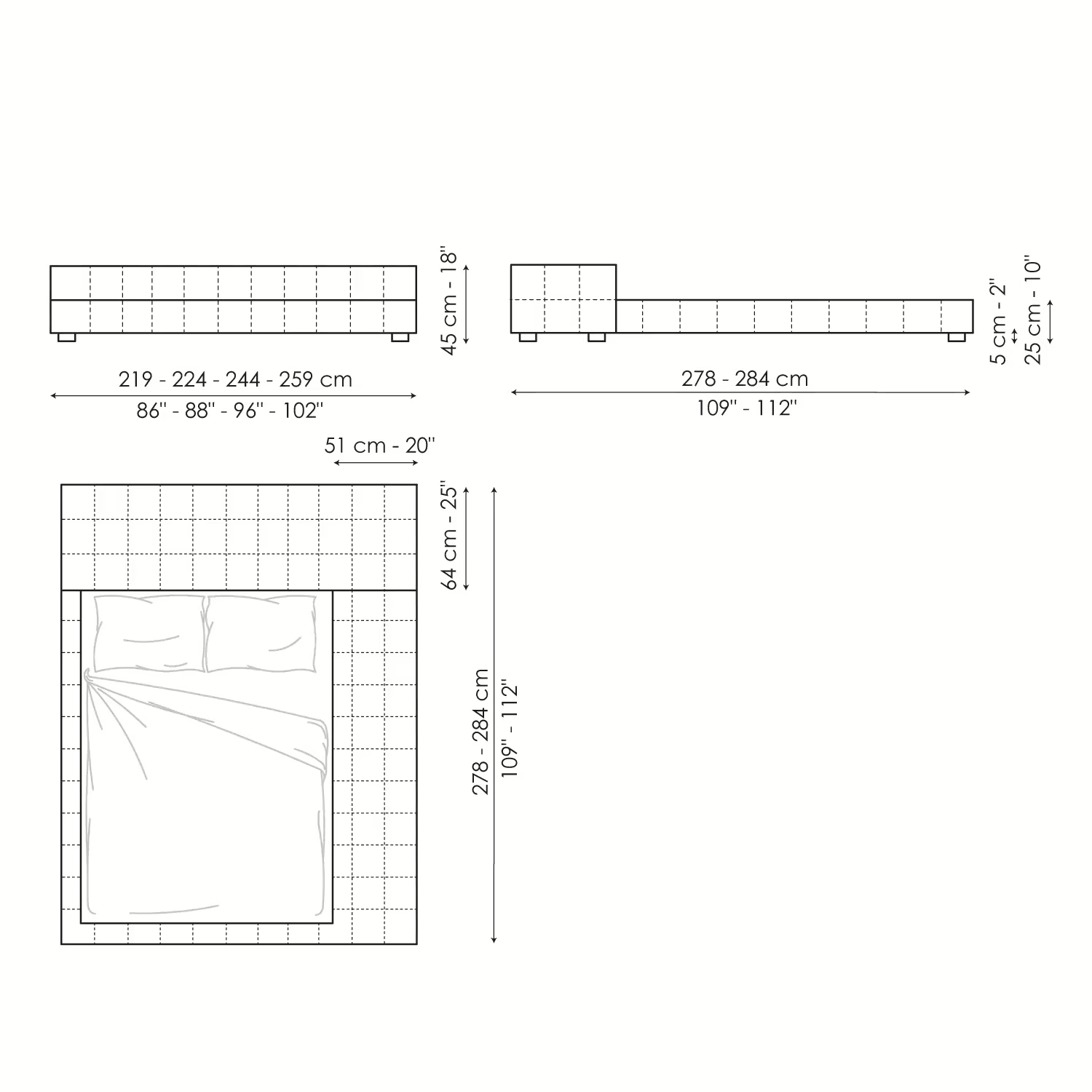
Penisola Variante B
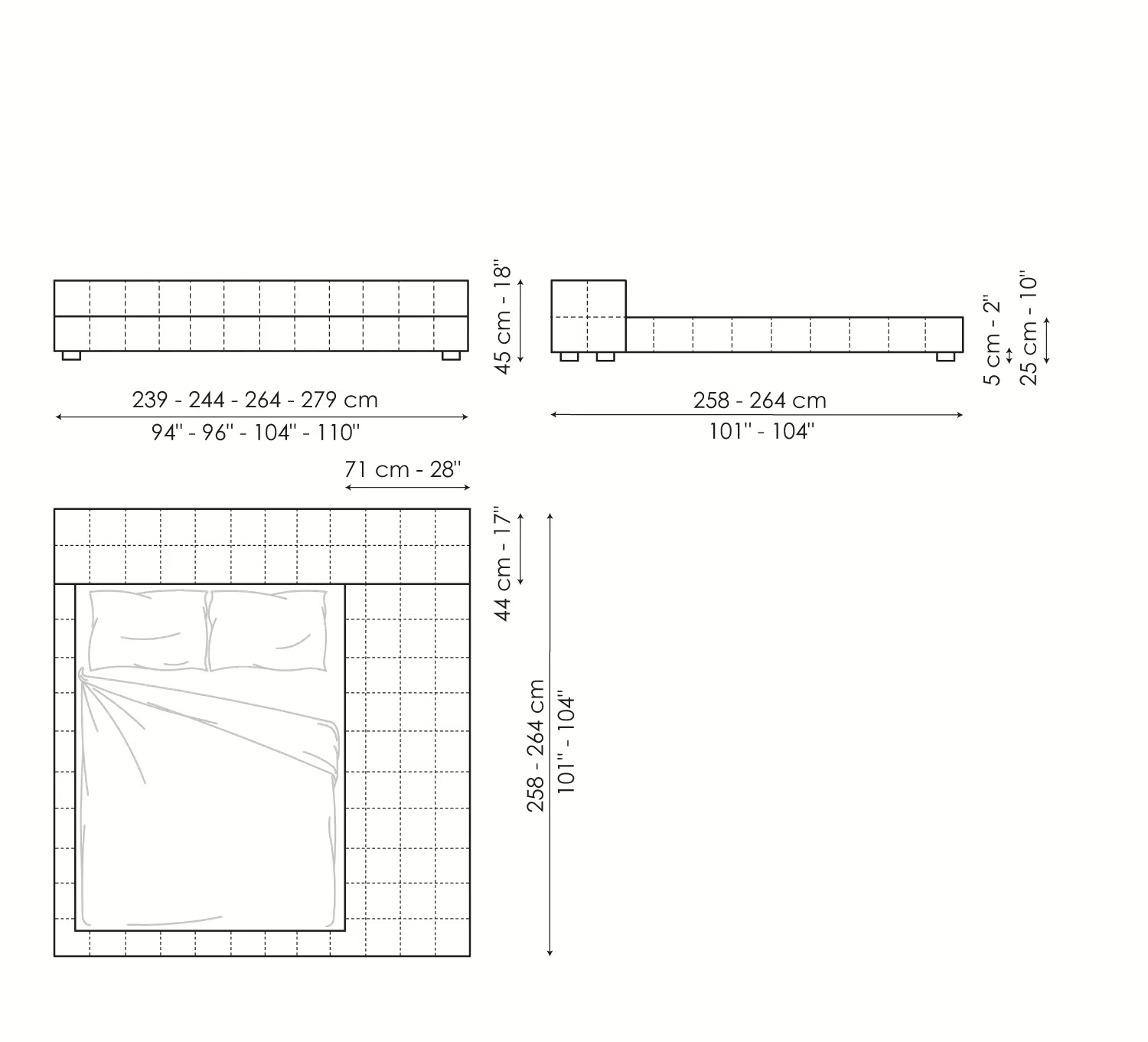
Penisola Variante C
In addition to its generous upholstery, contrasting with the slender metal feet, the most striking feature of this sofa is the stitching on the upholstery that embellishes the backrest and seat, and which recalls the typical elegance of the 1950s. A series of leather accessories complete the Maximilian collection to achieve a perfect aesthetic and functional performance: among them, the armrest, the magazine holder armrest and a small table; they stand out as distinctive elements in a versatile, elegant and understated project. The extraordinarily wide range of elements, materials, and finishes is one of the most important added values of the entire Bonaldo collection; when it comes to the Maximilian sofa, this versatility represents a key element in fully satisfying different design requirements.
In addition to its generous upholstery, contrasting with the slender metal feet, the most striking feature of this sofa is the stitching on the upholstery that embellishes the backrest and seat, and which recalls the typical elegance of the 1950s. A series of leather accessories complete the Maximilian collection to achieve a perfect aesthetic and functional performance: among them, the armrest, the magazine holder armrest and a small table; they stand out as distinctive elements in a versatile, elegant and understated project. The extraordinarily wide range of elements, materials, and finishes is one of the most important added values of the entire Bonaldo collection; when it comes to the Maximilian sofa, this versatility represents a key element in fully satisfying different design requirements.
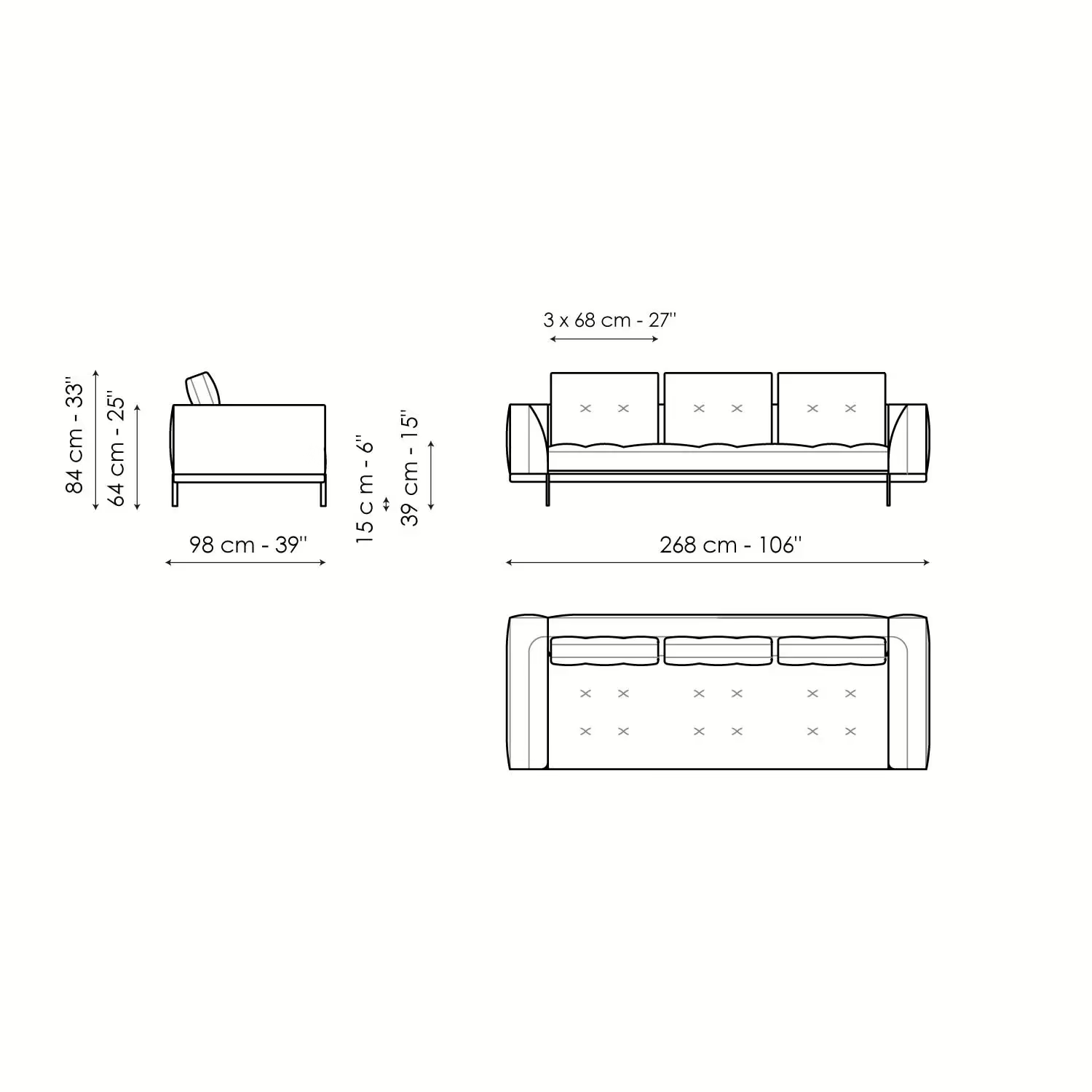
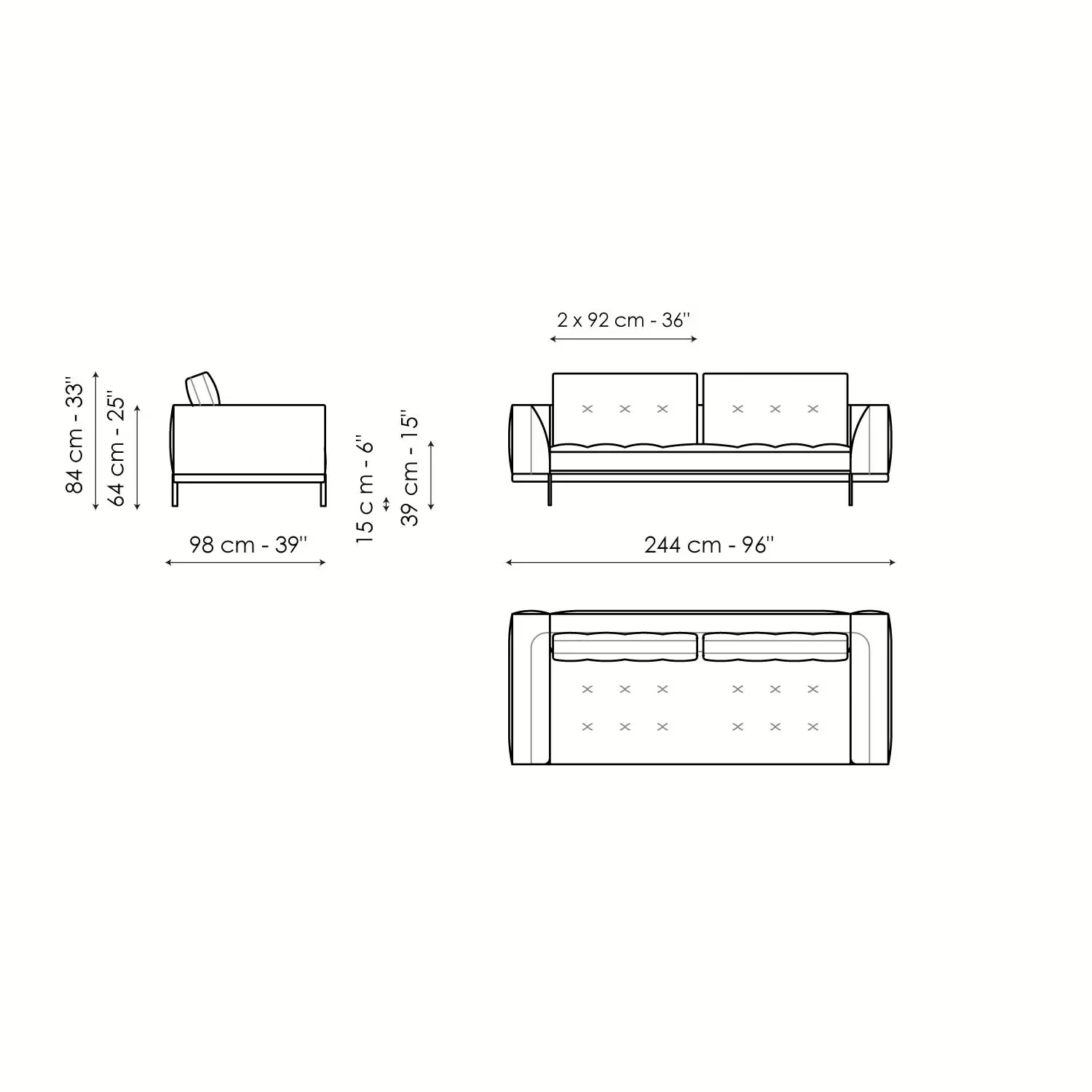

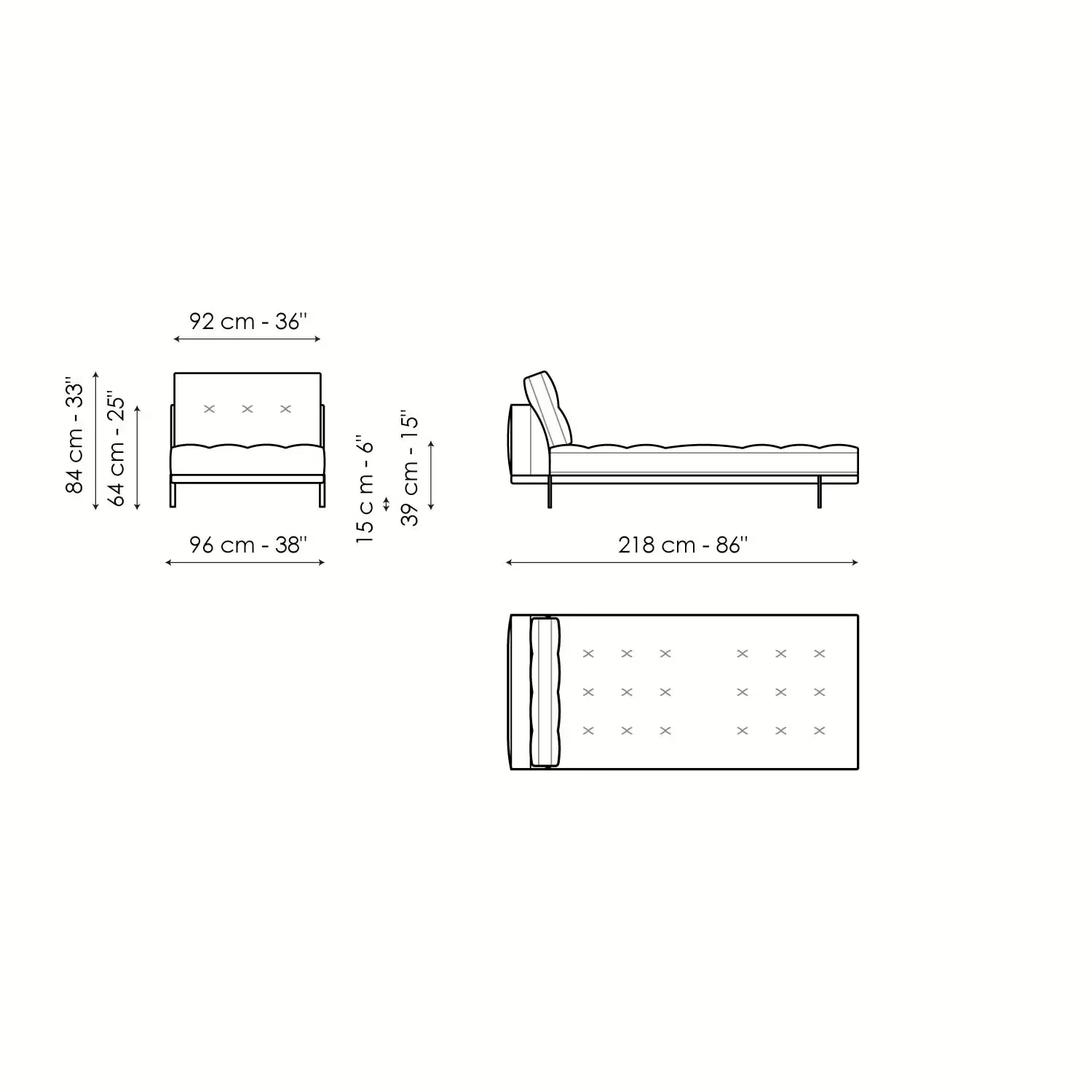
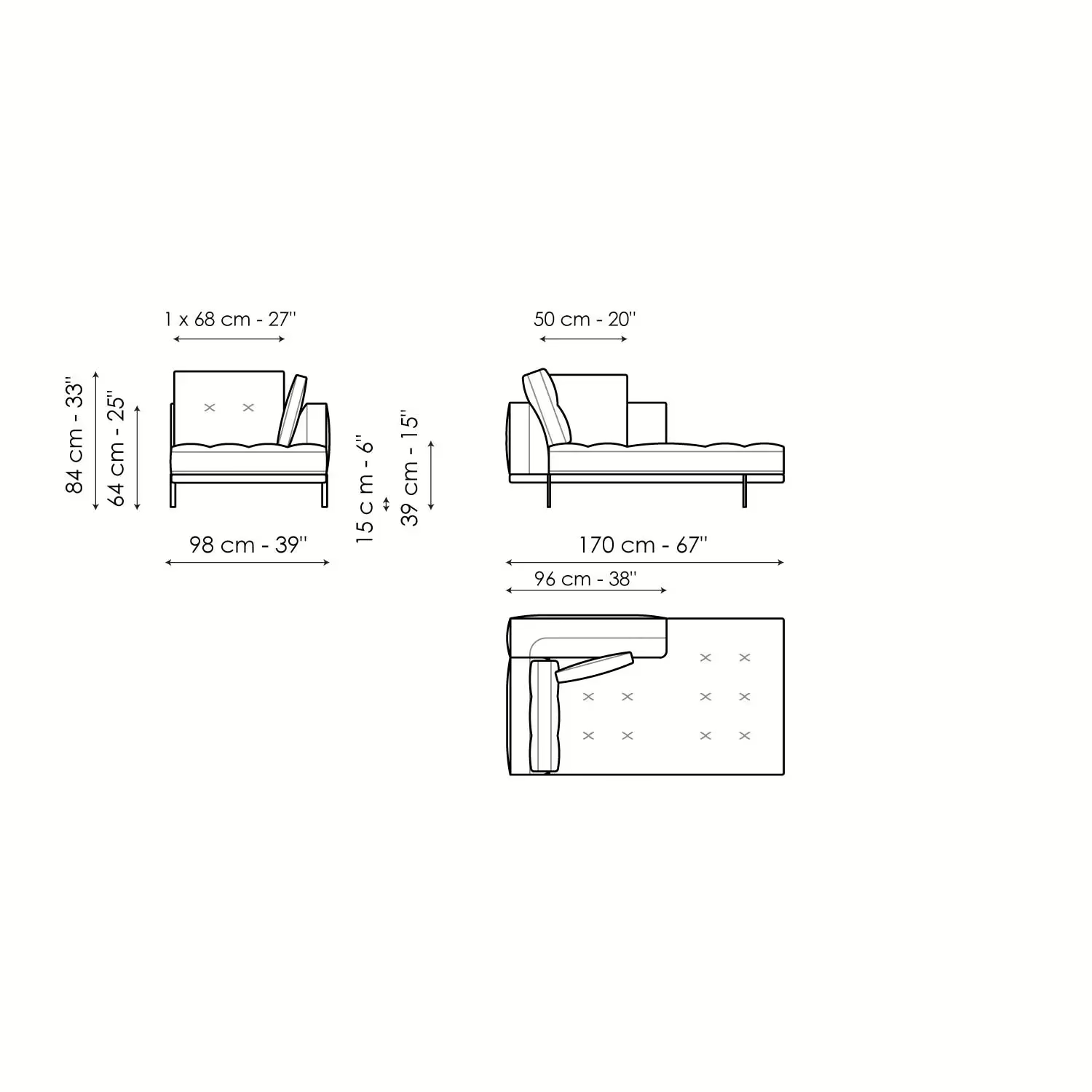
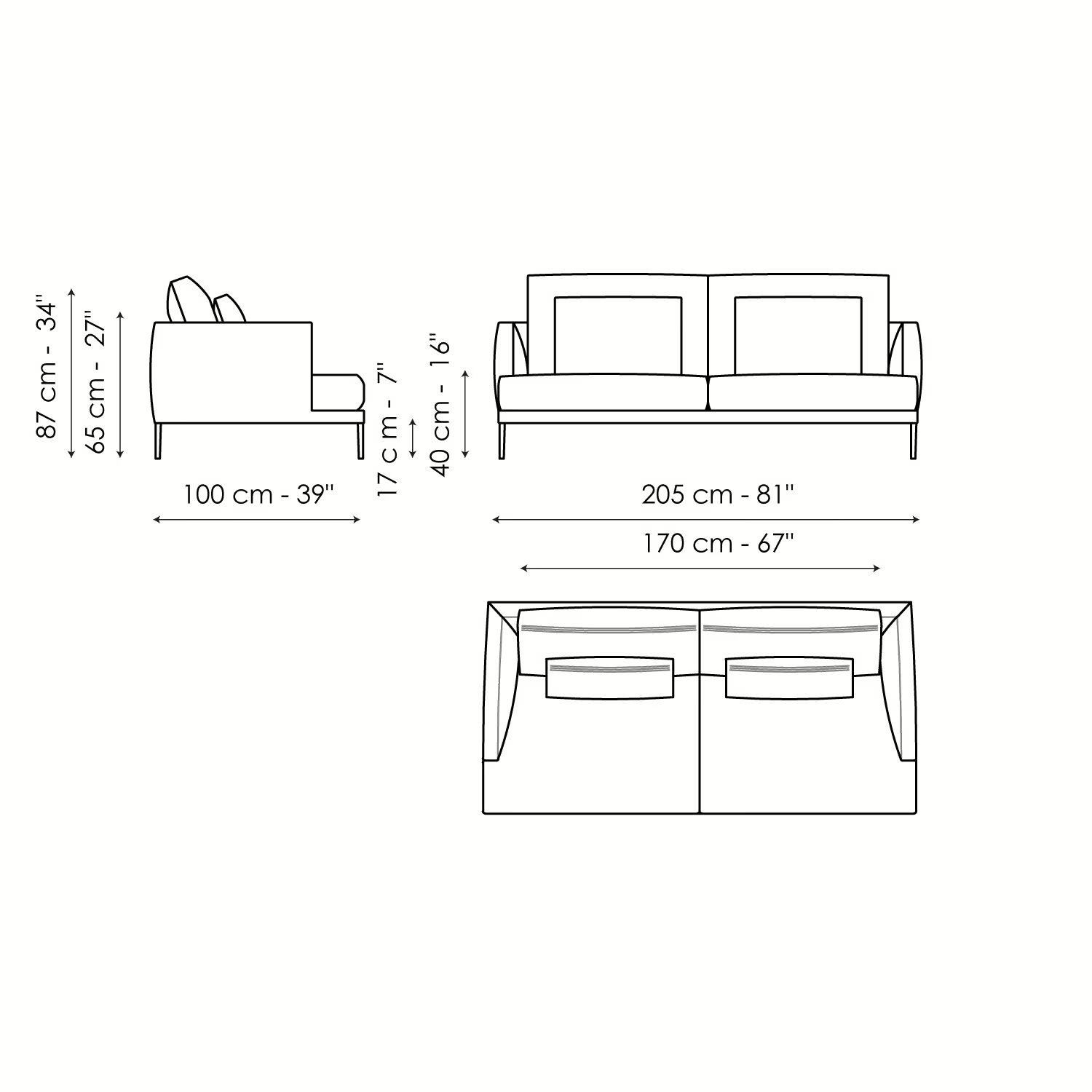
The Paraiso classic designer sofa with removable upholstery in fabric or leather, is available in numerous versions: in addition to the linear sofa, it is indeed possible to create solutions with a chaise longue or corners, or combining comfortable poufs, fully satisfying different tastes and needs for comfort. Particular care has also been used in the internal parts of the sofa: the feet can be in painted metal or upholstered in Capri leather.

2 Seater Sofa
2.5 Seater Sofa
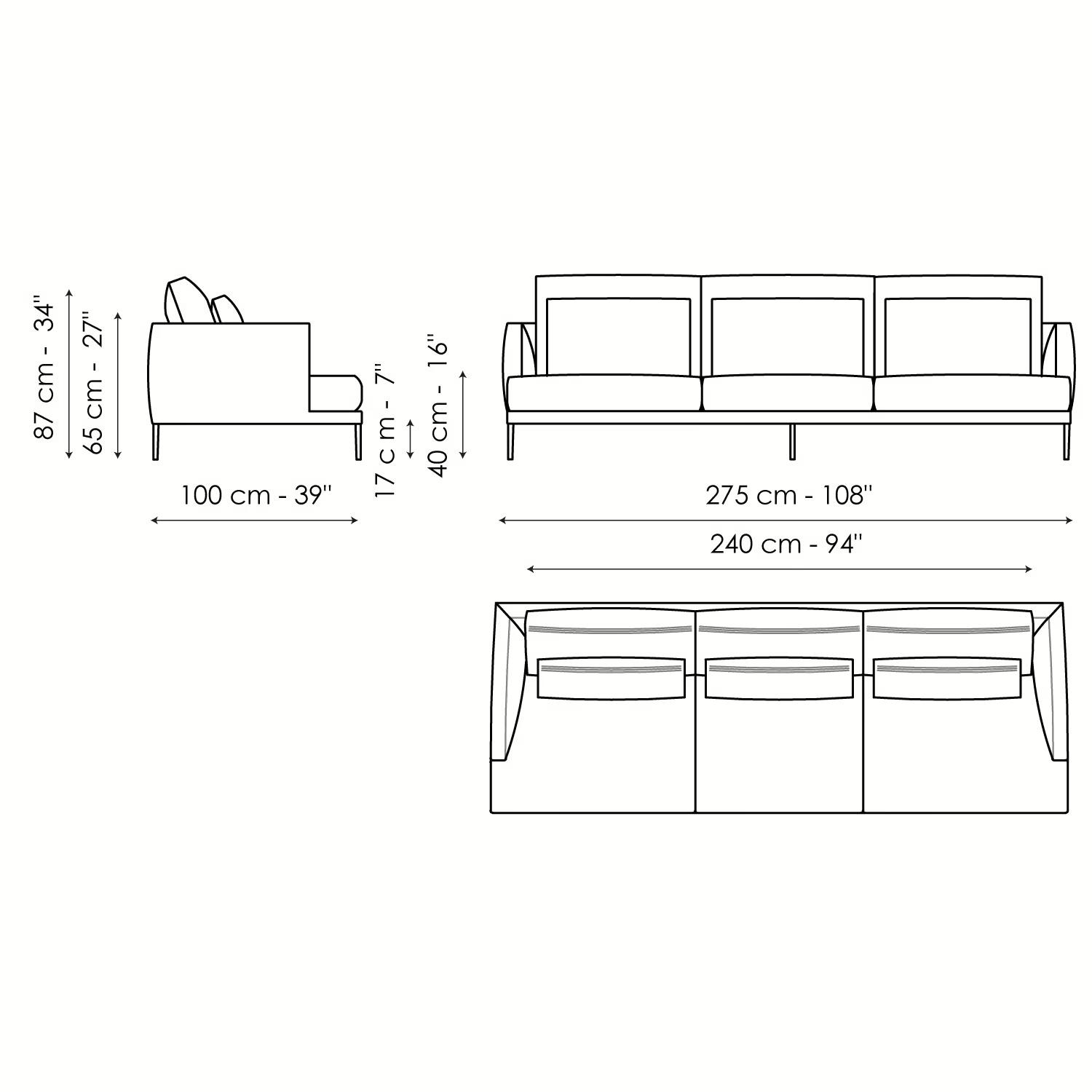
3 Seater Sofa
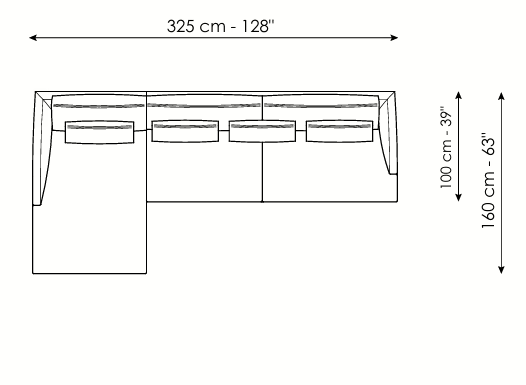
Composition 01

Composition 03
This double bed is covered in fabric, leather or eco-leather, completely removable. There are many variations to the design: in addition to Basket, there is the Basket plus model, featuring sophisticated tucks on the headboard. The Basket, and Basket plus are also made in the “open” version: the practical unit provides valuable additional space for storing covers, cushions and everything necessary for the bedroom.
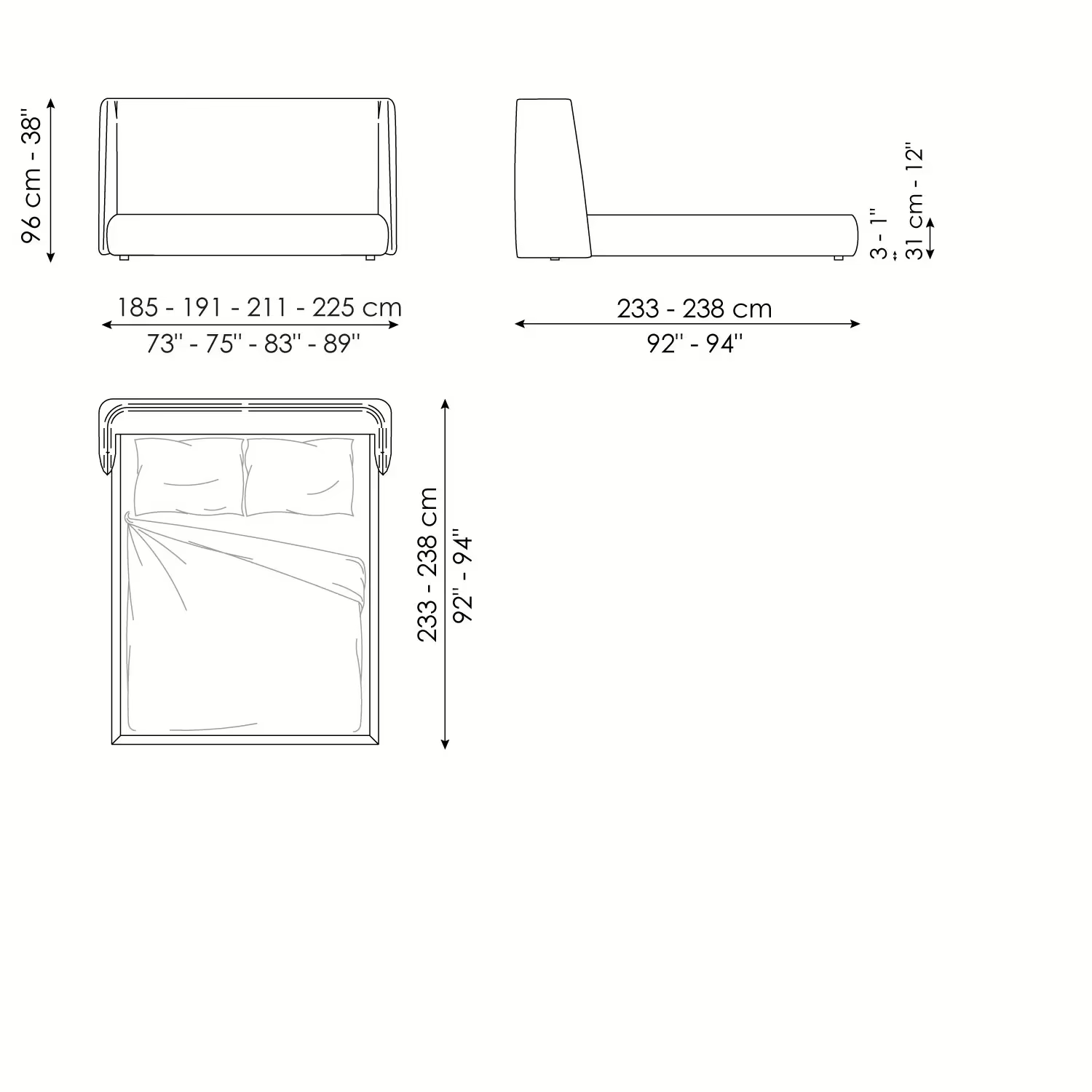
Basket
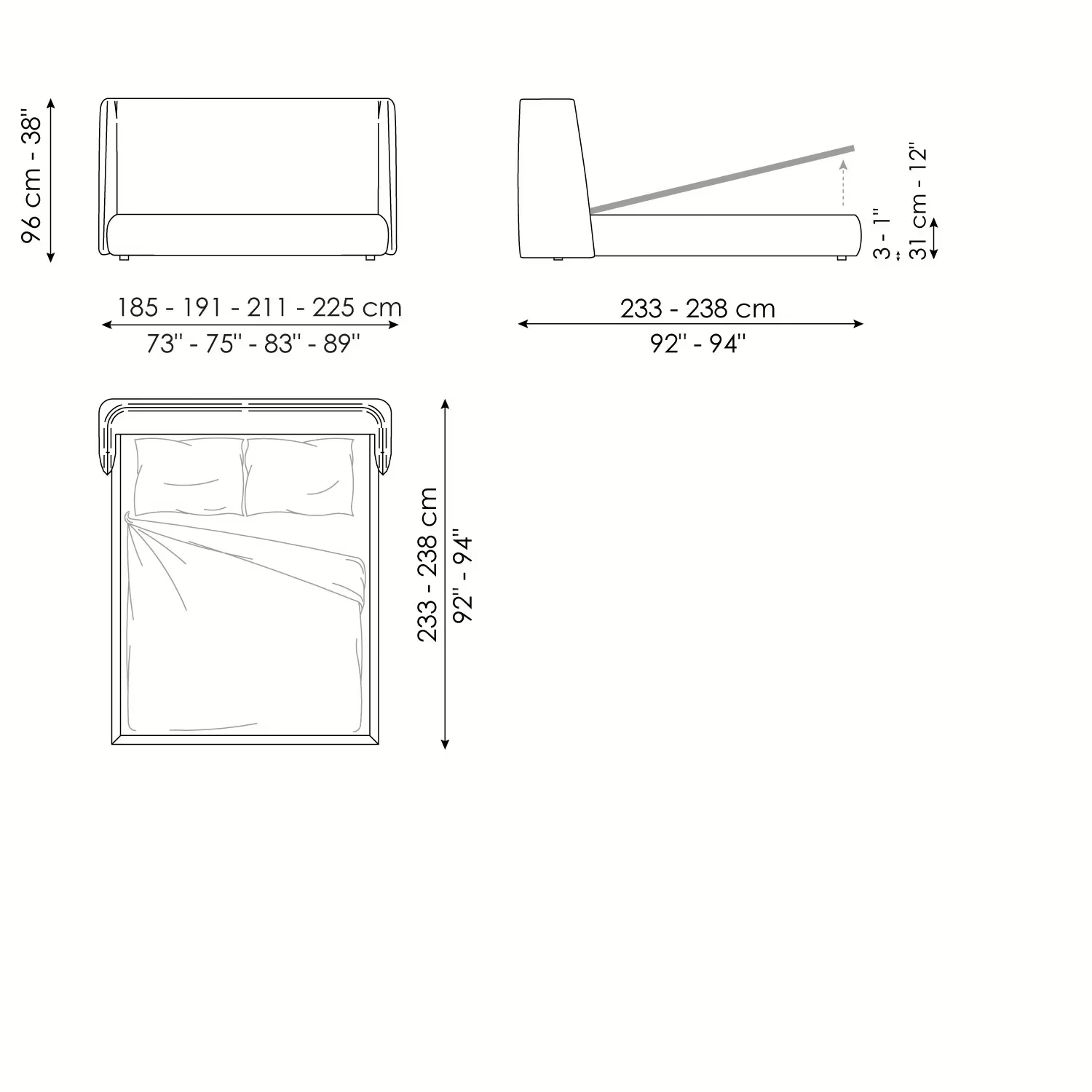
Basket Open (with storage)
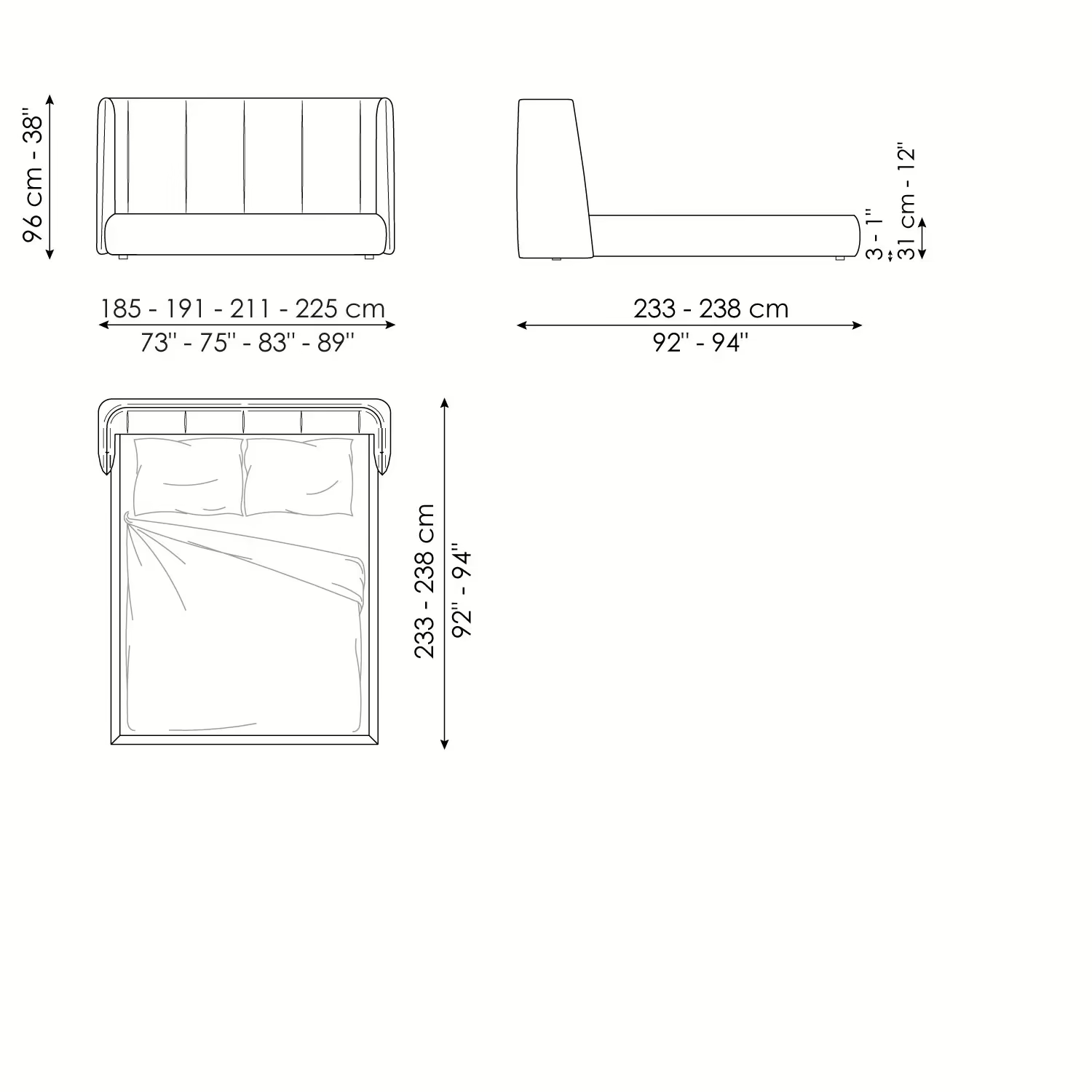
Basket Plus
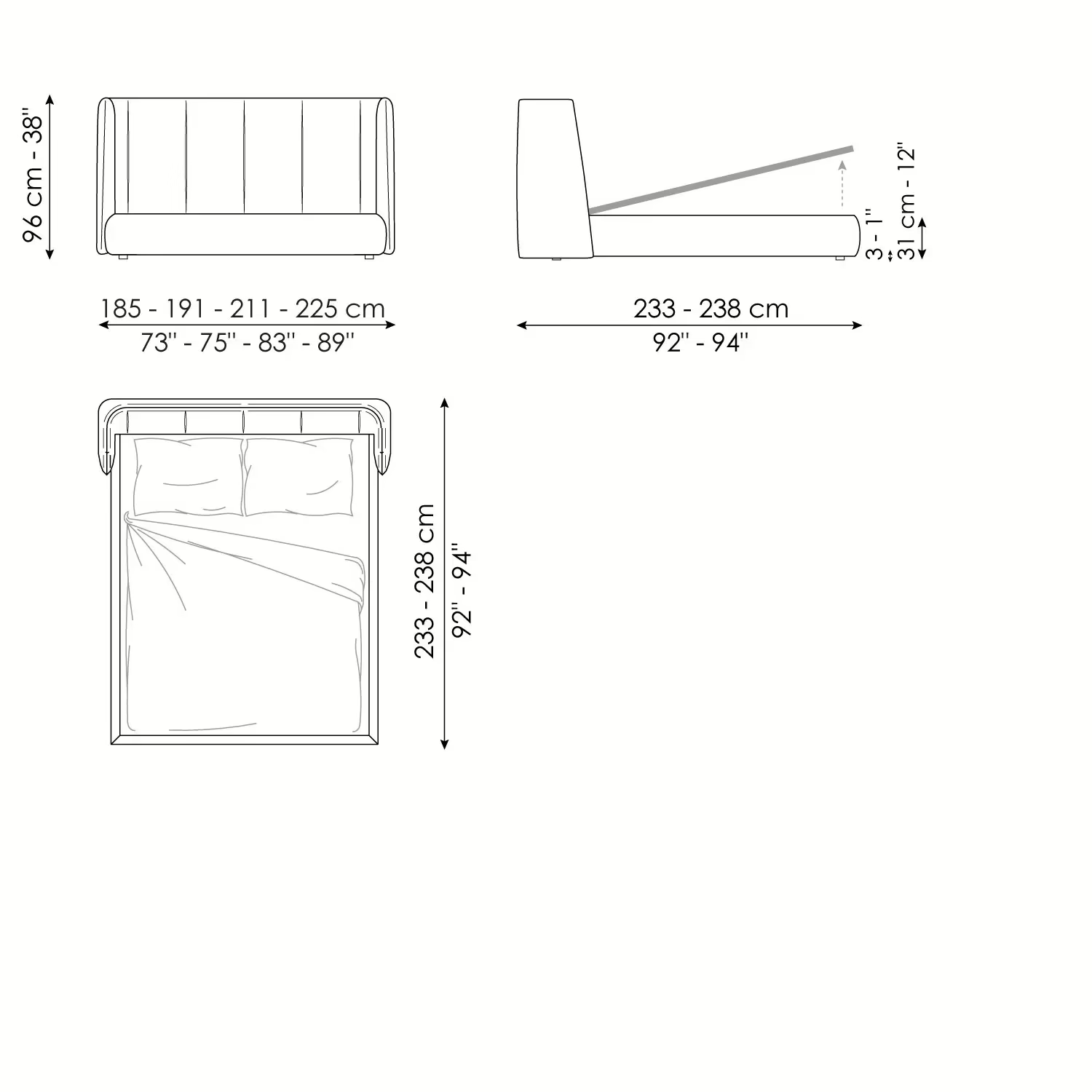
Basket Plus Open (with storage)
Available with completely removable cover in fabric, leather or eco-leather, Cuff is produced in various versions: with higher headboard (Cuff hi), with thicker bed frame, low feet in painted wood and low (Cuff plus) or high (Cuff hi plus) headboard. In the versions with storage (Cuff open and Cuff hi open), valuable additional space is available for storing covers, cushions and everything necessary for the bedroom. The Cuff easy open and Cuff hi easy open versions are furnished with a convenient storage space and also a double-action mechanism that allows the bed surface to be completely raised to facilitate making and cleaning the bed.
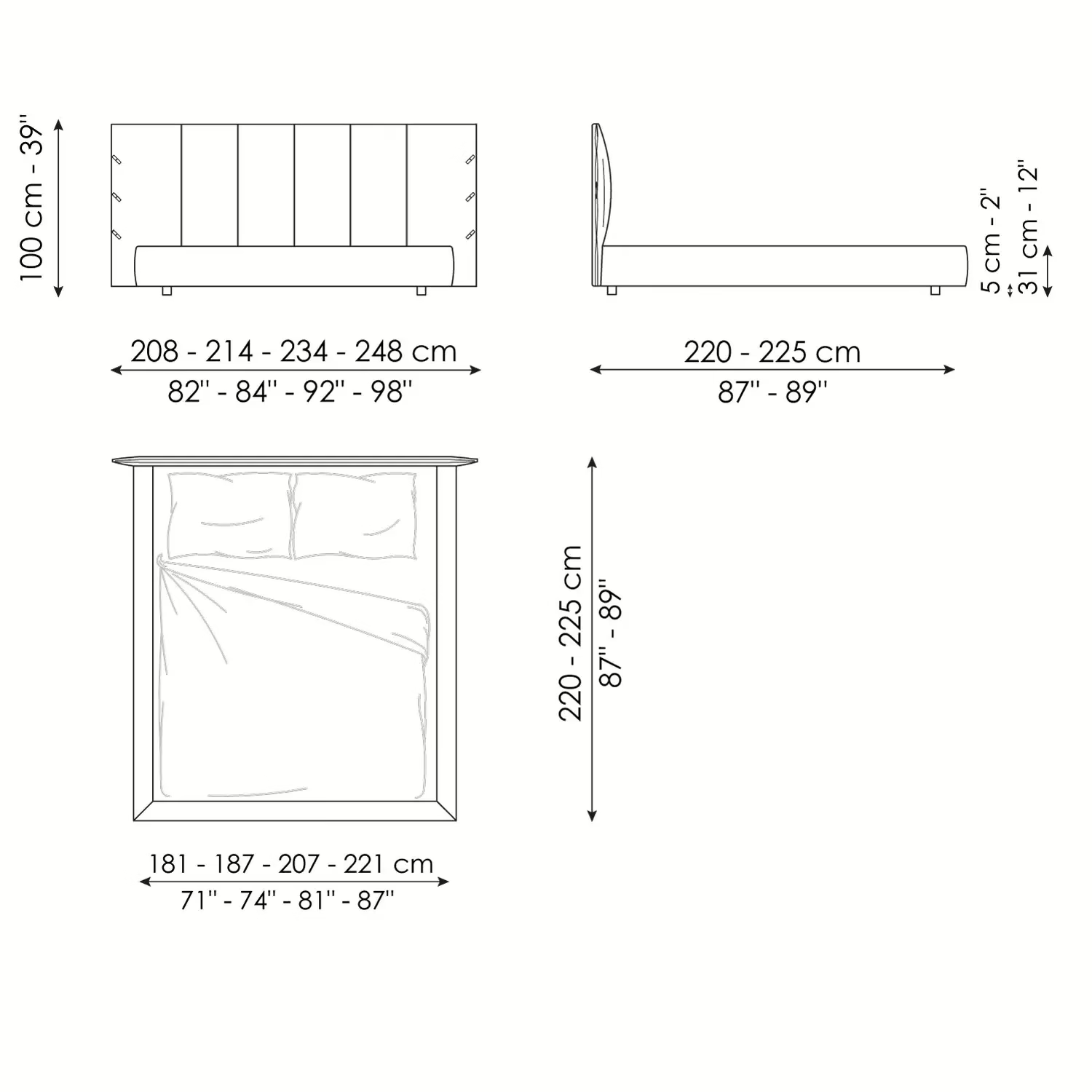
Cuff
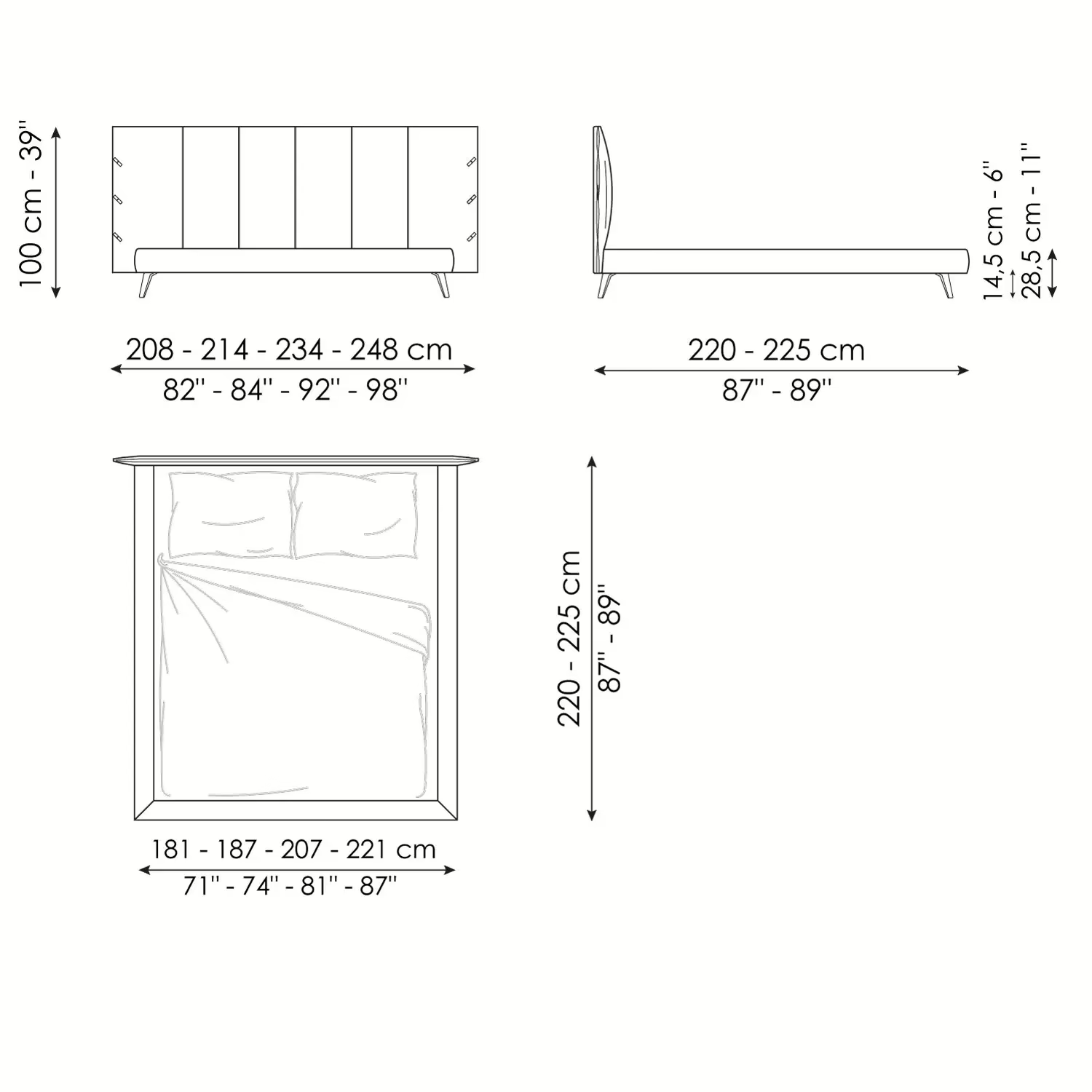
Cuff Plus
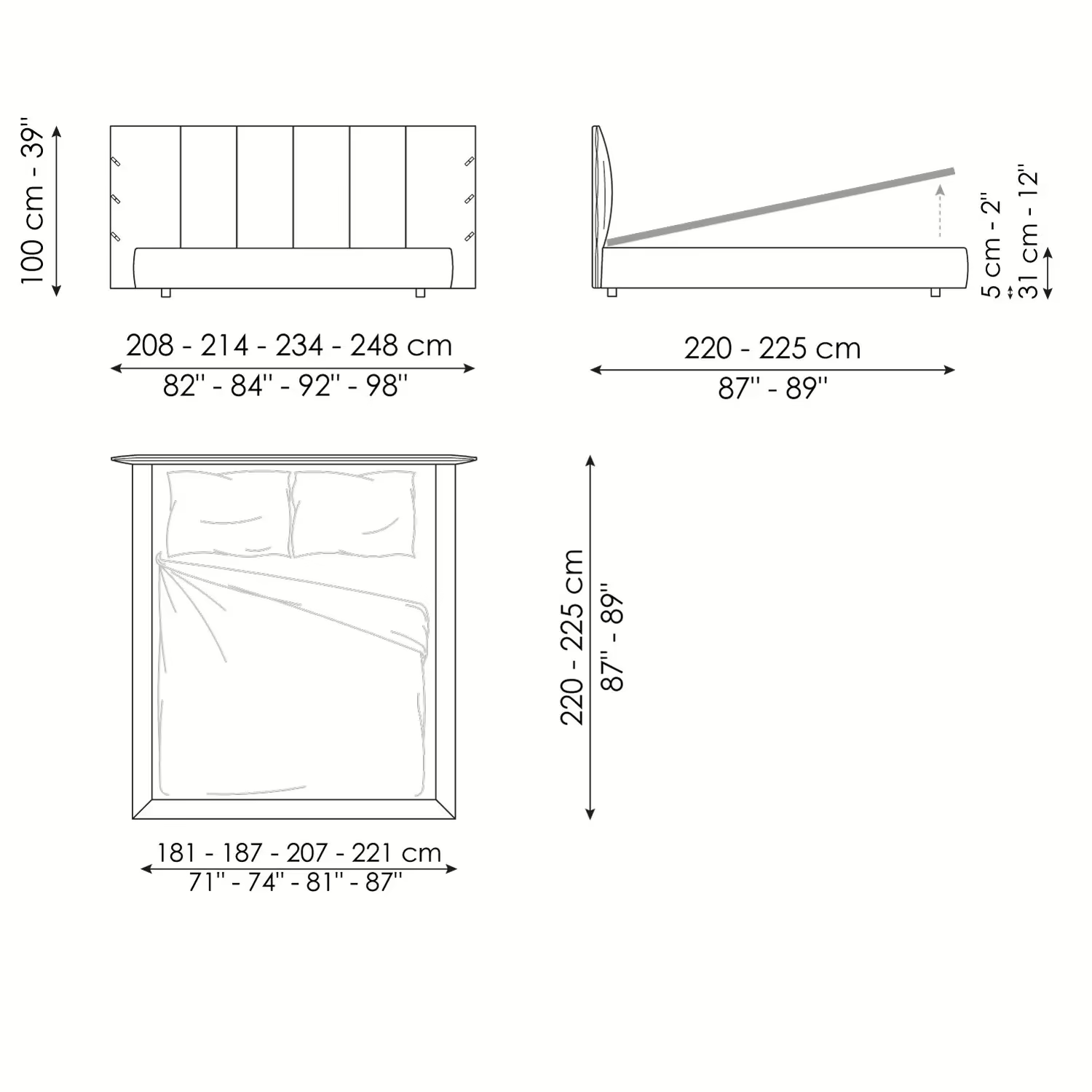
Cuff Open (with storage)
Four thin metal feet discreetly support the sleeping section, giving additional lightness to the whole. The perimeter of the bed is embellished with a fabric profile available in a wide range of colours. The option of choosing the colours of the border allows elegant combinations or interesting contrasts to be created with the cover (which can be made of fabric, leather or eco-leather, removable in all versions). Alternatively, it can also be produced in the embroidered version, with a modern and elegant diamond pattern (Thin ego).
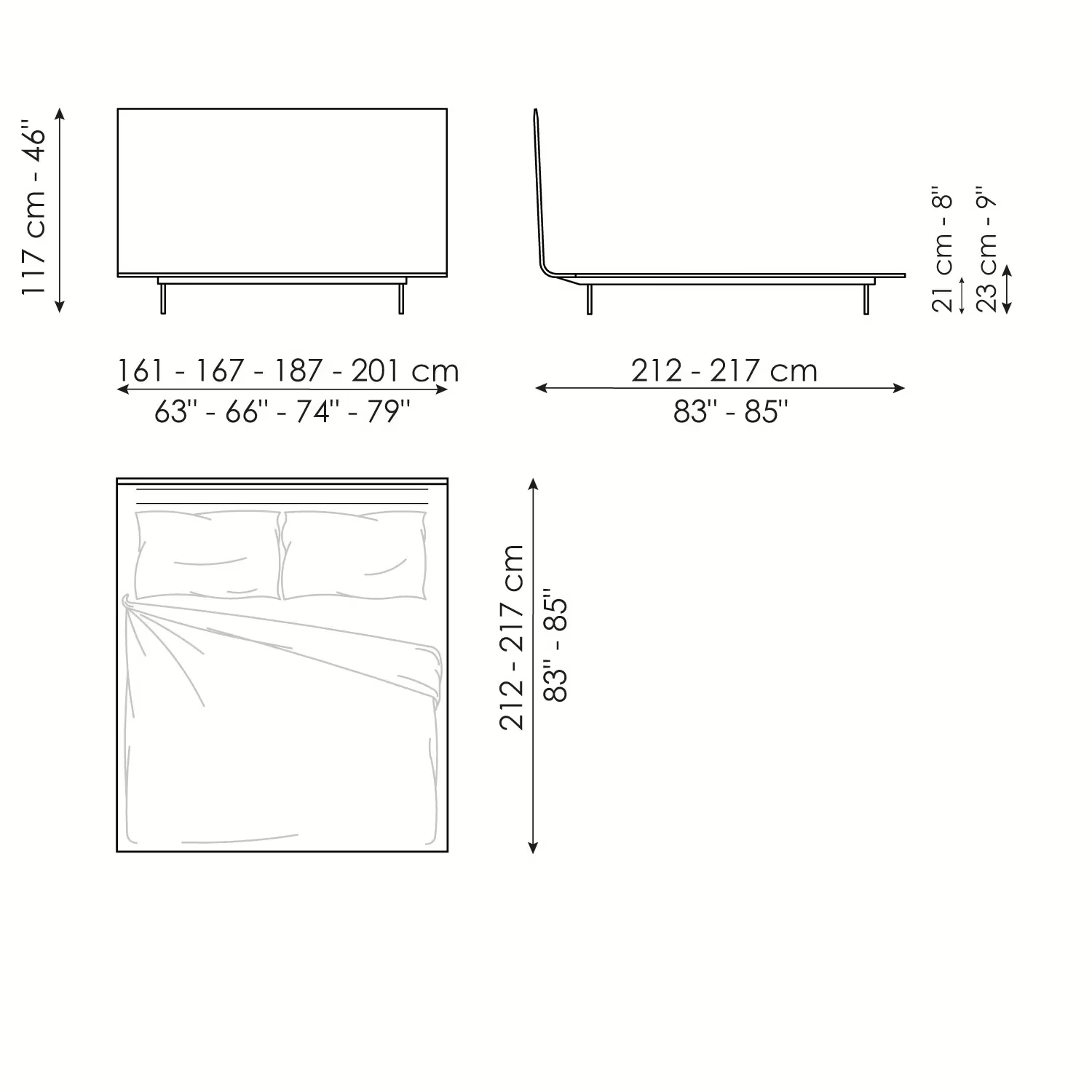
Thin (Above)
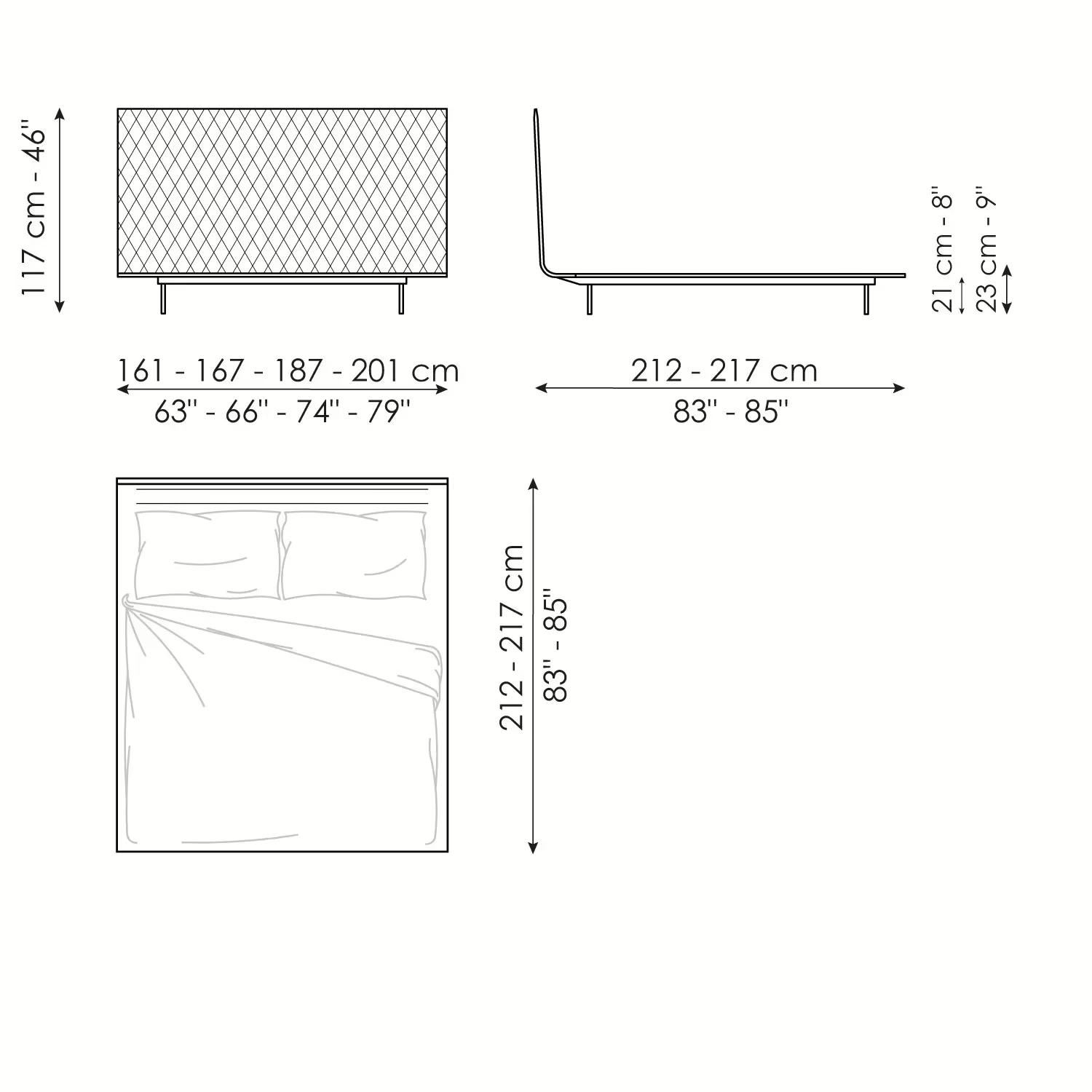
Thin Ego (Above)
The softness of the headboard and the bed frame is obtained through the padding, which puts the accent on visual and physical sensations and comfort. The generous sizes and comfy forms of this bed make it the absolute centerpiece of the sleeping area and the place for carefree moments of relaxation. The fully removable cover is available in fabric, leather or eco-leather. The Fluff double bed is also available in the “open” version: the practical storage area provides valuable additional space for storing covers, cushions and everything necessary for the bedroom.
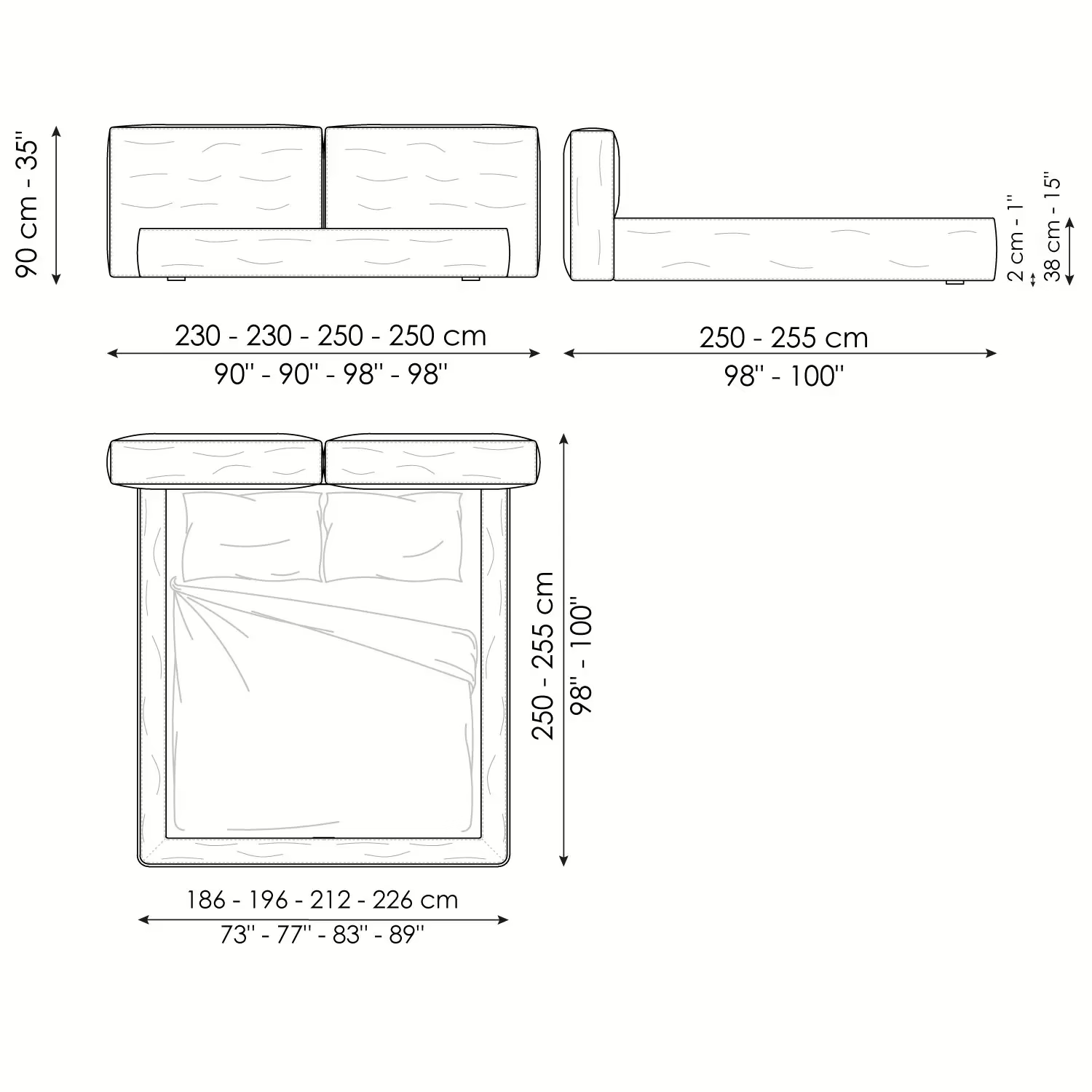
Fluff – Without Storage
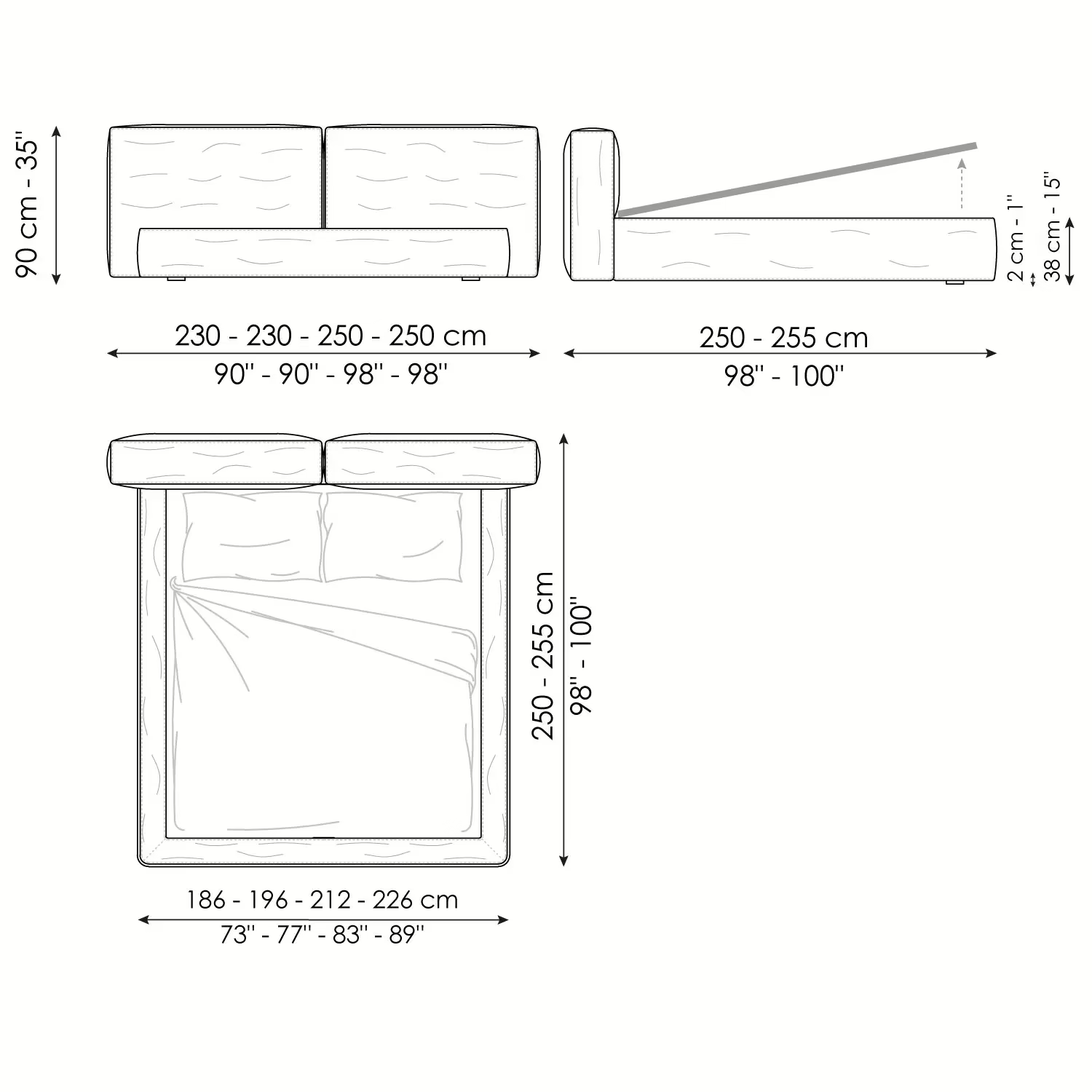
Fluff Open – With Storage
The alternation of full and empty spaces gives dynamism and continuity to the seat, while the slender legs create a sense of seriousness and lightness. The low backrest completes the clean and light design and balances the frame, emphasizing its contemporary style.
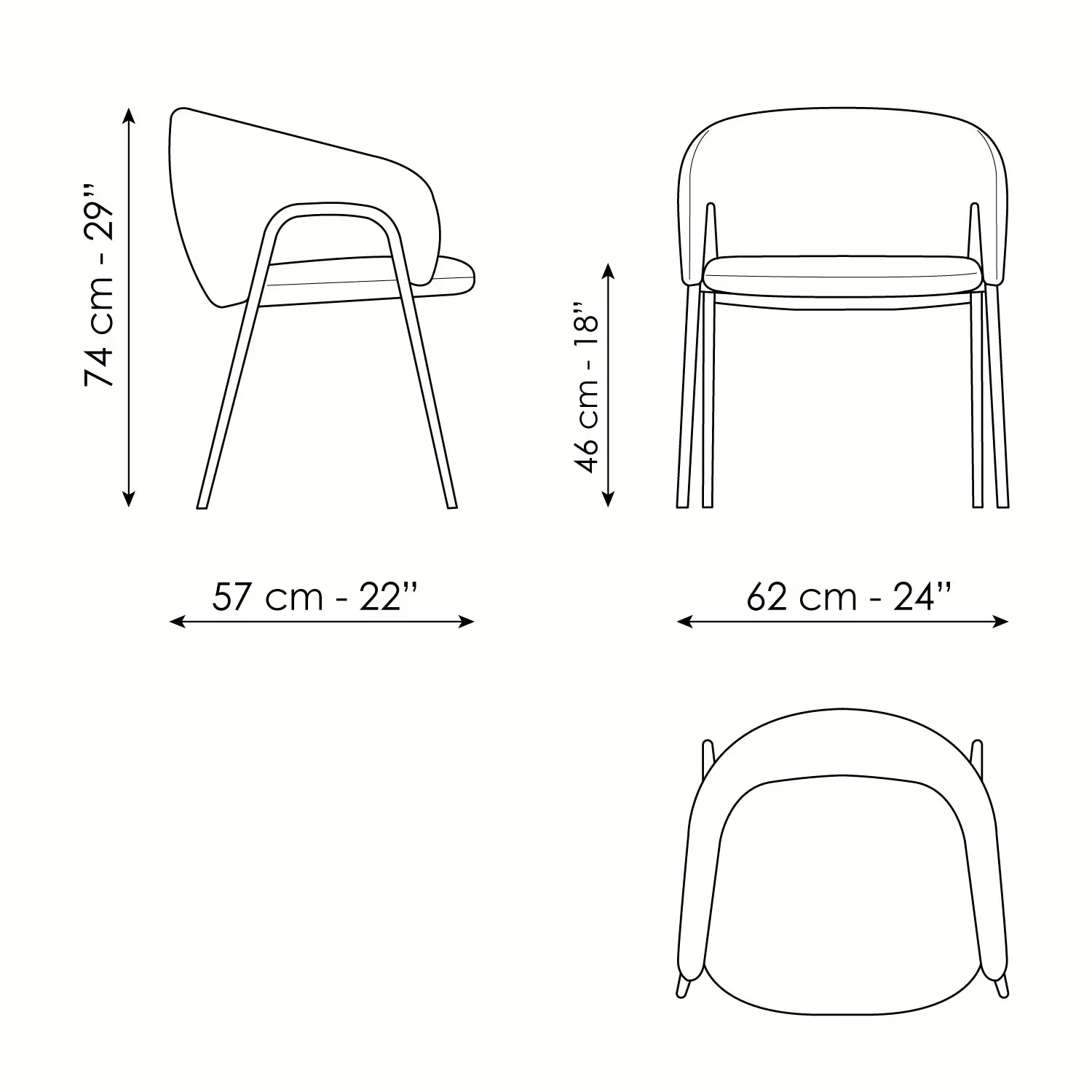
Finish Combinations
- Base Combination 2: Brown, Powder Pink, Dove Grey, Amaranth
- Base Combination 3: Brass Yellow, Royal Blue, Racing Green, Bordeaux
Available premium finishes
- Plus Metal
- Bronze
- Pearl Gold
- Lead
- Matt Brass
- Matt Copper
- Special Metal
- Copper bronze
- Burnished
- Clouded Chrome
- Dark Nickel
- Brown Nickel
Discover our brands
At RB12 we curate, we don’t just stock. Every brand we carry is chosen for its design integrity, craftsmanship and longevity — pieces made to be lived with, not replaced.
We favour makers who combine timeless aesthetics with intelligent engineering, offer meaningful customisation, and uphold responsible sourcing and production. Reliability matters as much as beauty, so we partner with manufacturers who deliver consistent quality, clear lead times and strong aftercare.
The result is a considered edit of European and global names — iconic houses alongside exceptional emerging studios — that complement one another across style, scale and budget.
When you shop our brands, you’re buying into standards we stand behind: enduring materials, refined detailing, and a service experience that takes you from fabric books to white-glove delivery with confidence.
Its geometry stimulates the combination of different elements, transforming the living area into the warmest and most welcoming of environments. The Panorama New modular designer sofa collection is based on a particular element that can be considered the system’s real unit of measurement: the hexagonal shaped pouf which, with armrests and backrest, becomes an armchair and which in turn can be combined with other armchairs and sofas to obtain the most diverse configurations. As such it represents the maximum expression of personalisation and creativity. The cover in fabric is completely removable and features a special quilting pattern on the armrests and backrest.
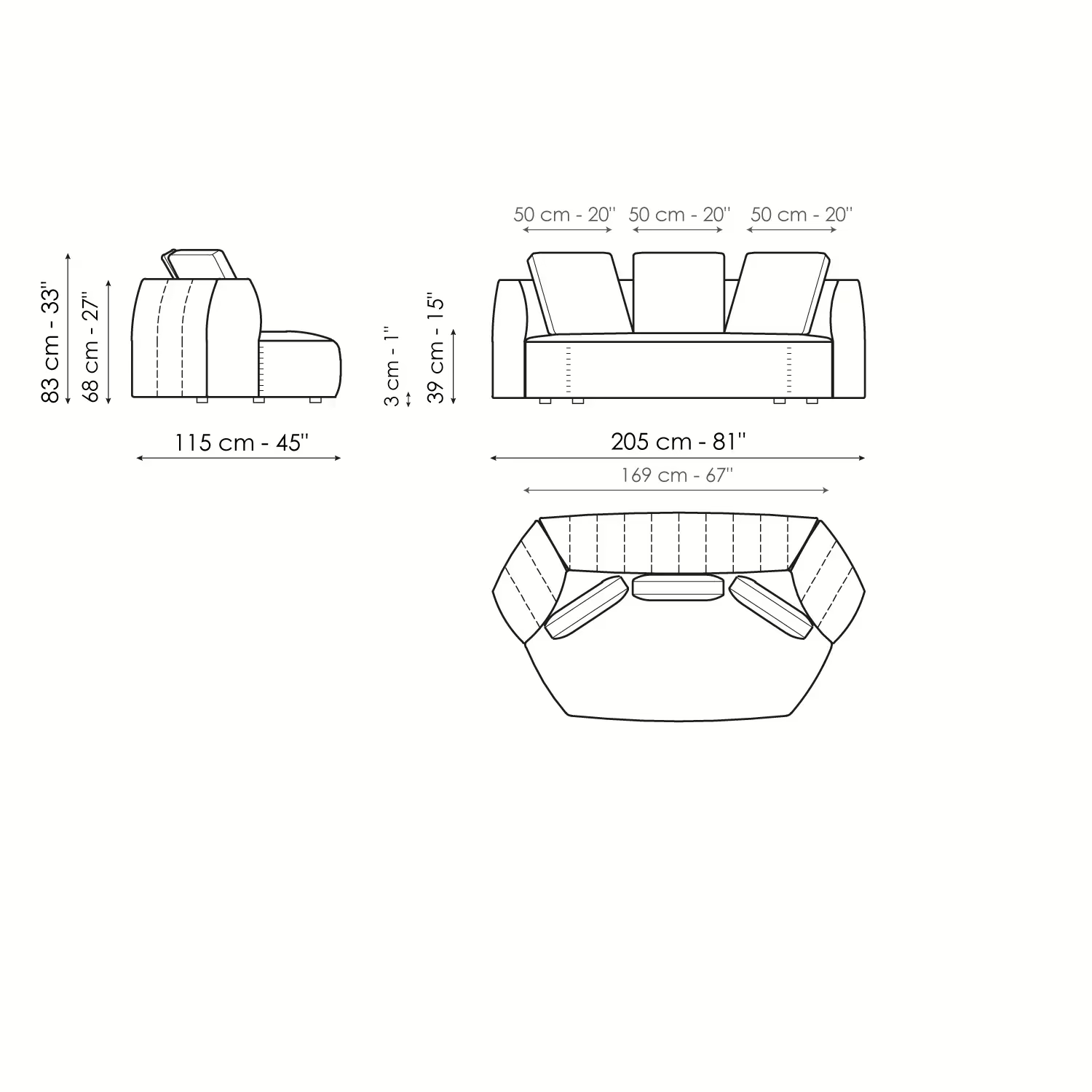
2 Seater Sofa
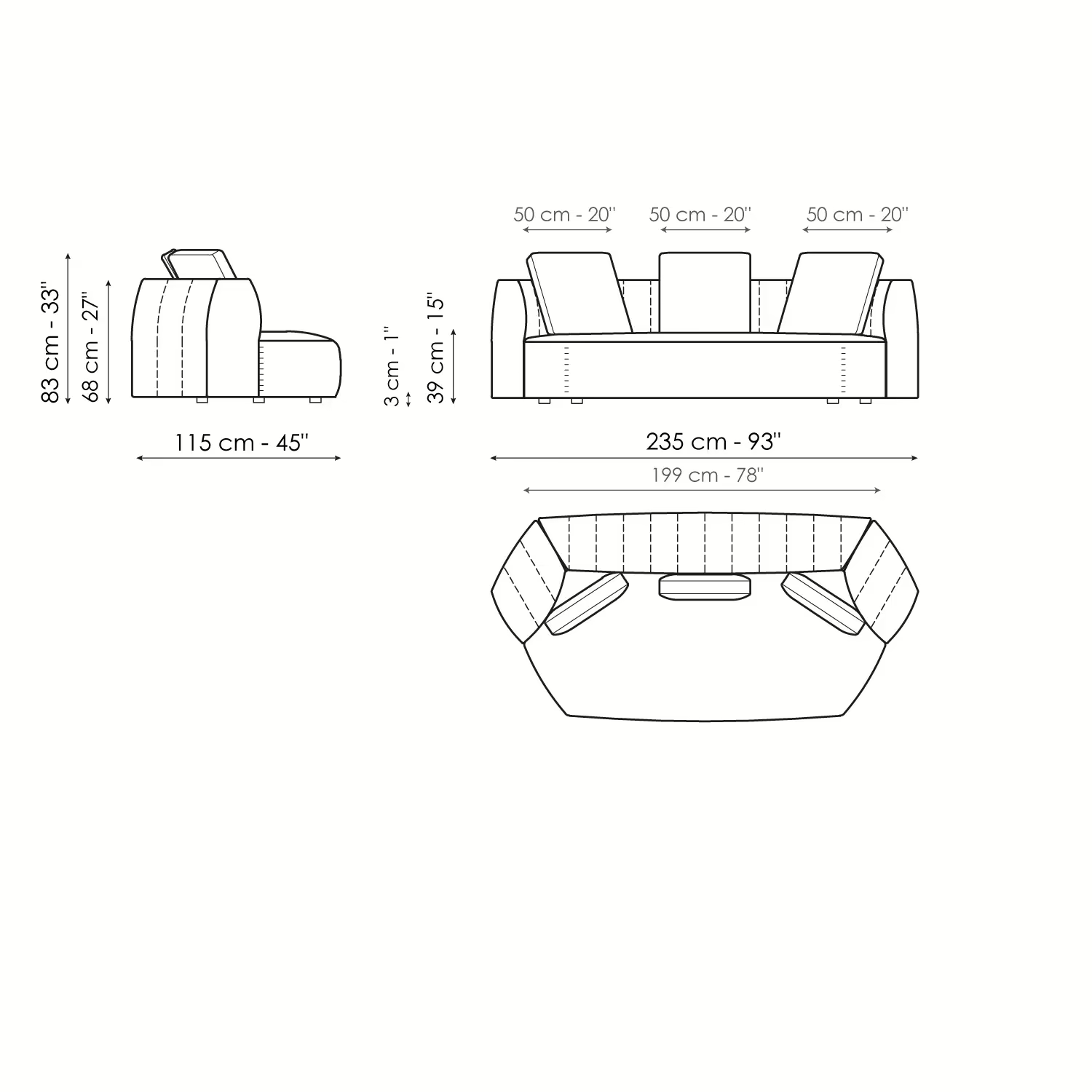
2.5 Seater Sofa
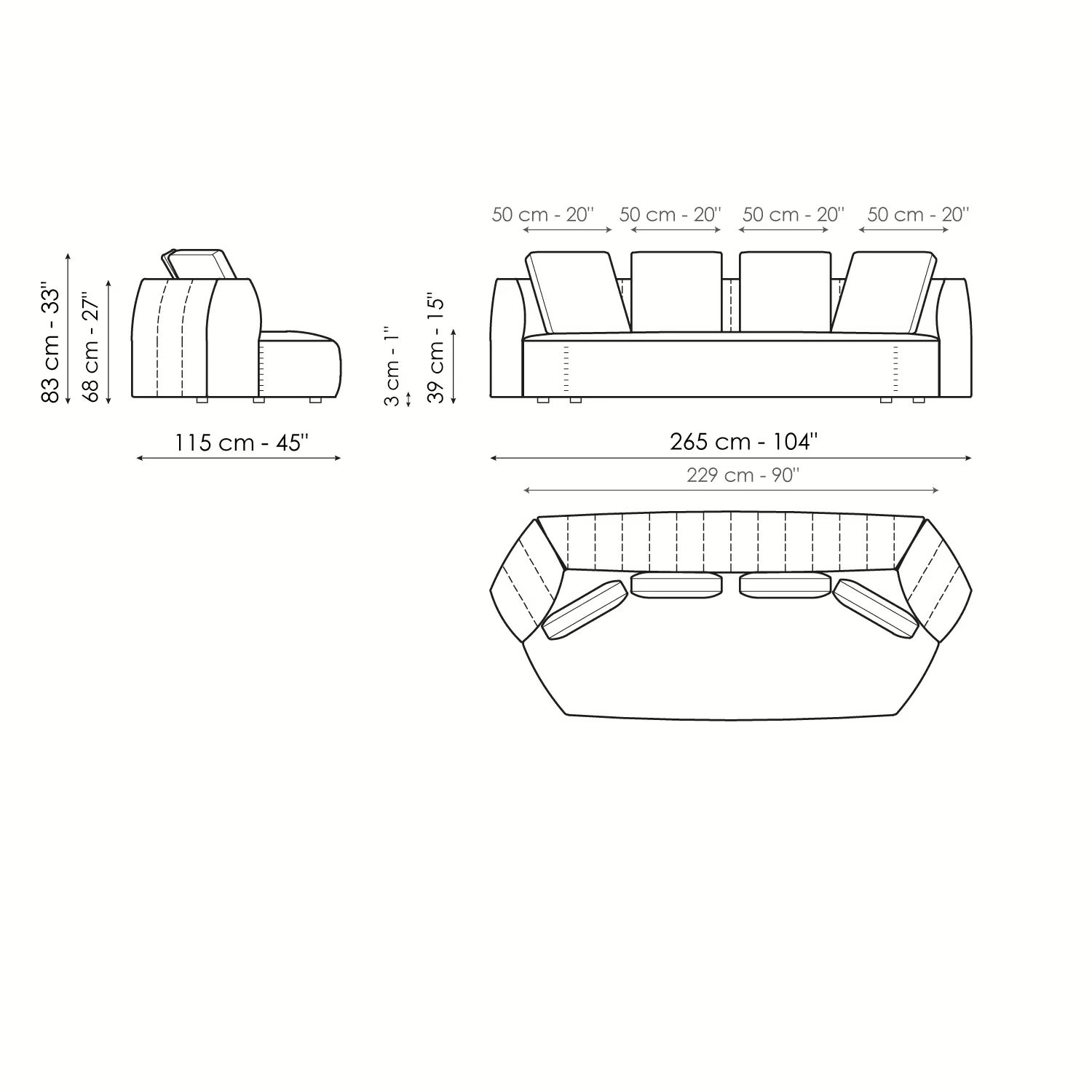
3 Seater Sofa

Composition 01
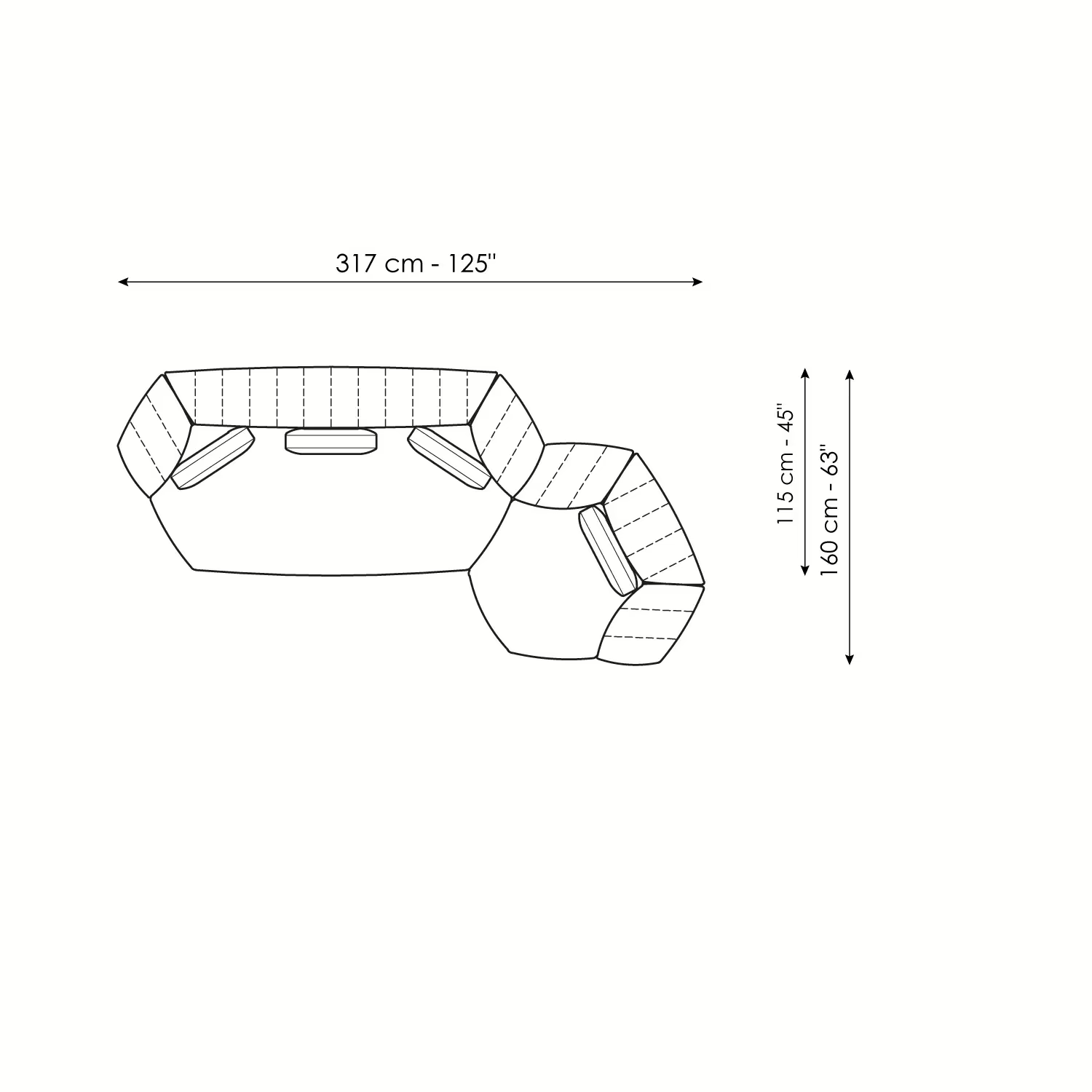
Composition 02
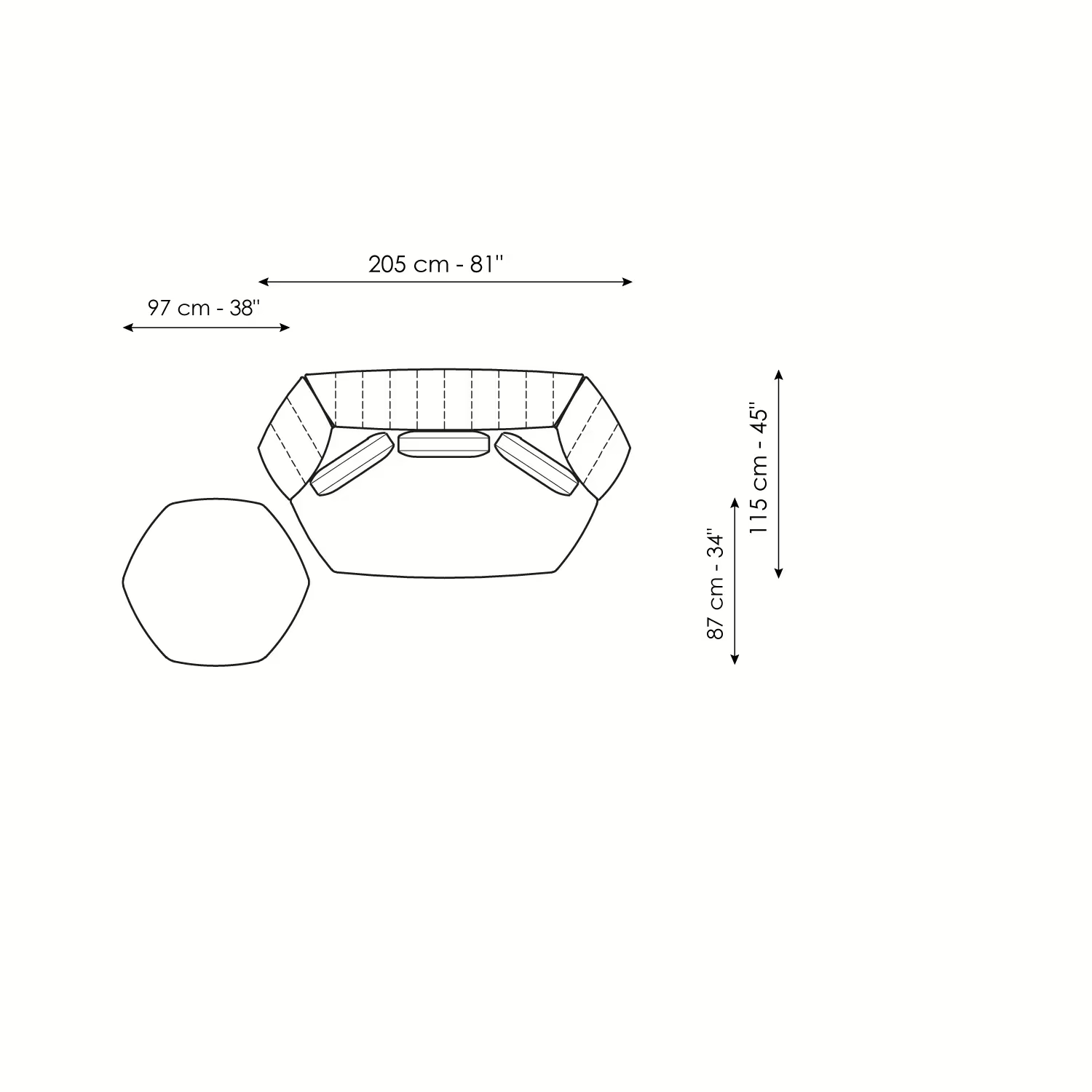
Composition 03
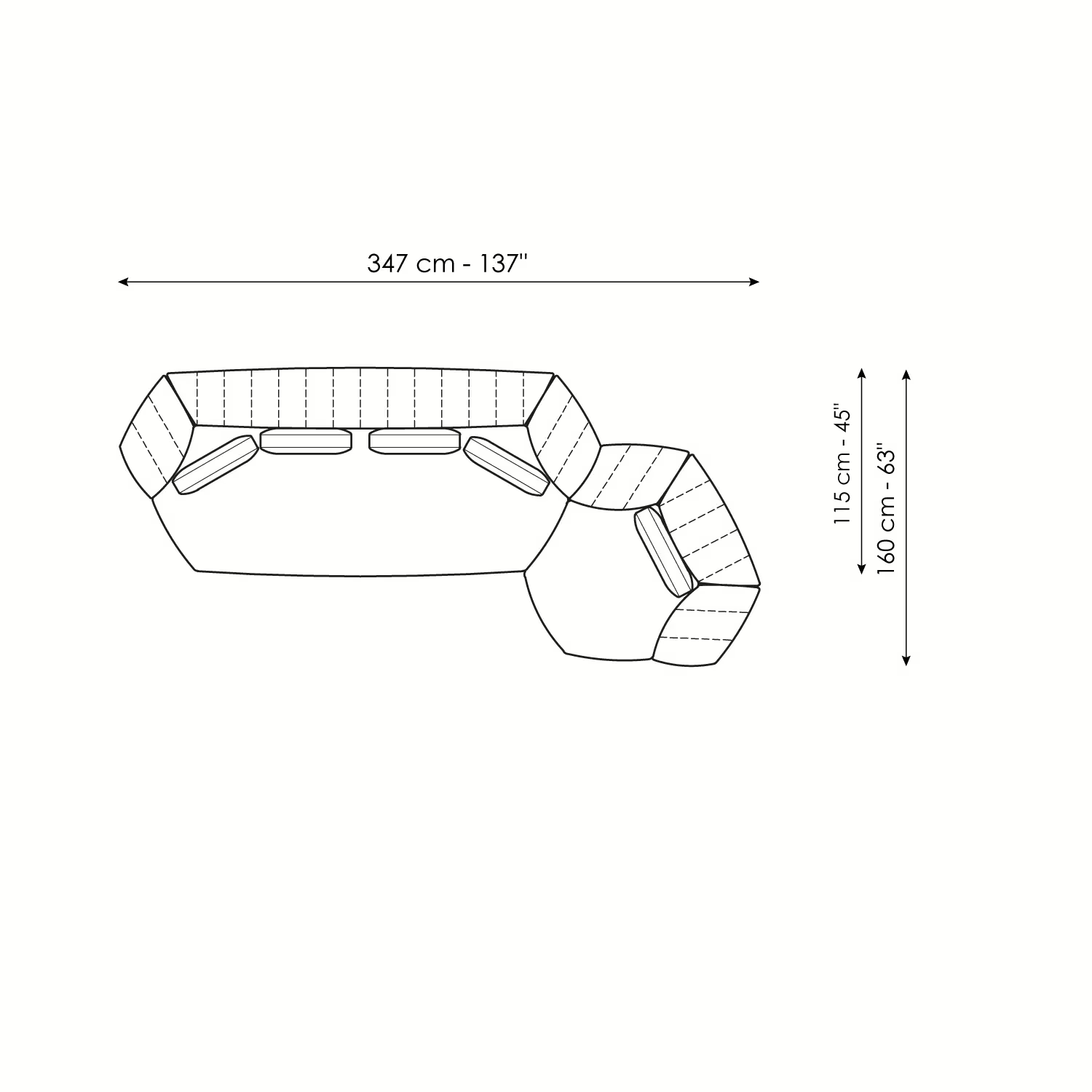
Composition 04
Whether in single or double format and with completely removable covers in fabric, leather or eco-leather, it is available in a wide range of versions. The option of having additional space is available with the Tonight open version which features a storage drawer while the Tonight charme version has a headboard embellished with vertical quilting that highlights its shape, and the Tonight air version has shaped metal feet which raise the bed frame higher above the ground. A further opportunity for personalisation is given to the Tonight and Tonight open versions by the decorative border of the headboard and bed frame which can be either matching or in contrast with the cover.
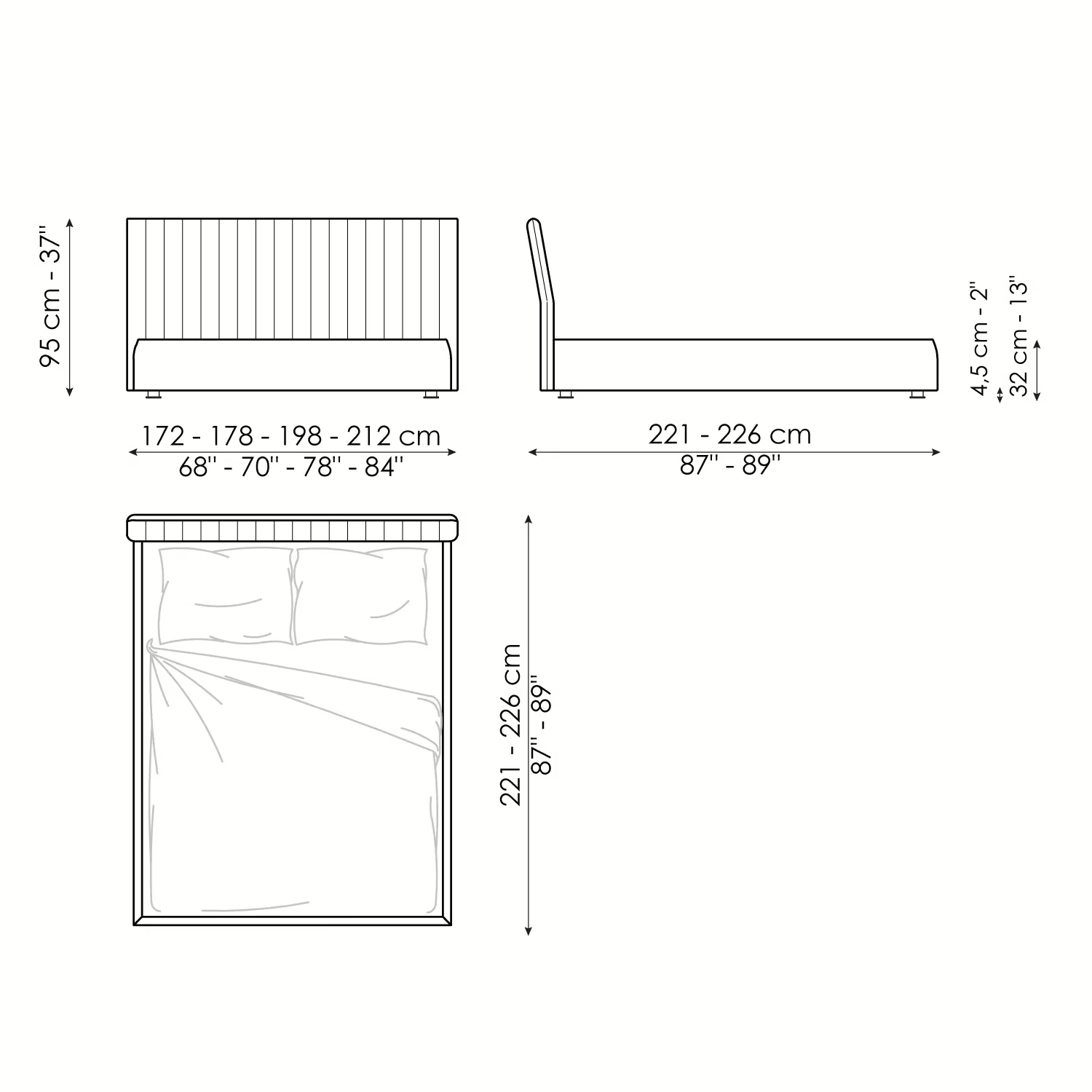
Tonight Charme – Without Storage
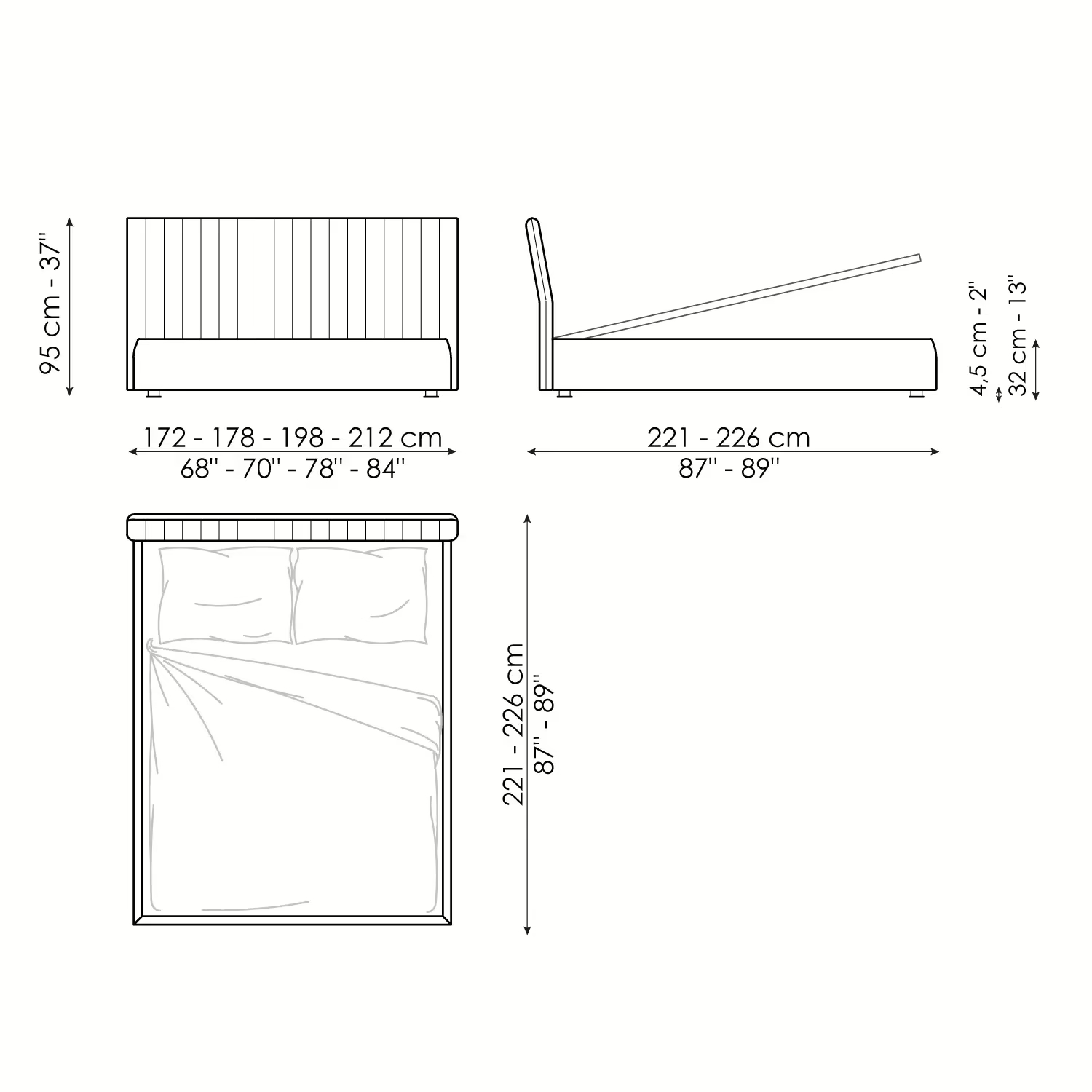
Tonight Charme Open – With Storage
Peanut B can also be arranged like an island and be placed at the centre of the room to create a space in which to socialise. There are also some elements available with a mechanism that allows the seat to be extended, for even more comfort. The removable upholstery is in fabric or leather, and can be chosen in a solid colour or with different colours and patterns for every module that composes the sofa, in this way offering a further opportunity of personalisation. The Peanut B. family of upholstered furniture has been expanded to include new elements that stimulate the creative and imaginative side of those who enjoy them. Thanks to new elements with asymmetrical, pentagonal and trapezoidal shapes, available in various dimensions and combinations with existing regular elements, Peanut B.X. becomes extremely versatile and customisable: an island of softness, a symbol of relaxation, the standout feature of the living area thanks to its unique personality. “Two-sided” design remains the distinctive element of the sofa’s architecture, which is perfectly expressed by the inclusion of the new armrests and poufs. The contours of the stitching, which surround the soft volumes of the seats, contrast with the more austere and geometric shapes of the frame with different seat depths: the result is a sofa that can adapt to any space and style requirement.

The base in curved steel rods, with a highly decorative value, is a stylised corolla made of silhouettes of petals that support the thin but precious top, made in the same finish as the base, or in various types of glass or ceramic. The base is available in multiple finishes and can be completed with a painted metal bottom, which serves as a practical magazine rack or tray for objects. Available in 5 different sizes, the Arbor coffee tables can be used as unique elements or in groups, to create original compositions.
Designed by Fabrice Berrux, the Neuilly chair comes to life thanks to the combination of different and clearly outlined elements such as the thin metal tubular structure on the one side and the upholstered elements on the other. The padded seat plays with the curvilinear shape of the welcoming backrest/armrest, which embraces the body with a single ergonomic movement thereby guaranteeing a natural posture for the back and offering unencumbered support for the arms. The resulting product is a modern and comfortable living room chair characterized by a versatile style and a lightweight image. The catalogue also features the matching Neuilly too stool.
Seen from behind, the profile of the Youpi chair calls to mind the image of a stylized human figure, ready to welcome you in a comfortable embrace. Designed by Fabrice Berrux, what strikes the observer about the Youpi chair is its original shape, which adds style and a sense of lightness to any space. It consists of a series of different forms that combine to create a harmonious ensemble thanks to the fabric or leather upholstery that completely covers it: the circular backrest flows into the large seat and the whole is supported by a flared conical base. The Youpi unique design chair is also available in a version with four metal legs.
Perfect for the dining area, the Colibrì chair, available as a fabric dining room chair or in leather, renews the balance between the parts that distinguish it. The thin metal structure of the base highlights the welcoming volume of the seat/backrest: a large “shell” with raised edges and generous proportions that offers “comfort without gravity”, giving body to the essential image from which the design by Fabrice Berrux emerges. The working of the padded surface highlights the detail of the parallel-stitched seams which run along the entire length of the upholstery.
In the Dorian modern oval dining table, flexible qualities and geometric simplicity establish an interplay through contrast. The large top – made of ceramic – rests on a base with a striking sculptural character, consisting of an elegant and surprising elongated cylinder that recalls the shape of a Greek column and which pushes the design towards ancient architectural horizons.
European design, curated for modern living.
Scandinavian and Italian furniture, lighting and interiors from some of Europe’s most considered design houses.
Designed for every room
Scandinavian Design
Discover sculptural sofas, considered dining furniture and timeless pieces designed for modern living.
Discover The Bolia SaleDesign houses we believe in
More than a furniture store.
Whether you’re choosing one piece or furnishing an entire home, our team can help with layouts, dimensions, fabrics, finishes and product specification.
Discover Our Services →finishes and layouts.
architects and property
professionals.
opens October 2026.
Discover Our Best Selling Products
-

AYTM Angui Oval Mirror
from £159.00 -
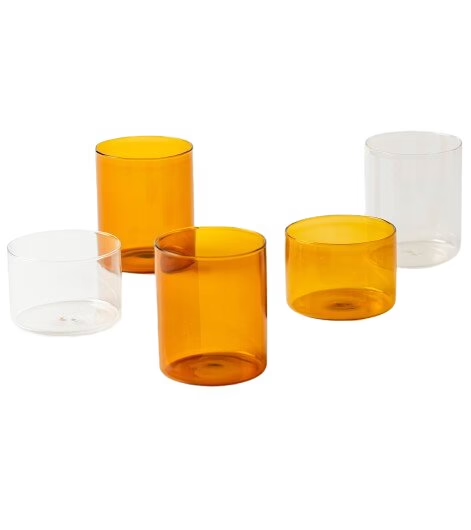
KnIndustrie Lime Line Glasses
from £7.50 -
Blomus Calma Lantern
from£18.00£15.30 -

Bolia Classic Inner Cushion
from £39.00 -
Blomus Tubo Pedal Bin
from£32.00£27.20 -

Bolia Forma Tableware Range
from £11.00 -
Blomus Sono Pedal Bin
from£69.00£58.65 -

AYTM Novo Dining Chair
from £339.00 -
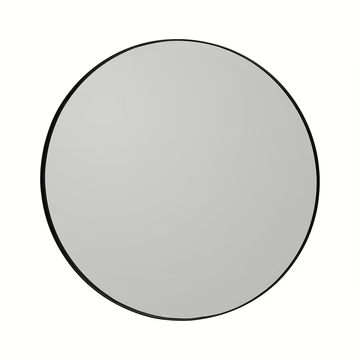
AYTM Circum Mirror
from £139.00 -
Blomus Fera Set of 2 Side Table
from£194.00£164.90 -
Blomus Tela Crochet Basket
from£14.00£11.90 -

Design House Stockholm Nordic light Candle Holder
from £85.00 -
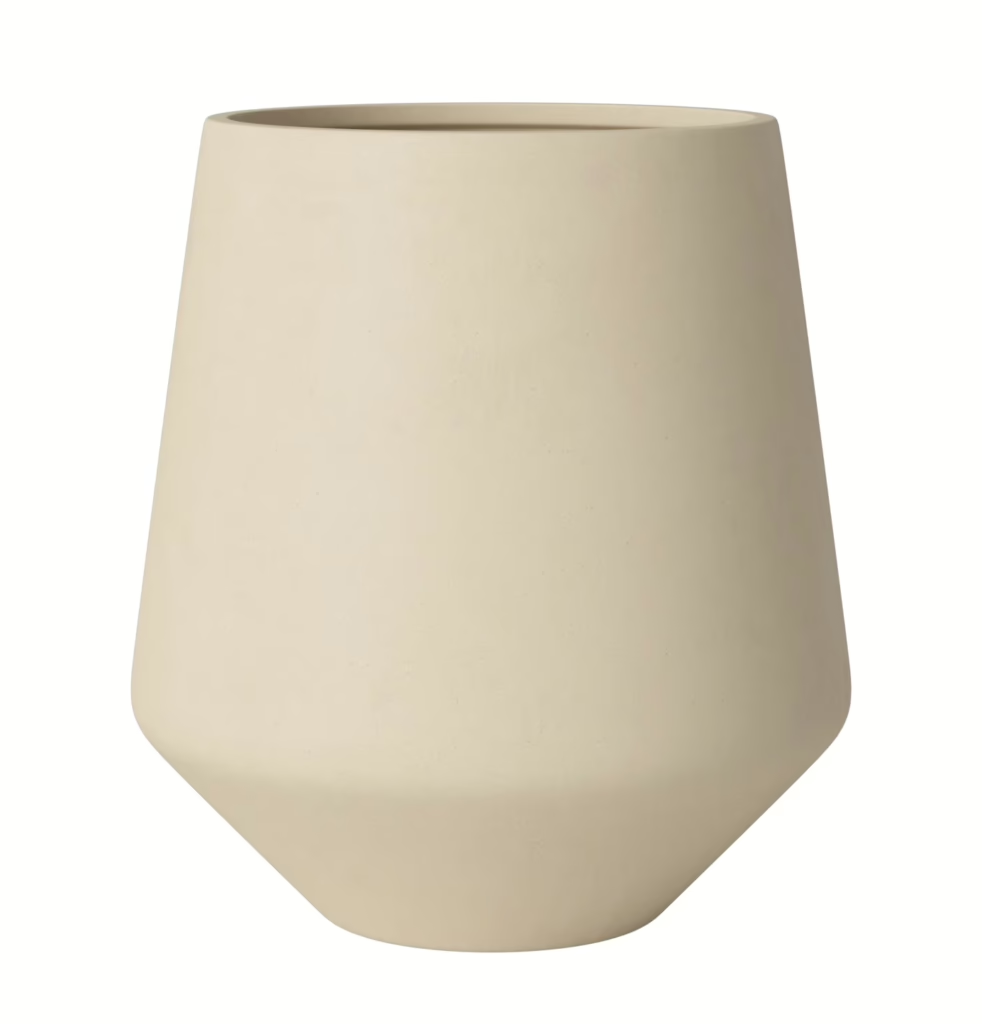
Bolia Grove Flowerpot
from £57.00 -

Bolia Balloon Pendant
from £559.00 -

101 Copenhagen Brutus Stool
from £446.00



Ex-display pieces.
Exceptional prices.
One-off showroom pieces from some of our favourite design houses, available at exceptional prices.
Shop Ex-Display →
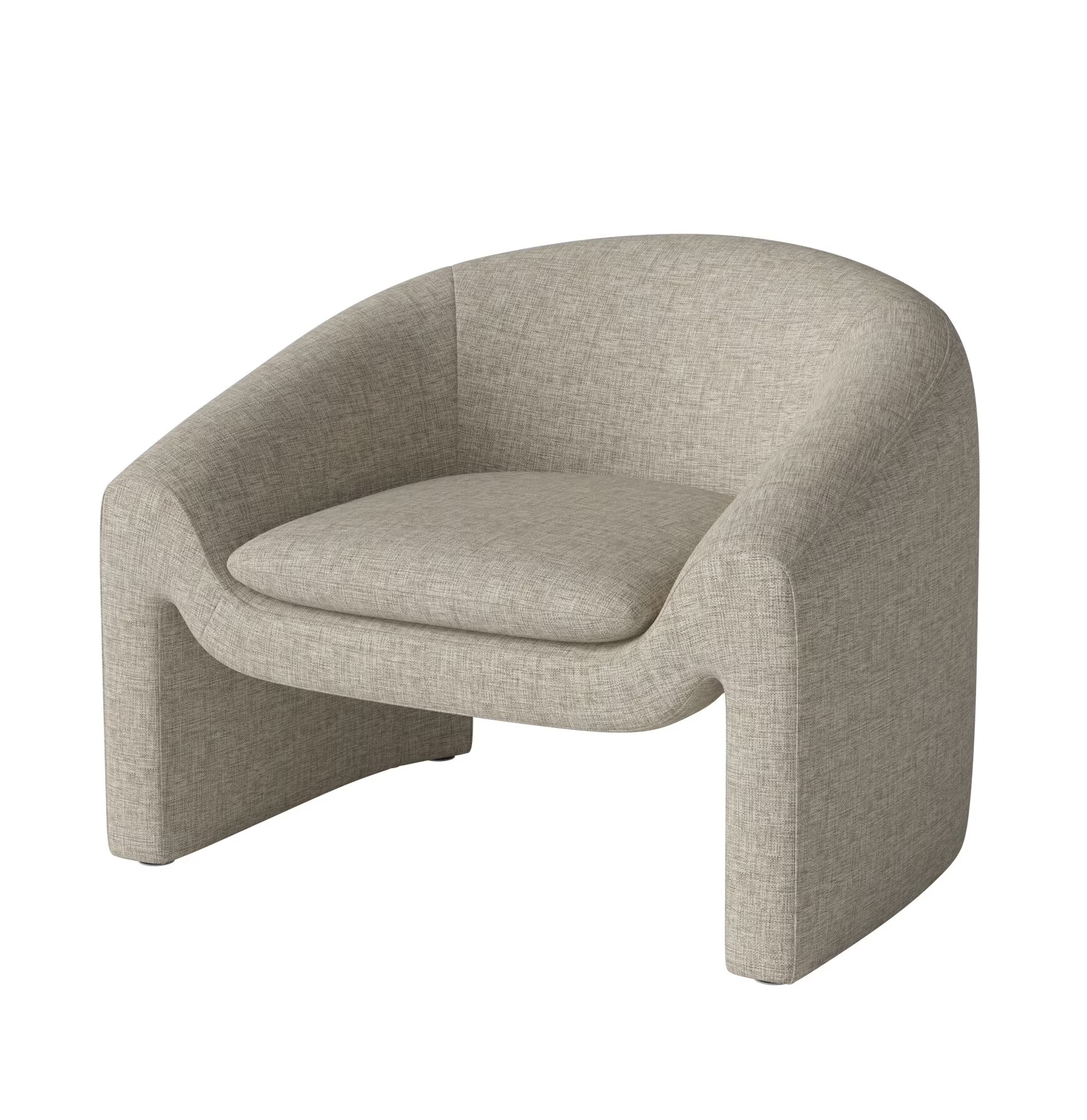
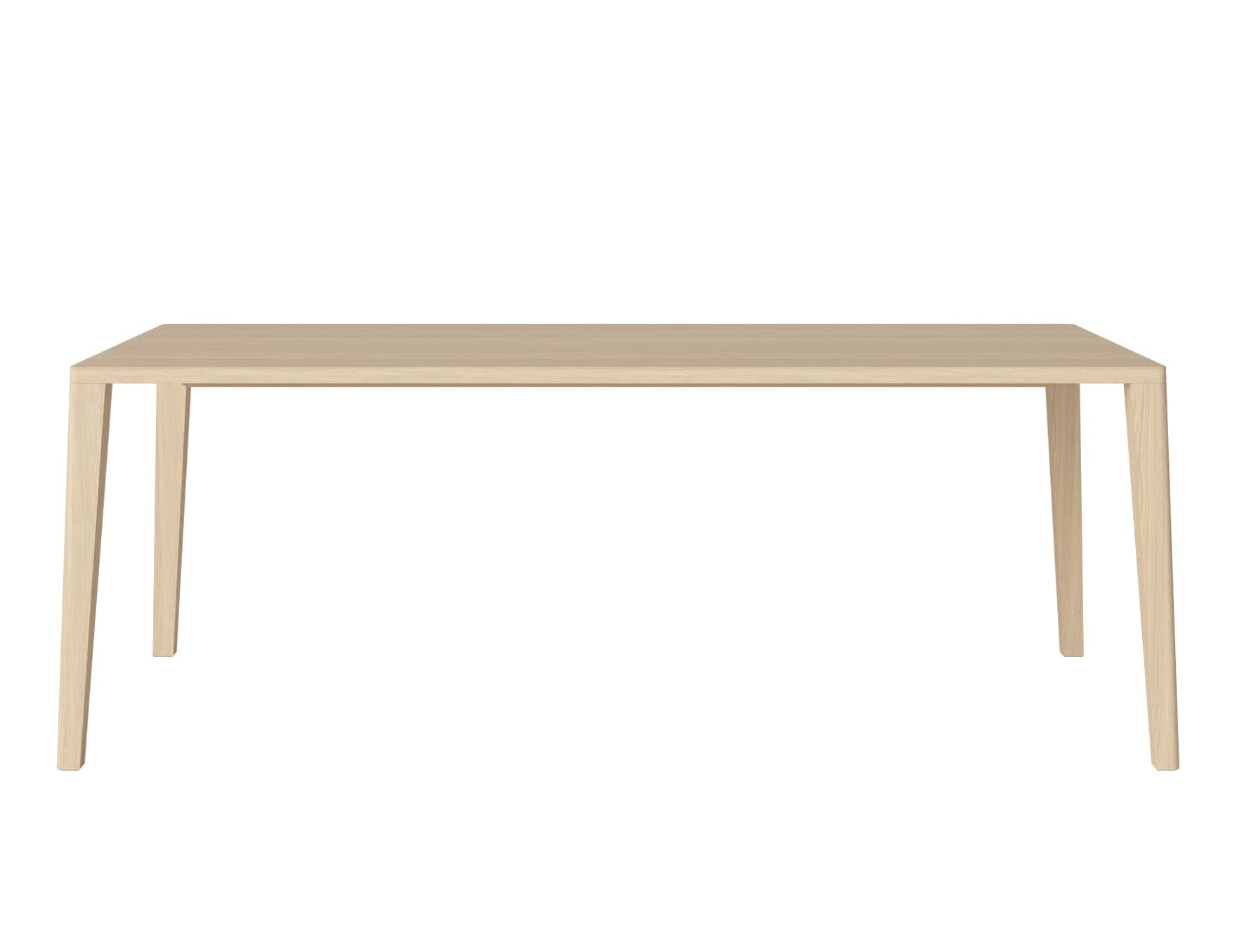
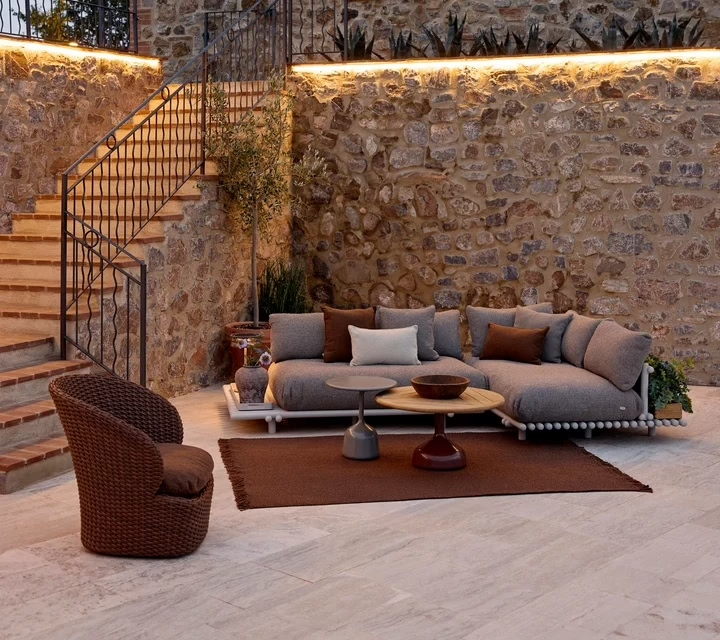
Designed for life outdoors.
Discover contemporary outdoor furniture for dining, lounging and entertaining, with considered pieces designed to bring the same level of comfort and refinement to your garden, terrace or balcony.
Explore outdoor sofas, dining tables, chairs and accessories from Scandinavian and European design houses, selected for enduring materials, thoughtful proportions and timeless design.
-
AYTM Novo Dining Chair
from £339.00 -

AYTM Novo Dining Table
from £599.00 -

AYTM Novo L Coffee Table
from £339.00 -

AYTM Novo Lounge Chair
from £599.00 -
Blomus Grow Outdoor Corner Seat
from£858.00£729.30 -
Blomus Stay Outdoor Bed
from£776.00£659.60 -

Bolia Arke Garden Sofa
from £1,255.00 -

Bolia Calm Pouf
from £1,071.00 -
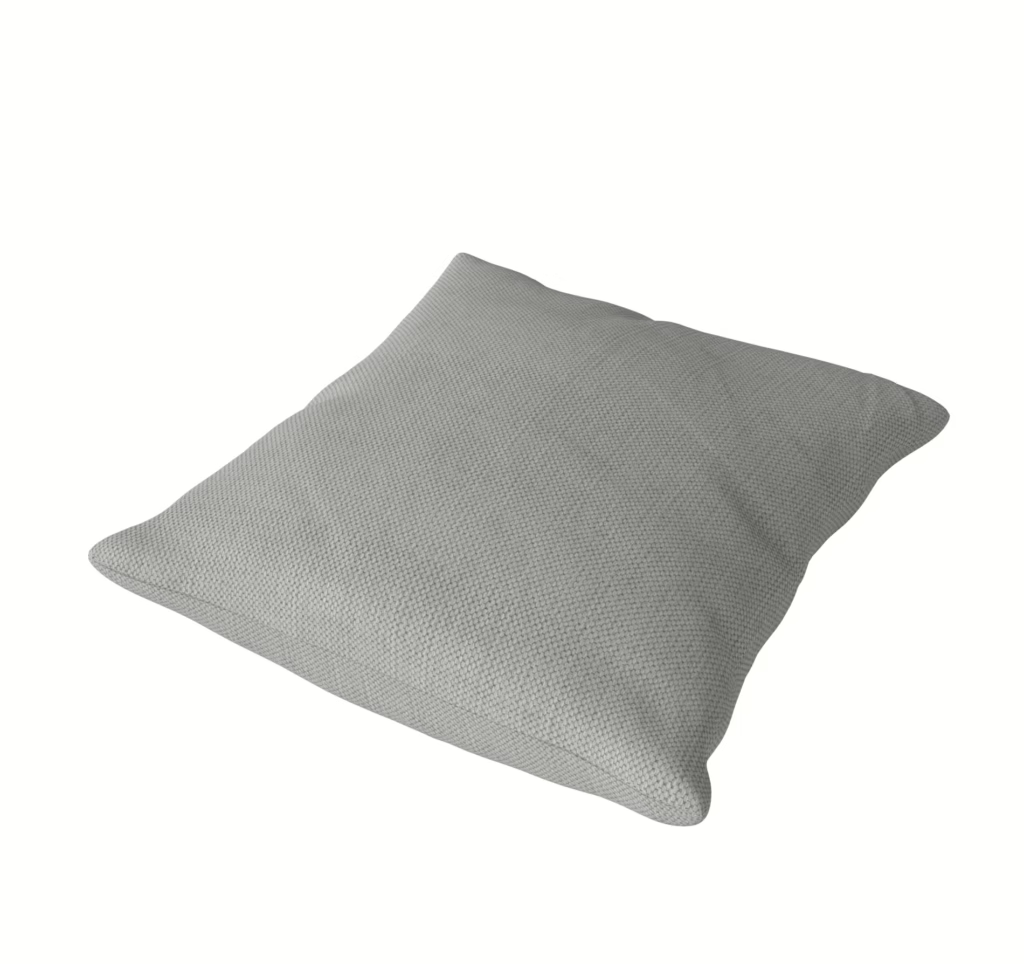
Bolia Classic Outdoor Cushion
from £75.00 -

Bolia Ease Sun Lounger
from £1,399.00 -

Bolia Ease Sun Lounger Cushion
Select optionsfrom £499.00 -

Bolia Ease Sun Lounger Headrest
Select optionsfrom £199.00 -

Bolia Ease Sun Lounger Protective Cover
from £589.00 -

Bolia Eida Garden Coffee Table
from £2,099.00 -

Bolia Forma Flowerpot
from £24.00 -
Bolia Grove Flowerpot
from £57.00 -

Bolia Hour Flowerpot
from £27.00 -

Bolia Kelo Outdoor Rug
from £159.00 -

Bolia Kite Garden Chair
from £439.00 -

Bolia Kite Garden Table
from £599.00 -

Bolia Orlando O2 Garden Sofa
from £2,890.00 -
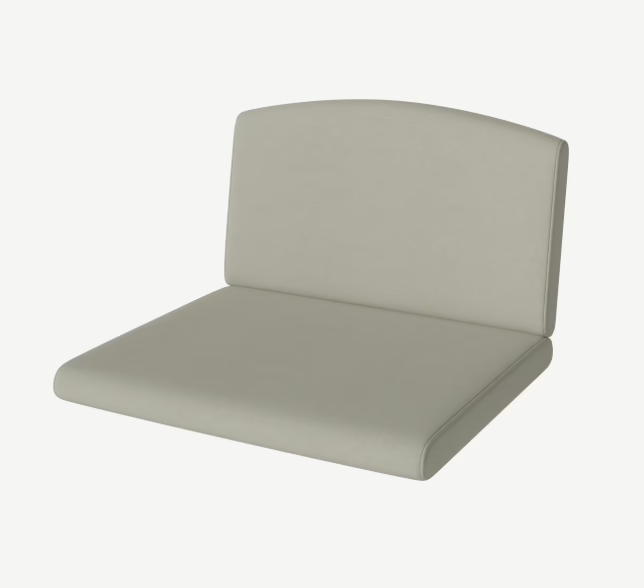
Bolia Patio Cushion
from £139.00 -

Bolia Patio Garden Coffee Table
from £769.00 -

Bolia Patio Garden Dining Chair
from £659.00 -

Bolia Patio Garden Dining Table
from £2,369.00 -

Bolia Patio Garden Round Dining Table
from £2,389.00 -

Bolia Patio Outdoor Sofa
from £1,319.00 -

Bolia Podium Flowerpot
from £169.00 -

Bolia Seed Garden Chair
from £449.00 -
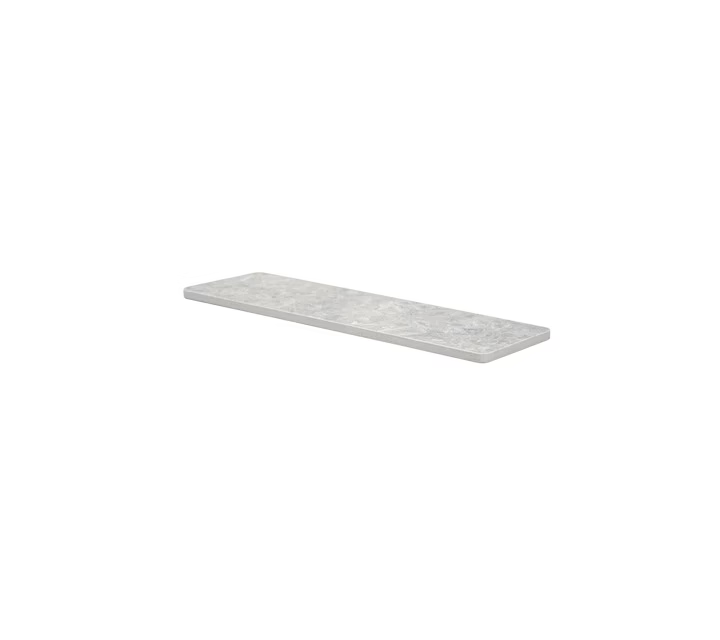
Cane-line 83x23cm Sticks Ceramic Table Top
from £780.00 -
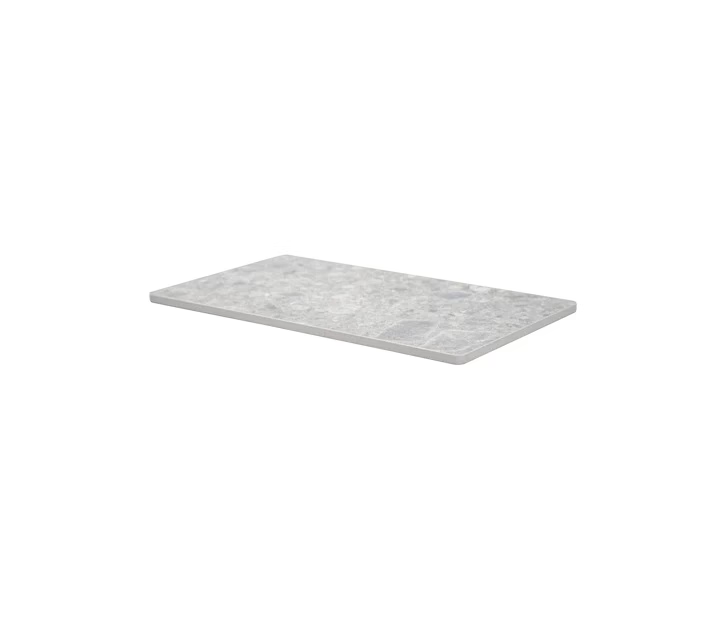
Cane-line 83×47 cm Sticks Ceramic Table Top
from £930.00 -

Cane-line Al Dente Chair
from £300.00 -

Cane-line Al Dente Lounge Chair
from £525.00 -

Cane-line Amaze 2-Seater Sofa
from £2,400.00 -

Cane-line Amaze Lounge Chair
from £1,320.00



Free shipping*
The shipping is on us

Up to 10 year warranty*
We’ll replace it with a new one

Satisfaction guarantee*
Your happiness matters most

Optional white glove delivery
Let us do the heavy lifting

Klarna pay in 3
Buy now, pay over time
Where to find us
No one wants to be a part of the overconsumption issue that has been affecting the planet in passing years, but sometimes second-hand furniture or upcycling just isn’t possible. If this is the case then considering well-made, high-quality furniture from the best ethical furniture brands is the way to go. Making a conscious decision to shop with sustainable brands at RB12 can and will make a difference to the planet and the people within it.
Why is this shift away from fast-furniture and cheap products so important?
We believe the 4 main reasons to ‘buy it now, have it forever’ are…
- Quality reduces waste
At RB12 we only partner with the most sustainable brands we can find. Furniture producers such as Saba Italia, Bolia and Novamobili focus on quality, using materials and finishes that are made to last as well as being kind to the environment. Interior items produced by fast-furniture brands are not made to last – their goal is to get you to buy more, so why would the focus be on making quality long-lasting items? In choosing sustainable brands that provide quality, you can reduce your waste as well save on your overall spend over time.
- Buck the trends
Fast-furniture brands are all about trends, but at RB12 we believe in classics but also that everyone has their own style – you do you! We are here to help guide you and pull your space together, but ultimately your home is your space and is meant to make you happy (and not the latest style guru). A huge number of our interior brands including Bonaldo, Fabula Living and Expormim focus on creating timeless pieces that fit into a wide variety of spaces. You should be able to curate your own space without wasting your money on trends, and choose furniture that reflects you and your family.
- It’s better for the planet
The furniture industry leaves a large environmental impact. From landfill, water consumption and harmful chemicals used in production. By choosing high-end furniture brands you are helping to minimize the negative impact the industry can have, and in turn reducing your own environmental footprint. Brands selected by RB12 use nature’s finest materials, sustainably sourced. Whether it’s wood that is FSC certified, fabrics made of recycled materials, production free from dangerous chemicals or traceable leather which ensures animal welfare – just ask us and we can inform you about our suppliers.
- It’s better for human beings
Fast-furniture keeps the price down, but at what cost? Prices are low because corners are cut, from product quality to production environment factors such as low pay and poor working conditions in developing countries. By switching to ethically made brands such as Armadillo (B Certified), Volver Studio and GAN you are ensuring that the furniture and home accessories you choose to spend your money on isn’t the product of unfair business practices.
At RB12 we can help you discover some of the most sustainable furniture brands. We only partner with luxury brands that fit in with our ethos of quality over quantity. We believe its important to invest in high-quality pieces rather than have to repeatedly buy new “trendy” furniture.
When choosing with ethics and durability in mind, you might explore our Bolia brand overview to see how responsible craftsmanship paired with Scandinavian design creates lasting furniture investments.
If you would like to find out more about RB12 and ethical, luxury furniture brands you can contact us here, pop by the showroom or give us a call on +44 (0) 2071 352 246 – we would love to hear from you.
Winter is fast approaching so we wanted to share with you how best to turn your living space into a cosy, warm retreat. You can do this without sacrificing on style, by selecting modern house items and the right colour palette bringing true comfort to your space.
Interior Colour Trends
Earthy, spicy tones are comforting and add warmth and depth to a room. These shades remind us of the natural world and give off a feeling of calm and ease. In fact, Dulux has chosen ‘Brave Ground’ – a warm, natural neutral that is said to help reconnect us and encourage a sense of community and harmony into the home – as their Colour of the Year 2021. This is a fantastic segway for people to choose autumnal colours such as burnt oranges, saffron yellows plus the more conventional grey-greens and soft browns to bring their spaces down to earth. These hues are hugely adaptable and can work in both a contemporary home or something more traditional. They are a timeless backdrop to a multitude of furniture combinations.
Complementing natural shades
A great way of complementing the kind of colours we’re talking about is to set them against brass, metallic finishes. The new Maison François Brasserie in London is a great example of this. The stunning dark mahogany wood and walnut shades create a cosy private atmosphere and are beautifully contrasted against the brass light fixtures.

The new A/W20 collection from Aromas lighting has some great options for trying to recreate this look, including the elegant Erto pendant light designed by AC Studios. This contemporary lamp has a gorgeous texture to it and is available in three different finishes including metal, matt brass and matt black. The muted light bounces from the inside reflective surface giving a toasted glow to your living space.
For a sleeker choice, another great lighting option from this collection is the Delie wall lamp designed by JF Sevilla. This design incorporates a rounded marble element alongside the option of either matt black or the old gold finish.
Matching timeless tones
Modern sofas are perfect for framing your room and can be showcased against more neutral backdrops, sands and coppers look great mixed with bold sitting room furniture. This can also be used the other way round by choosing the brighter colours as the backdrop and selecting more neutral finishes for your sitting area, giving a similar effect.

When it comes to sofa choices Bolia has a wide variety of options that fit perfectly with this type of scheme. Our first selection is the Lomi sofa designed by Meike Harde. This lounge piece is of typical Scandinavian design (archetypal of Bolia) and has cushions positioned closely to provide exceptional comfort. Plus the set includes a matching pouffe to rest your tired feet on, on these wintery nights.

The Cosy modular sofa by Bolia is a great option for flexibility, as this design is available in several different layout combinations. We particularly like the voluminous cushions that are combined with the narrow frame in the pictured Sea Green finish, and the visible stitching on this design is a lovely touch which really emphasizes the craftsmanship that’s gone into the piece.

Italian sofa manufacturers Saba Italia have also taken inspiration from the burnt orange trend with this setup. The Avant-Après sofa is a rigid yet lightweight seat that looks divine in this setting. It has taken a backseat behind the bold, bright colours but still invites you to fall into its unique detachable arm/backrests offering full flexibility once again.

For something a bit different, consider the Bonaldo Tirella armchair. We love the contrasting combination of the earthy orange and the deep blue pictured here. The back and armrests look like you could almost melt into them, and the hanging cushion design is quite unique.
Underfoot warmth
Adding a rug can make a big difference to the temperature in your room, especially if it’s being put down on a wooden or tiled floor. It is also an easy way to add another layer of comfort and style. Picking the right size, colour and shape rug for your room can be a challenge, although there are options out there for every room.

Armadillo has recently expanded their colour offering in three of their bestselling rugs – Braid, Malawi and Sherpa. They have chosen a calming yet playful palette using natural tones including a blush, a naturalistic kelp and a bright maize yellow. These earthy designs are made from a range of different materials.
- Malawi is made from ribbed wool pile which is framed by soft tassels that oozes barefoot comfort.
- Sherpa is textured weave made from a lush wool blend.
- For a circular option Braid is hand-plaited out of a luxurious wool blend that is coiled into a circular form.
Earthy Accessories

Recently featured on our Instagram ‘New Editions’ story highlight is the arrival of the new Lo de Manuela cushions. We took delivery of a beautiful selection of heavy velvet fabrics in colours that would look quite at home plumped up on any of the sofas selected above. We stock a variety of Lo de Manuela cushions including linen, cotton, velvet and patterned designs.

AYTM also have a wide selection of soft furnishings and accessories to make for a cosier home. The Arcus cushions come in unique shapes of luxurious velvet and are available in either deep black, Amber or Bordeaux red.
Accessories are important in bringing everything together and can truly make a space. When creating a comforting, nature-inspired home, handmade ceramics by Rina Menardi could be just what you’re looking for. Coming in a range of organic shapes and colours, they are a fusion of art, craftsmanship and function. You can check out a selection of her amazing vases, plates and other works at our home furniture store in Shoreditch, or our online homeware store here.
A better way to source European design.
Furniture, lighting and accessories for interior designers, architects and property professionals — with preferential trade pricing and dedicated project support.
You already know the space you want to create.
Our role is to make sourcing it simpler.
RB12 works with interior designers, architects and property professionals across residential, hospitality and commercial projects, providing access to a considered collection of Scandinavian and Italian furniture, lighting and accessories.
From selecting the right product, configuration and finish to checking dimensions, samples and lead times, our team can support the practical details behind your design.
Preferential Trade Pricing
Project and volume-based pricing across our collection.
Specification Support
Help with dimensions, configurations, materials, finishes and product selection.
Samples & Finishes
Support sourcing fabrics, finishes and material samples for client presentations and approvals.
Lead-Time Guidance
Clear information to help you specify around realistic project programmes.
Multi-Brand Sourcing
Bring together products from different European design houses through one point of contact.
Project Delivery Support
Help coordinating your furniture order from specification through to delivery.
From Scandinavian modular seating to Italian dining, lighting, outdoor furniture and configurable collections, we can help build a coordinated specification across multiple brands.
Explore All Brands →Send us your brief
Tell us about the project, quantities, programme and products you’re considering.
Build the specification
We can help refine products, dimensions, configurations, fabrics and finishes.
Review pricing & lead times
Receive project pricing alongside the information needed for client approval.
Place & coordinate the order
Once everything is approved, we help move the specification through ordering and delivery.
Trade should make your working life easier.
Our team can help when you’re comparing sofa configurations, checking dining dimensions, narrowing fabric selections, coordinating several brands or simply need a quick answer before presenting something to your client.
Interior Designers
Residential schemes, individual rooms and complete homes, with support across furniture, lighting and accessories.
Architects
Furniture, lighting and finishing pieces selected to work alongside your wider design specification.
Property Developers
Furniture support for show homes, multi-room schemes, residential developments and investment properties.
Hospitality & Commercial
Design-led furniture for restaurants, hospitality venues and professional spaces.
Furniture for considered residential interiors.
Design-led furniture, lighting and accessories brought together across a complete residential scheme.
Design-led furniture for hospitality spaces.
Furniture selected around comfort, atmosphere, durability and the wider interior concept.
One coordinated specification across the project.
Multiple furniture categories and European brands coordinated across living, dining and additional spaces.
Who can apply for an RB12 trade account?
RB12 trade accounts are intended for qualifying interior designers, architects, property developers and other design and property professionals.
Do you offer trade discounts?
Yes. Approved trade clients can access preferential pricing, with project and volume pricing available depending on the brand, product and quantities required.
Can you help with product specification?
Yes. Our team can help with dimensions, configurations, upholstery, finishes, product selection and other details needed to build a complete specification.
Can I request samples?
Yes. Depending on the brand and product, we can assist with fabric, finish and material samples for presentations, client approvals and specification.
Can you provide lead-time information before I specify a product?
Yes. We can provide current lead-time guidance before you finalise a specification, helping you assess whether a product works within your project programme.
Can RB12 source several brands for the same project?
Yes. RB12 works across a broad portfolio of European furniture, lighting and accessory brands, allowing us to help coordinate multiple product categories through one point of contact.
Do you work on larger residential and commercial projects?
Yes. We can support residential, hospitality and commercial projects with larger quantities and multi-room furniture requirements.
Can I send RB12 my furniture schedule?
Absolutely. If you already have a furniture schedule, specification, product shortlist or early-stage brief, send it to our team and we can review where RB12 can support it.
Become an RB12 Trade Partner
Whether you’re sourcing one statement piece or developing a complete furniture specification, we’d be pleased to learn more about your practice and how we can support your projects.
Apply for an RB12 trade account to access preferential pricing, specification support, samples and assistance across our portfolio of European furniture, lighting and accessory brands.
Complete the application and our team will review your details.
Send us your brief.
If you’re already working on a project, furniture schedule or product specification, speak directly with our team about your requirements.
Discuss A Project →Contents
- How long should furniture last?
- How do I know if my furniture needs to be replaced?
- How do I ensure my furniture lasts?
- Why is slow buying high-end furniture more sustainable?
- Luxury furniture at RB12
Your furniture is the heart of your home, so you want to ensure that it will last. Luxury furniture is a sustainable investment that guarantees that you will have the best quality furnishings for many years to come.

How long should furniture last?
One thing is certain: high-end furniture lasts longer than cheap, mass-produced furniture.
But how long should you expect your furniture to last, and when is it time to make a change? There are many answers to these questions because it depends on the type of furniture you own.
How do I know if my furniture needs to be replaced?
Unlike food, furniture doesn’t have an expiration date when you buy it. Its upkeep and longevity are determined by how well it’s maintained over the years.
Let’s explore how long your core pieces of furniture should last and what you can do to keep them in top condition.
Sofas
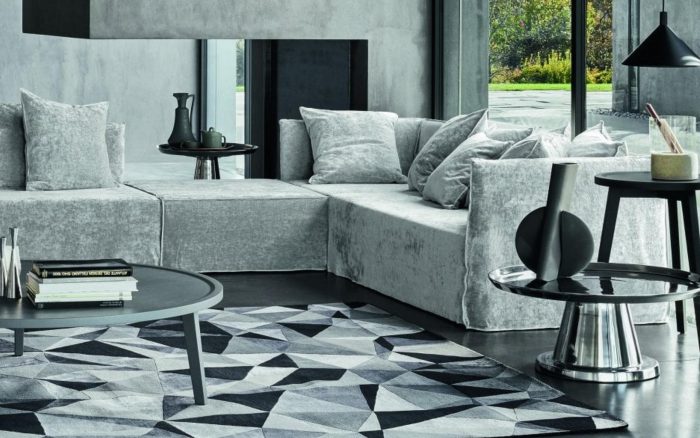
Sofas are the backbone of every living room. We’ve all been to someone’s house when their old sofa has that tell-tale dip in the cushion. This essential piece of furniture needs to be hardy enough to withstand binge-watching every series possible, wine nights with the neighbours, and the kids’ sleepovers. Ideally, you should renew your sofa every 7 to 15 years. However, reupholstering and handling this core piece of furniture with care can make your sofa last much longer. Many of our sofas by the likes of Saba, RB12, SITS, Bonaldo and Gervasoni require no re-upholstery thanks to their removable covers. Simply change the covers or have them washed or dry cleaned.
Dining tables

Every home needs a well-made dining room table. It’s the heart of every big festive dinner and also where you have a tea break during that work-from-home shift. A dining table can last anywhere between 5 and 20 years, as long as it is well cared for. Dining room tables are often finished to resist damage. However, to ensure your table lasts, we highly recommend using placemats, coasters, and tablecloths to protect against potential heat damage from plates or scratches. Recently, ceramic and marble tabletops have also become en vogue as they are durable enough to last for even decades, as well as many models being heat and scratch-resistant.

Chairs

Wooden chairs can last for a long time. In general, wooden furniture will remain in good condition for at least 10 to 15 years. We only recommend replacing chairs if the legs are wobbly beyond repair. In terms of upkeep and maintenance, ensure that people don’t lean back on your chairs, as this is a common reason they can be worn down!
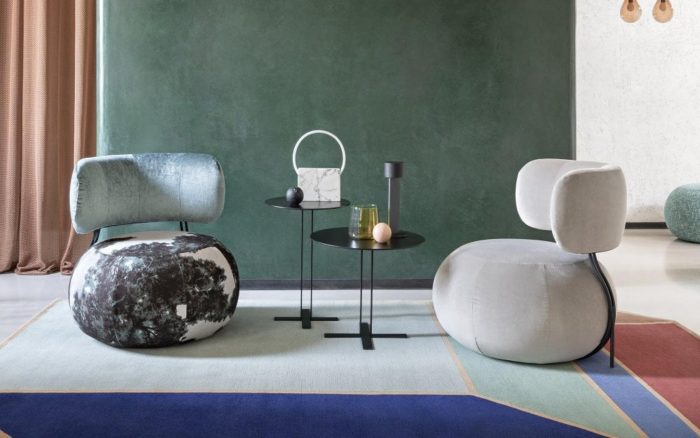
If your dining chairs contain upholstery, it’s worth consulting an upholsterer to see if they can be repaired. How do you know if upholstery needs a bit of a makeover? Check for any holes, frayed fabric, or stains on the material. Unless your goal is to have a full matching dining set and you need more chairs to entertain guests, you don’t need to replace chairs very often.
Carpets and rugs
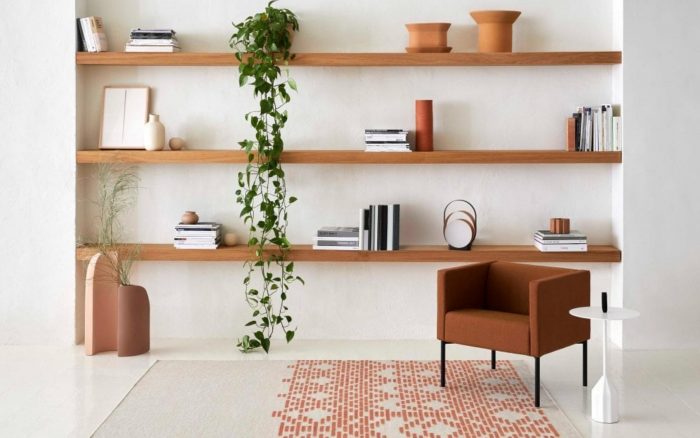
Standard carpets in mainstream stores last as little as 1 to 5 years. High-end carpets, usually artisan-made, with the most durable materials, last much longer than their cheaper counterparts. Not only do luxury rugs make a statement in your home, but they last 15 to 25 years or even longer.
Beds

Getting a good night’s sleep is crucial to our physical and mental health. So, you need a comfortable bed and base that will keep you well-rested for years to come. Bed frames made from wood should last up to 10 years, while metal bedframes last 5 years more. Similarly, a good quality mattress lasts 10 years, but as we age, it’s recommended that you replace it every 7 years.

How do I ensure my furniture lasts?

Luxury furniture is made to last but it will eventually come to an end like all good things. So, how do you make la creme de la creme of high-end furniture last as long as possible?
There are many simple daily hacks and tips to ensure your furniture looks as good as new over the years.
Consider the type of material and piece of furniture you want to maintain and the upkeep necessary. Make sure to follow your brand or supplier’s care instructions on upkeep and maintenance. If in doubt or unclear, you can contact us at RB12 as we’re always available to answer your questions and assist you in helping your furnishings last.
For example, a sofa is a core piece of furniture that requires care. Invest in stain removers that correspond with your sofa’s material. Sofa covers are a lifesaver if the material is too sensitive or has stubborn stains. Spruce up your sofa by changing its covers and throw cushions if you want to change your decor but not your furniture.
At the end of its lifecycle, can your furniture be upcycled or recycled? If it’s fixable, you could upgrade your piece by fixing up the upholstery. Or, if you need to invest in new pieces, consider donating old furniture elsewhere for a second life where it can be fixed and reused. Many luxury furniture brands even create high-end furnishings from recycled and recyclable materials for a more sustainable step forward.

Why is slow buying high-end furniture more sustainable?
With the rise of slow living, everyone is more conscious of sustainability regarding furniture.
Luxury furniture is often handmade, where possible, and uses materials that originate from the local communities. High-end furniture designs choose sustainably sourced wood that’s FSC certified and OEKO-tech certified materials created without the use of harmful chemicals.
Not only is handmade furniture more environmentally friendly, but each piece of furniture is also unique. No piece will be identical. When a company creates high-end furniture with a machine, it usually uses the latest technology for more sustainable, precise, and practical manufacturing processes. For example, if a design features intricate detailing that requires exact precision, a 3D printer is essential to make each piece completely identical.
Buying sustainably-made luxury furniture is a step in the right direction to reducing our carbon footprint because it lasts longer.
Luxury furniture at RB12
We collaborate with the best design houses to bring you furniture that reflects you and makes your house a home. From handmade rugs and sofas by Gan to modular furniture by Cinquant by Cinquanta3 and Novamobili, you’ll find everything you need here. Discover the most luxurious high-end furniture and invest in sustainable furnishings available at RB12 online.
A Scandinavian Oval Mirror with a Slim Steel Frame
The AYTM Angui Oval Mirror combines a tall oval silhouette with a simple steel frame, creating a wall mirror that feels decorative without becoming overly ornate.
Part of the wider AYTM collection at RB12, Angui reflects the Danish brand’s more expressive interpretation of Scandinavian design, using colour, shape and material to give everyday interior objects a stronger visual identity.
The elongated oval form is particularly useful where you want to soften the straight architectural lines created by doors, furniture and wall edges while still retaining a clean contemporary look.
The Angui Pipe-Style Frame
AYTM describes Angui through its distinctive pipe-style frame. The narrow steel outline follows the oval edge of the mirror, giving the reflective surface definition without surrounding it with a heavy or decorative border.
That simplicity helps Angui work in several types of interior, from Scandinavian bedrooms and dressing spaces to hallways where a mirror needs to add both function and shape without occupying significant visual depth.
Glass Mirror with a Steel Frame
The material specification is deliberately straightforward:
- Mirror: 100% glass
- Frame: 100% steel
The slim steel surround is an important part of the Angui character. Rather than disguising the mirror within a broad timber or upholstered frame, AYTM uses the metal outline to emphasise the oval geometry itself.
Two Angui Oval Mirror Sizes
RB12 offers the Angui Oval Mirror in two sizes, allowing the scale of the mirror to be matched more closely to the wall and furniture around it.
- Small: W29 × D2 × H78 cm
- Large: W39 × D2 × H108 cm
The 78 cm version is particularly easy to place above a smaller console, chest or dressing area. The 108 cm mirror creates greater vertical presence and reflects more of the surrounding room while retaining the same narrow 2 cm profile.
Taupe, Anthracite, Rose, Silver or Gold
RB12 currently offers the Angui Oval Mirror in five colours:
- Taupe
- Anthracite
- Rose
- Silver
- Gold
Taupe and Anthracite provide the most restrained options and integrate naturally with neutral interiors. Gold introduces a warmer metallic accent, while Rose gives the mirror a more expressive decorative character.
Use the product options above to confirm the exact colour and size combinations currently available from RB12.
An Oval Mirror for Hallways
AYTM specifically positions Angui for spaces such as hallways and bedrooms. In an entrance or hallway, the elongated mirror adds a useful reflective surface without requiring the width of a large round mirror.
The oval shape also pairs naturally with straighter furniture such as console tables and cabinets, helping soften the more angular geometry usually found within an entrance space.
A Bedroom and Dressing-Area Mirror
In a bedroom, Angui can be used above a chest of drawers, dressing surface or other lower furniture where a full-length mirror is not required.
The larger 108 cm version creates a stronger vertical feature, while the smaller mirror is useful where wall space is tighter or where the mirror needs to sit comfortably between lighting, storage or artwork.
Use One Mirror or Create a Group
AYTM suggests using the Angui mirror individually or combining several mirrors together. Repeating the same oval form can turn a practical wall mirror into a more decorative installation.
For a calmer effect, use matching sizes and colours. For something more expressive, the two available sizes and different frame colours provide greater freedom to build a composition across a wider wall.
Complete the AYTM Angui Mirror Collection
Angui is a wider mirror family rather than one isolated design. RB12 carries several formats that use the same distinctive steel-frame language.
For a full-length freestanding option, the AYTM Angui Floor Mirror stands 180 cm high and combines its steel frame with a marble base and small integrated shelf.
The AYTM Angui Wardrobe Mirror provides another larger-scale interpretation, adding a discreet clothes rail behind the mirror for bedrooms and dressing areas.
RB12 also carries the Angui Table Mirror for dressing tables and smaller surfaces, allowing the same collection to move from wall mirror to full-length and tabletop formats.
Angui Oval or AYTM Circum?
For a simpler geometric alternative, compare Angui with the AYTM Circum Mirror.
Circum uses a circular form and is available in diameters extending up to 110 cm, making it especially effective above consoles and sideboards where a broad round mirror better suits the proportions of the furniture below.
Choose Angui when you want a narrower vertical shape and a more elongated reflection. Choose Circum when a round mirror and wider wall presence are the priority.
Angui Oval or AYTM Arcus?
For a more architectural mirror shape, the AYTM Arcus Mirror takes its inspiration from historic architectural arches.
Arcus is considerably more substantial, with sizes up to approximately 45 × 140 cm, and can create a stronger wall feature. Angui remains the more delicate option, with its slim steel surround and softer oval outline.
Choose Angui for a lighter Scandinavian expression; choose Arcus when you want the mirror itself to become a stronger architectural statement.
Explore AYTM Mirrors at RB12
AYTM offers one of the broadest Scandinavian mirror selections at RB12, spanning oval, round, arched, tabletop, wardrobe and freestanding designs.
The Angui family provides the strongest collection continuity, while Circum and Arcus offer alternative geometric approaches for different wall proportions and interior styles.
Explore Designer Mirrors at RB12
Browse RB12’s wider collection of designer mirrors to compare Angui with round, rectangular, full-length, timber-framed and sculptural mirrors from AYTM, Bolia, Bonaldo, Cattelan Italia and other contemporary design brands.
Features
- Designed by AYTM
- Part of the wider AYTM Angui collection
- Elongated oval wall mirror
- Mirror: 100% glass
- Frame: 100% steel
- Slim pipe-style steel frame
- Available in two sizes
- Small: W29 × D2 × H78 cm
- Large: W39 × D2 × H108 cm
- RB12 colours: Taupe, Anthracite, Rose, Silver and Gold
- Suitable for hallways, bedrooms and dressing spaces
- Can be used individually or grouped with multiple Angui mirrors
Highlights
- Oval silhouette softens straight architectural lines and rectangular furniture
- Two sizes allow Angui to work on both compact and larger wall sections
- Five frame colours range from understated neutrals to warmer decorative finishes
- Slim 2 cm profile keeps the mirror visually light
- Coordinates directly with Angui floor, wardrobe and tabletop mirrors
- Can be grouped to create a larger decorative mirror composition
A Scandinavian Oval Mirror with a Slim Steel Frame
The AYTM Angui Oval Mirror combines a tall oval silhouette with a simple steel frame, creating a wall mirror that feels decorative without becoming overly ornate.
Part of the wider AYTM collection at RB12, Angui reflects the Danish brand’s more expressive interpretation of Scandinavian design, using colour, shape and material to give everyday interior objects a stronger visual identity.
The elongated oval form is particularly useful where you want to soften the straight architectural lines created by doors, furniture and wall edges while still retaining a clean contemporary look.
The Angui Pipe-Style Frame
AYTM describes Angui through its distinctive pipe-style frame. The narrow steel outline follows the oval edge of the mirror, giving the reflective surface definition without surrounding it with a heavy or decorative border.
That simplicity helps Angui work in several types of interior, from Scandinavian bedrooms and dressing spaces to hallways where a mirror needs to add both function and shape without occupying significant visual depth.
Glass Mirror with a Steel Frame
The material specification is deliberately straightforward:
- Mirror: 100% glass
- Frame: 100% steel
The slim steel surround is an important part of the Angui character. Rather than disguising the mirror within a broad timber or upholstered frame, AYTM uses the metal outline to emphasise the oval geometry itself.
Two Angui Oval Mirror Sizes
RB12 offers the Angui Oval Mirror in two sizes, allowing the scale of the mirror to be matched more closely to the wall and furniture around it.
- Small: W29 × D2 × H78 cm
- Large: W39 × D2 × H108 cm
The 78 cm version is particularly easy to place above a smaller console, chest or dressing area. The 108 cm mirror creates greater vertical presence and reflects more of the surrounding room while retaining the same narrow 2 cm profile.
Taupe, Anthracite, Rose, Silver or Gold
RB12 currently offers the Angui Oval Mirror in five colours:
- Taupe
- Anthracite
- Rose
- Silver
- Gold
Taupe and Anthracite provide the most restrained options and integrate naturally with neutral interiors. Gold introduces a warmer metallic accent, while Rose gives the mirror a more expressive decorative character.
Use the product options above to confirm the exact colour and size combinations currently available from RB12.
An Oval Mirror for Hallways
AYTM specifically positions Angui for spaces such as hallways and bedrooms. In an entrance or hallway, the elongated mirror adds a useful reflective surface without requiring the width of a large round mirror.
The oval shape also pairs naturally with straighter furniture such as console tables and cabinets, helping soften the more angular geometry usually found within an entrance space.
A Bedroom and Dressing-Area Mirror
In a bedroom, Angui can be used above a chest of drawers, dressing surface or other lower furniture where a full-length mirror is not required.
The larger 108 cm version creates a stronger vertical feature, while the smaller mirror is useful where wall space is tighter or where the mirror needs to sit comfortably between lighting, storage or artwork.
Use One Mirror or Create a Group
AYTM suggests using the Angui mirror individually or combining several mirrors together. Repeating the same oval form can turn a practical wall mirror into a more decorative installation.
For a calmer effect, use matching sizes and colours. For something more expressive, the two available sizes and different frame colours provide greater freedom to build a composition across a wider wall.
Complete the AYTM Angui Mirror Collection
Angui is a wider mirror family rather than one isolated design. RB12 carries several formats that use the same distinctive steel-frame language.
For a full-length freestanding option, the AYTM Angui Floor Mirror stands 180 cm high and combines its steel frame with a marble base and small integrated shelf.
The AYTM Angui Wardrobe Mirror provides another larger-scale interpretation, adding a discreet clothes rail behind the mirror for bedrooms and dressing areas.
RB12 also carries the Angui Table Mirror for dressing tables and smaller surfaces, allowing the same collection to move from wall mirror to full-length and tabletop formats.
Angui Oval or AYTM Circum?
For a simpler geometric alternative, compare Angui with the AYTM Circum Mirror.
Circum uses a circular form and is available in diameters extending up to 110 cm, making it especially effective above consoles and sideboards where a broad round mirror better suits the proportions of the furniture below.
Choose Angui when you want a narrower vertical shape and a more elongated reflection. Choose Circum when a round mirror and wider wall presence are the priority.
Angui Oval or AYTM Arcus?
For a more architectural mirror shape, the AYTM Arcus Mirror takes its inspiration from historic architectural arches.
Arcus is considerably more substantial, with sizes up to approximately 45 × 140 cm, and can create a stronger wall feature. Angui remains the more delicate option, with its slim steel surround and softer oval outline.
Choose Angui for a lighter Scandinavian expression; choose Arcus when you want the mirror itself to become a stronger architectural statement.
Explore AYTM Mirrors at RB12
AYTM offers one of the broadest Scandinavian mirror selections at RB12, spanning oval, round, arched, tabletop, wardrobe and freestanding designs.
The Angui family provides the strongest collection continuity, while Circum and Arcus offer alternative geometric approaches for different wall proportions and interior styles.
Explore Designer Mirrors at RB12
Browse RB12’s wider collection of designer mirrors to compare Angui with round, rectangular, full-length, timber-framed and sculptural mirrors from AYTM, Bolia, Bonaldo, Cattelan Italia and other contemporary design brands.
Features
- Designed by AYTM
- Part of the wider AYTM Angui collection
- Elongated oval wall mirror
- Mirror: 100% glass
- Frame: 100% steel
- Slim pipe-style steel frame
- Available in two sizes
- Small: W29 × D2 × H78 cm
- Large: W39 × D2 × H108 cm
- RB12 colours: Taupe, Anthracite, Rose, Silver and Gold
- Suitable for hallways, bedrooms and dressing spaces
- Can be used individually or grouped with multiple Angui mirrors
Highlights
- Oval silhouette softens straight architectural lines and rectangular furniture
- Two sizes allow Angui to work on both compact and larger wall sections
- Five frame colours range from understated neutrals to warmer decorative finishes
- Slim 2 cm profile keeps the mirror visually light
- Coordinates directly with Angui floor, wardrobe and tabletop mirrors
- Can be grouped to create a larger decorative mirror composition

When London homeowners start shopping for premium furniture, the choice often narrows to two design traditions that have dominated European interiors for decades: Scandinavian and Italian. Both are associated with quality, longevity, and considered craftsmanship. Both attract buyers who care about how a room feels, not just how it looks. But they are built on fundamentally different ideas about what a home should be, and choosing between them, or knowing when to combine them, is one of the most consequential decisions you can make when furnishing a space.
This guide breaks down the two traditions honestly: their philosophies, their strengths, their limitations, and the types of homes and buyers each suits best. If you are currently searching for Scandinavian furniture in London or exploring Italian alternatives, the comparison below should help you move from browsing to deciding.
The market context: The UK furniture market is currently valued at USD 22.8 billion and is projected to reach USD 32.4 billion by 2034, according to OpenPR market data. London leads on per-household spend, and the shift towards premium, design-led pieces is accelerating. Buyers are increasingly prioritising craftsmanship and longevity over volume and price.
The Scandinavian Design Philosophy
Scandinavian furniture is rooted in a concept the Nordic countries call Lagom, a Swedish word meaning “just the right amount.” It is a design philosophy that resists excess in all directions: not too ornate, not too sparse, not too loud, not too cold. The result is furniture that is immediately liveable.
The tradition emerged in the early twentieth century as a democratic response to the idea that good design should be available to everyone, not just the wealthy. That heritage still shapes the work of contemporary Scandinavian brands today, even at the premium end of the market.
What defines Scandinavian furniture in practice
Materials: Solid oak, walnut, and sustainably sourced woods are the foundation. Natural textiles, wool, and linen feature heavily in upholstery.
Colour: In 2025-26, Scandinavian design has moved away from the stark whites associated with the 2010s. Earthy tones, clay, sand, warm terracotta, and olive green now dominate, according to Vogue Scandinavia.
Form: Rounded edges and organic silhouettes have replaced rigid lines. The aesthetic is softer and more inviting than the minimalism of a decade ago.
Sustainability: Transparent sourcing and eco-certified materials are increasingly central, not peripheral, to the brand story of leading Scandinavian makers.
Function: Multifunctional and modular designs are a consistent priority, particularly relevant in London’s compact living spaces.
Who Scandinavian furniture suits
Scandinavian furniture performs best in homes where the brief is calm, cohesive, and long-lasting. It suits buyers who want a room that feels considered without demanding attention, spaces that work as hard as they look good. It is particularly well matched to open-plan London interiors where visual noise becomes a real problem.
Brands such as Bolia, 101 Copenhagen, Northern, Warm Nordic, Muubs, and Design House Stockholm represent the current Scandinavian offer at RB.Twelve. Each brings a distinct personality within the broader Nordic tradition: 101 Copenhagen leans towards sculptural, gallery-like pieces; Northern balances Scandinavian restraint with rich material choices; Warm Nordic draws on mid-century heritage without pastiche.
Bolia is the one we sell most of in this category – the Bolia sofa range covers fourteen models, roughly £1,300 to £12,000 depending on size, fabric and module count.
The Italian Design Philosophy
Italian furniture design operates from an entirely different set of values. Where Scandinavian design asks “what is necessary?”, Italian design asks “what is possible?” The tradition is rooted in the bella figura, a cultural commitment to beautiful appearances and the pleasure of craftsmanship for its own sake. Italian makers have historically treated furniture as an art form first and a functional object second.
This philosophy produced some of the most celebrated design houses in the world, and it continues to define how the best Italian brands approach material, form, and finish today.
What defines Italian furniture in practice
Materials: Italian makers work across a wider material palette: polished marble, lacquered wood, hand-stitched leather, cast metal, and bespoke glass. The finish is often as important as the structure.
Colour: Italian design embraces both restraint and drama. The 2025 Salone del Mobile in Milan highlighted a convergence with Scandinavian trends around earthy palettes, but Italian pieces typically carry more tonal depth and contrast.
Form: Sculptural and expressive. Italian furniture often functions as a focal point in a room rather than a background element.
Craftsmanship: The Made in Italy designation carries genuine weight. Many Italian brands still produce in family-owned workshops in regions like Brianza, where furniture-making traditions stretch back generations.
Customisation: Italian makers tend to offer broader finish, fabric, and configuration options than their Scandinavian counterparts.
Who Italian furniture suits
Italian furniture is the right choice when the home has a strong architectural identity and the buyer wants the furniture to hold its own within it. It rewards rooms with generous proportions, good light, and a clear focal point. It also suits buyers who see furniture as a long-term investment in a specific aesthetic vision, rather than a flexible foundation that can evolve.
RB.Twelve carries a curated selection of Italian brands including Cattelan Italia, Saba Italia, Bonaldo, Miniforms, Gervasoni, and Novamobili. These are not the mass-market Italian names found across London’s showroom district. They represent a more considered tier: brands with genuine design pedigree and the production standards to match.
Scandinavian vs Italian Furniture: A Direct Comparison
The table below maps the two traditions across the dimensions that matter most to a London buyer making a considered purchase.
|
Scandinavian |
Italian | |
|---|---|---|
|
Design philosophy |
Restraint, function, longevity |
Expression, craft, visual impact |
|
Typical materials |
Oak, walnut, wool, linen |
Marble, leather, lacquer, metal |
|
Colour palette |
Warm neutrals, earthy tones, muted hues |
Full spectrum, with depth and contrast |
|
Room role |
Background anchor, cohesive foundation |
Statement piece, focal point |
|
Customisation |
Moderate |
Extensive |
|
Sustainability focus |
Very high; often central to brand identity |
Variable; improving, but less consistent |
|
Best room type |
Open-plan, compact, light-filled |
Larger rooms with strong architecture |
|
Investment profile |
Long-lasting; ages gracefully |
Long-lasting; strong resale and heritage value |
The convergence happening right now
One trend worth noting for London buyers: the two traditions are drawing closer together in 2025-26. Both are moving towards warmer, more tactile interiors. Italian design is softening its harder edges; Scandinavian design is adding more material richness and sculptural confidence. The sharpest distinction is no longer aesthetic but philosophical: Scandinavian design still starts with function, Italian design still starts with form.
“Gone is sterile minimalism; 2025 blends clean lines with characterful pieces, creating spaces that feel lived-in.” — Interior Designer, Vogue Scandinavia
This convergence has a practical implication for buyers: the two traditions mix better than they ever have. A Scandinavian dining table with Italian lighting above it, or a Saba Italia sofa anchoring a room full of Nordic accessories, is not a contradiction. It is increasingly the signature of a well-curated home.
How to Choose: Five Questions Worth Asking
Rather than prescribing a single answer, the most useful thing a buyer can do is work through a short set of questions about their home, their priorities, and their timeline.
If you need a piece to anchor a space without dominating it, Scandinavian design is the stronger choice. If you want a piece to define the room’s identity, Italian design typically delivers that more confidently.
If you need a piece to anchor a space without dominating it, Scandinavian design is the stronger choice. If you want a piece to define the room’s identity, Italian design typically delivers that more confidently.
If eco-certified materials and transparent supply chains matter to you, Scandinavian brands are currently ahead. The demand for eco-friendly furniture is growing at a CAGR of 10.7% from 2026 to 2033, according to Grand View Research, and Scandinavian makers have been ahead of this curve for years.
Italian brands typically offer more extensive configuration options across fabric, finish, and dimension. If you are working to a precise specification, Italian makers often give you more to work with.
Scandinavian furniture is generally easier to integrate into an existing interior because it is designed to coexist rather than command. Italian statement pieces work best when the rest of the room is built around them.
Key insight: Most design-conscious London homeowners end up with a mix. The question is not which tradition to commit to entirely, but which tradition to lead with in each room.
Why the Showroom Experience Matters
One thing the research consistently confirms: buyers of premium furniture strongly prefer to see, touch, and sit in pieces before committing. This is not simply a preference for the in-store experience. It reflects something specific about how furniture decisions are made at this level.
Tactile comfort, material weight, finish quality, and the way a piece sits in relation to other objects in a room are all things that photographs, however good, cannot accurately convey. A sofa that looks perfect online can feel entirely wrong in a room. A dining chair that appears heavy in images can turn out to be elegantly light in person.
The multi-brand showroom advantage
Most London furniture showrooms are single-brand. They offer depth within one design house but no ability to compare traditions, mix aesthetics, or test how a Scandinavian piece sits alongside an Italian one. For buyers who already know exactly what they want, that works. For buyers who are still working out their brief, it creates a significant gap.
A curated multi-brand showroom closes that gap. The ability to compare a Northern armchair against a Saba Italia sofa in the same visit, to test how Cattelan Italia marble reads against a Muubs ceramic accessory, is genuinely useful. It compresses what would otherwise be weeks of individual showroom visits into a single, more productive session.
What to look for in a London furniture showroom:
A genuine mix of Scandinavian and Italian brands, not a token selection from each
Staff who understand design heritage and can explain the differences between makers
The ability to see pieces in context, not just on a plinth
Access to customisation options and lead times for made-to-order pieces
White-glove delivery and installation, particularly for larger or more complex pieces
RB.Twelve’s London showroom carries over 50 European brands across both traditions, with pieces available to view in a curated setting. You can explore the full collection online or visit in person to see how the Scandinavian and Italian furniture ranges work alongside each other.
Visit RB.Twelve in London
RB.Twelve is at 230 Vauxhall Bridge Road, London, SW1V 1AU, open Monday to Friday 10am to 6pm and Saturday 11am to 5pm. No appointment is needed to browse; design consultations can be booked for more in-depth guidance.
The showroom brings together more than 50 European brands across both traditions. You can sit in pieces, compare finishes side by side, and view fabric swatches under natural light. For buyers outside London, the full collection is available at rbtwelve.com with free standard delivery to UK mainland addresses. White-glove delivery, including room placement and assembly, is available as an upgrade.
Whether you are drawn to the quiet confidence of Scandinavian design, the expressive craftsmanship of Italian furniture, or a considered mix of both, the RB.Twelve showroom is the most efficient place in London to make that decision well.
Ready to see it in person? Visit the showroom or explore the full collection at rbtwelve.com.
Choosing a sofa is rarely just about finding one you like the look of.
A sofa has to work with the proportions of your room. It has to support the way you live. It has to feel right when you sit down at the end of the day, but still look considered when the room is quiet. It needs to balance comfort, scale, fabric, colour, shape and longevity.
This is where Bolia sofas are particularly strong.
Bolia is known for contemporary Scandinavian design, but its sofas are not just minimal pieces made to look good in a styled photograph. The range includes modular sofas, compact sofas, deep lounging designs, elegant structured models, sofa beds and daybeds, giving you the flexibility to choose something that fits both your home and your everyday routine.
At RB12, Bolia is one of the key brands we recommend for clients who want a sofa that feels modern, comfortable and beautifully made, without becoming too trend-led.
This guide looks at how Bolia sofas work, which styles suit different spaces, and how to compare the key models before choosing the right one for your home.
Prefer to browse the wider range first? Explore the full Bolia furniture collection – sofas, dining, storage, lighting, rugs and outdoor.
Ready to shop
Shop Bolia sofas at RB12
Fourteen Bolia sofa ranges, made to order in your choice of fabric and configuration, with free UK delivery on full-price orders.
Why Bolia Sofas Work So Well in Modern Homes
Bolia sofas sit between the two extremes of the designer market: softer than the very architectural Italian sofas, more design-led than the high-street equivalents.
That matters in UK homes, where the sofa often has more than one job – anchoring an open-plan kitchen and living area, holding a family zone together, or working in a snug, guest room or media room.
The range covers both ends. Cosima, Noora and Veneda are deep and soft. Avelou and Angle are more structured. Cosima, Noora, Caisa, Angle, Avelou and Núvol are built from modules; Veneda, Lomi, Scandinavia Remix, Elton and Chleo come in set sizes.
The Main Things to Consider Before Choosing a Bolia Sofa
1. How do you actually use the room?
If the room is mainly for conversation and occasional sitting, a more structured, visually lighter sofa works. If it is where you watch films, read, work and nap, seat depth matters more than silhouette. Start with what the sofa has to support, not which one photographs best.
2. How much space do you have?
Scale is where most sofa purchases go wrong. Mark the footprint on the floor with tape before you order, and keep roughly 80cm of walking space in front of it. In compact homes the sofa needs to feel generous without blocking circulation; in large open-plan rooms it needs enough length to define the seating area.
3. Do you need flexibility?
Modules suit awkward layouts, rooms that will change, and anyone who wants a corner or chaise on a specific side. A fixed-size sofa is simpler to order and usually cheaper when the layout is already settled.
4. Do you prefer upright comfort or relaxed lounging?
Some Bolia sofas are made for sitting, others for sinking into. Avelou and Angle hold their shape and are easier to get out of. Cosima, Noora and Veneda are deeper and softer, which suits long evenings and family use.
5. What kind of visual weight does the room need?
A low, deep modular run makes a room read relaxed. A neater sofa on visible legs leaves more floor showing and makes a small room feel larger. Decide whether the sofa should disappear into the scheme or define it.
Best Bolia Sofas by Room Type and Lifestyle
Best Bolia Sofas for Relaxed Open-Plan Living
This is where modular Bolia sofas are especially useful. They can help separate the living area from the kitchen or dining area, create a relaxed central zone, and give the space a more intentional layout.
Cosima
Cosima works particularly well in open-plan homes because it has a soft, low and relaxed presence. It is the kind of sofa that immediately makes a room feel more informal and comfortable.
The reason Cosima works is that it does not feel rigid. The design has a generous, lounge-like character, which makes it ideal for rooms where the sofa is used every day rather than kept for occasional sitting.

It suits homes where comfort is the priority, but where the room still needs to feel considered and contemporary.
Cosima is especially strong for:
Family living rooms
Open-plan kitchen and living spaces
Media rooms
Relaxed apartments
Homes where the sofa is the main lounging area
It is less suited to rooms where you want a very upright, formal seating arrangement.
Noora
Noora is another strong option for open-plan living, and like Cosima it sits at the relaxed end of the Bolia range.
It is soft to sit in and built from modules rather than fixed seats, so you can set it up as a two-module 250 x 107cm run, a wider 290 x 127cm version or a three-module 350 x 127cm layout. The difference against Cosima is proportion rather than firmness: Noora reads a little neater from the back and sides.

That matters in an open-plan room, where the back and side of the sofa are on show as much as the front.
It suits homes that want relaxed seating without the sofa dominating the room.
Noora is especially strong for:
Contemporary living rooms
Open-plan homes
Larger apartments
Relaxed family spaces
Rooms where the sofa needs to look good from all sides
Still deciding between the two?
We compared them module by module – seat depth, configurations, dimensions and price – in a separate guide.
Read: Bolia Noora vs Bolia Cosima → | View Noora | View Cosima
Best Bolia Sofas for Compact Living Rooms
This is not just about choosing the smallest sofa. It is about finding the right proportions. Arm height, seat depth, leg design and visual weight all affect how spacious a room feels.
Scandinavia
Scandinavia is one of the most useful Bolia sofas for smaller or more classic living spaces.
It has a lighter, more familiar shape than the deeper modular designs, so it fits rooms where space is limited without looking undersized.
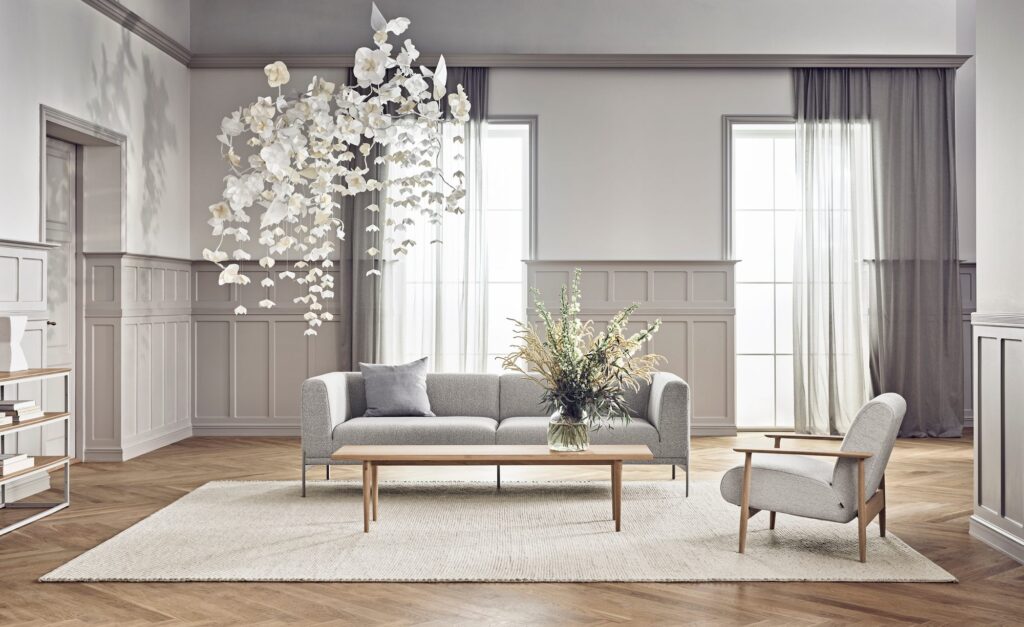
The benefit of a sofa like Scandinavia is that it does not demand too much from the room. It can work in apartments, guest rooms, smaller sitting rooms and spaces where you want something comfortable but not oversized.
Scandinavia is especially strong for:
Smaller living rooms
Apartments
Guest rooms
Classic contemporary interiors
Homes where you want comfort without too much bulk
The version of this sofa we stock at RB12 is Scandinavia Remix, in sizes from 2 seater to 6 seater.
Scandinavia Remix
Scandinavia Remix takes the familiar appeal of the Scandinavia sofa and gives it a slightly more contemporary feel.
It works well when you want something practical and comfortable, but with a more modern expression. It can suit compact spaces while still feeling design-led.
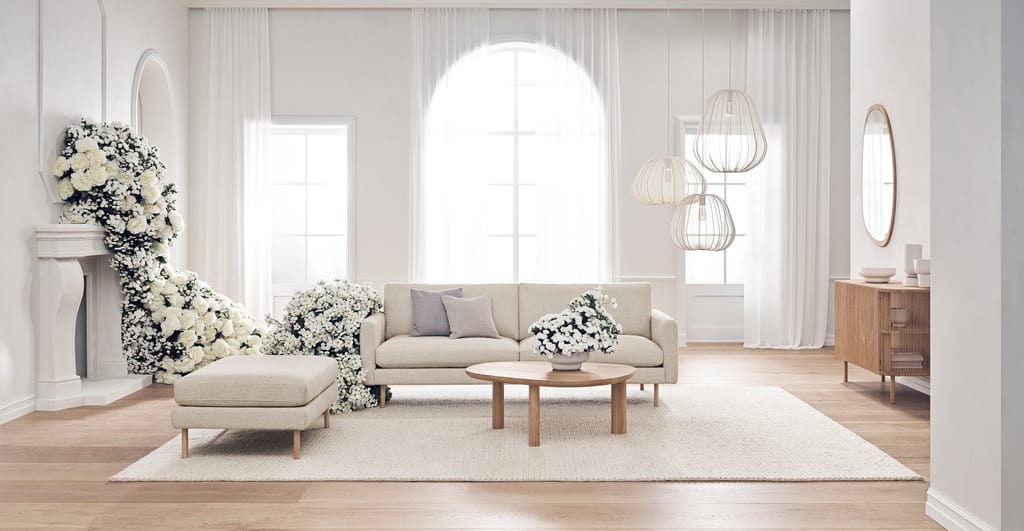
This makes it a good middle-ground option for people who want a sofa that feels relaxed, but not too casual.
Scandinavia Remix is especially strong for:
Modern apartments
Compact sitting rooms
Guest spaces
Smaller family rooms
Homes where you want a contemporary update on a classic shape
Lomi
Lomi is a good choice when you want a neat, modern sofa that does not dominate the room.
It works because it has a calmer visual presence. In smaller spaces, that can be a major advantage. A sofa does not always need to be the loudest piece in the room. Sometimes the best sofa is the one that supports the wider scheme.
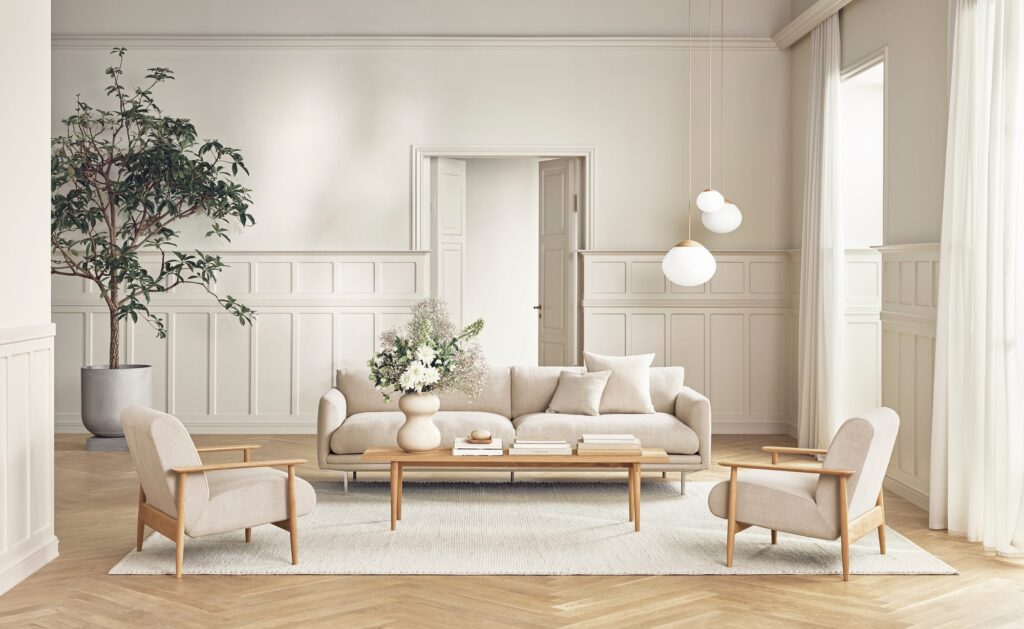
Lomi suits homes where proportion, simplicity and everyday usability matter.
Lomi is especially strong for:
Compact homes
Minimal interiors
Secondary sitting rooms
Modern flats
Rooms where you want the sofa to feel quiet and understated
Best Bolia Sofas for Neater, More Tailored Rooms
Some rooms need a sofa with a tidier outline – a reception room, an adult sitting room, or a space where the sofa sits alongside artwork and lighting rather than dominating. These models are still comfortable; they just hold their shape better than a full lounging sofa.
Veneda
Veneda is a relaxed sofa in a tidy shell: soft, generous seating on a slim oak or steel leg, in fixed 2.5, 3 and 4 seater sizes rather than modules.
Because the size is fixed, it is the easier choice when the room layout is already settled and you want comfortable seating without planning a module run. Five leg finishes let you match it to existing oak or metal in the room.

Veneda suits rooms where the sofa should feel soft to use but still sit quietly alongside the lighting, rug and artwork.
Veneda is especially strong for:
Relaxed living rooms
Design-led apartments
Rooms with a settled layout
Adult sitting rooms
Homes that want softness without a modular build
Malin
Malin is another good option for a more polished interior.
It works when you want comfort, but with a slightly smarter, more tailored feeling. This makes it useful in homes where the sofa needs to feel grown-up and calm, rather than deeply informal.
Malin can work particularly well in schemes where the sofa is paired with statement lighting, a sculptural coffee table or more refined occasional chairs.
Malin is not currently part of the Bolia range we stock at RB12. If you want that neater, more tailored look, Avelou is the closest sofa we do stock, with Veneda as a softer alternative.
Malin is especially strong for:
Sophisticated living rooms
Apartments with a more tailored style
Formal seating areas
Homes where the sofa needs to feel neat and composed
Elton
Elton works well when you want a sofa with a strong design identity.
It has enough character to become a focal point, which can be useful in rooms that need a more distinctive piece. Rather than simply filling a wall, Elton can help give the room personality.

This makes it a good option for people who want a sofa that feels more individual, while still sitting within a contemporary Scandinavian design language.
Elton is especially strong for:
Design-conscious homes
Statement living rooms
Creative interiors
Rooms that need a stronger focal point
Best Bolia Sofas for Family Homes
It also needs to be flexible. Family rooms change over time. Children grow. The way a space is used changes. Guests come and go. This is why modularity and comfort often matter more than strict formality.
Caisa
Caisa is a strong option for family homes because it gives you the benefits of a modular sofa with a clean, modern feel.
It can be configured to suit the shape of the room, which is useful when you are trying to make the most of a family living space. It can help create a corner for relaxing, watching television or spending time together.
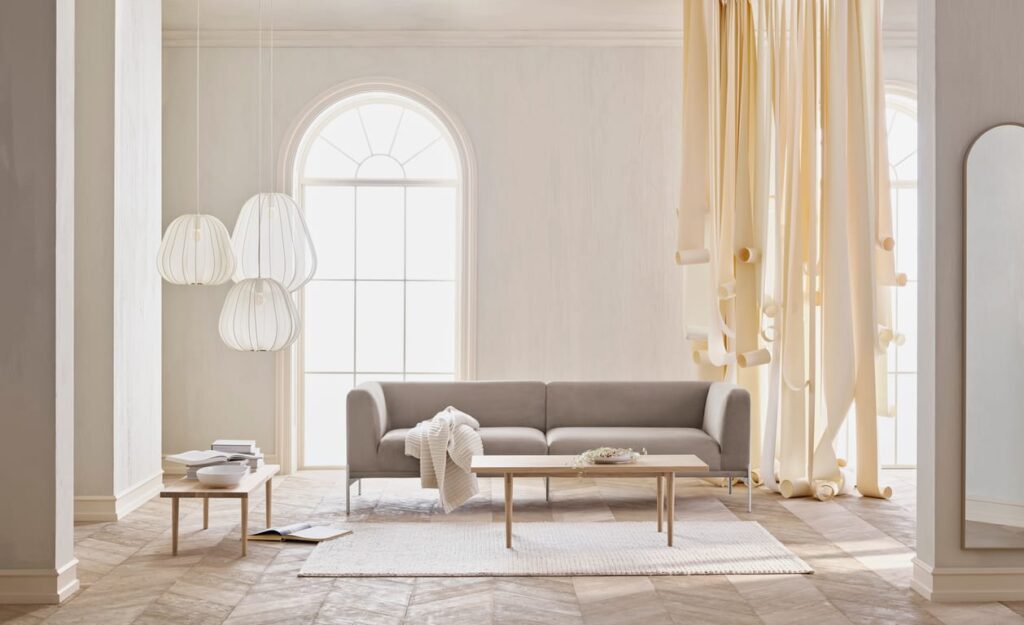
Caisa works best when the room needs a practical sofa that still looks considered.
Caisa is especially strong for:
Family living rooms
Open-plan family spaces
Homes that need flexible seating
Rooms where comfort and layout both matter
Angle
Angle is useful when you want to create a more defined seating area.
Its modular nature makes it a good fit for rooms where you need to manage the flow of the space. In larger family rooms, this can help create a clear living zone without needing extra furniture to divide the room.
Angle works well when you want the sofa to feel architectural and purposeful. It is built from modules – two modules, three modules small or large, three modules with a chaise longue, or a curved four-module layout.
Angle is especially strong for:
Large family rooms
Open-plan layouts
Corner configurations
Homes where the sofa helps structure the room
Cosy
Cosy is exactly the type of sofa to consider when softness and day-to-day comfort are the priorities.
It works best in homes where the sofa is used constantly. If the living room is where people gather, relax, watch films or spend long evenings, Cosy makes sense.
Cosy is especially strong for:
Relaxed family rooms
Snugs
TV rooms
Homes where comfort comes first
Cosy is not currently part of the Bolia range we stock at RB12. For the same soft, sink-in feel, look at Cosima or Noora.
Best Bolia Sofas for Contemporary Apartments
The sofa may need to support daily living, occasional entertaining and visual zoning, all within a smaller footprint. It may also be visible from the kitchen, hallway or dining space, which means the design needs to look good from different viewpoints.
Núvol
Núvol is a useful option for contemporary apartments because it feels modern without being overly heavy.
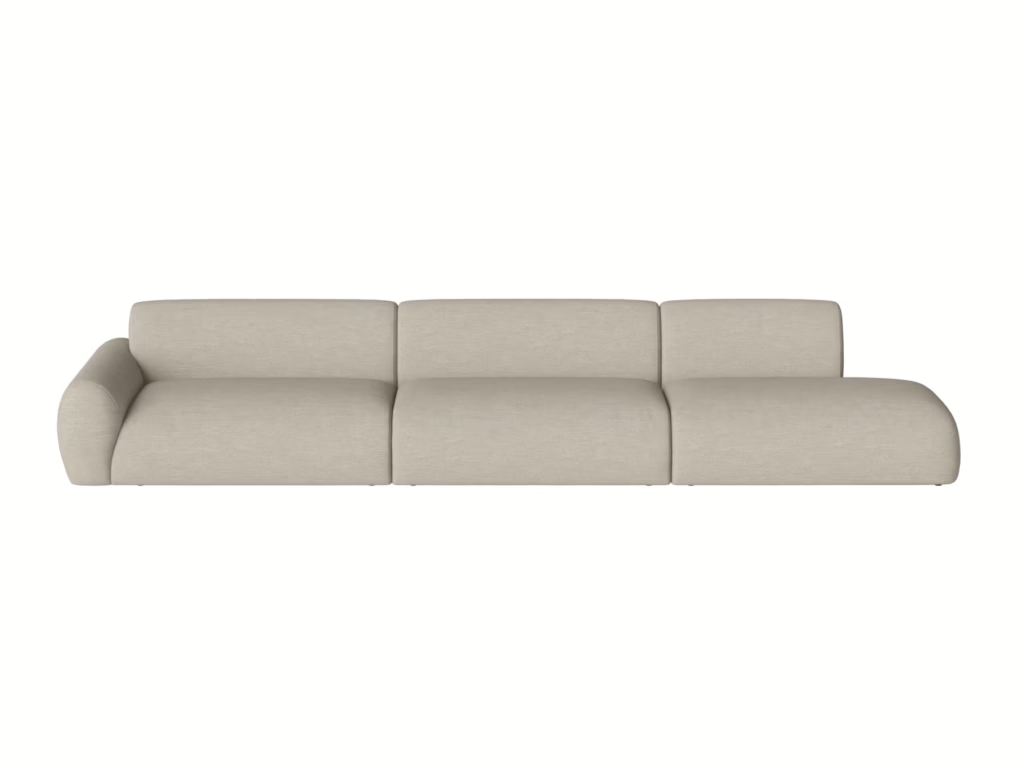
It suits rooms where you want softness, but not necessarily the full scale of a very deep modular sofa. This makes it a good choice for people who want comfort and a relaxed feel, while still keeping the space visually balanced.
Núvol is especially strong for:
Modern apartments
Relaxed living rooms
Smaller open-plan spaces
Homes where comfort matters but scale needs control
Avelou
Avelou is the most structured sofa in this list. The seat holds its shape rather than sinking, which is what you want when the sofa has to look composed as well as be sat on.

It is still modular – two large modules, two modules with a pouf, or three small modules – and the covers are removable, so it works in an apartment that needs a defined seating shape rather than a lounge pit.
Avelou is especially strong for:
Design-led apartments
Modern homes
Open-plan living spaces
Rooms that need a more upright, structured sofa
Chleo
Chleo is a good option when you want a sofa that feels simple, modern and easy to place.

It works well in apartments because it does not need to dominate the scheme. It can sit neatly within the room while allowing other pieces, such as lighting, rugs, artwork or coffee tables, to carry more of the design statement.
Chleo is especially strong for:
Modern apartments
Smaller living rooms
Simple contemporary interiors
Homes where the sofa needs to support the wider design
Best Bolia Sofas for Guest Rooms and Flexible Spaces
Some sofas need to work in guest bedrooms, home offices, studios, snugs or occasional rooms. In these spaces, flexibility becomes more important.
Gest
Gest is useful for flexible rooms because it can work as both seating and occasional sleeping, depending on the configuration.

This makes it ideal for homes where space needs to be used intelligently. A room may function as a study most of the time, but still need to accommodate guests occasionally.
Gest is especially strong for:
Guest rooms
Home offices
Flexible apartments
Occasional sleeping spaces
Multi-use rooms
Pira
Pira is another option to consider when you need a sofa bed solution that still feels design-led.
The problem with many sofa beds is that they look and feel like a compromise. Pira is better suited to homes where the piece still needs to look like part of the wider interior, rather than a purely practical afterthought.
Pira is especially strong for:
Guest bedrooms
Compact homes
Occasional rooms
Multi-functional living spaces
Pira is not currently part of the Bolia range we stock at RB12. The sofa beds we do stock are Gest and the Cosima Sofa Bed.
Cosima Sofa Bed
Cosima Sofa Bed is useful when you want the relaxed feel of Cosima, but with additional functionality.

This works particularly well in larger apartments, snugs or guest spaces where you do not want to sacrifice the comfort and appearance of a proper sofa.
Cosima Sofa Bed is especially strong for:
Guest-ready living rooms
Larger spare rooms
Relaxed media rooms
Homes where comfort and sleep functionality both matter
Bolia Sofa Comparison Table
| Model | Feel | Structure | Modular | Best for | Shop |
|---|---|---|---|---|---|
| Cosima | Soft, low, sink-in | Relaxed | Yes – corner and 3-module layouts | Family rooms, open-plan living | View |
| Noora | Soft and generous | Relaxed | Yes – 250, 290 and 350cm runs | Open-plan rooms seen from all sides | View |
| Scandinavia | Comfortable and familiar | Relaxed | No | Smaller living rooms | Not currently stocked |
| Scandinavia Remix | Comfortable, practical | Relaxed | No – 2 to 6 seater sizes | Compact and mid-size rooms | View |
| Lomi | Simple and calm | Middle | No – 2 to 3 seater, splittable option | Compact lounges, minimal interiors | View |
| Veneda | Soft in a tidy shell | Relaxed | No – 2.5, 3 and 4 seater | Rooms with a settled layout | View |
| Malin | Neat and tailored | More structured | No | Formal seating areas | Not currently stocked |
| Elton | Characterful, oak frame | Middle | No – 2 to 3 seater, armchair | Focal-point living rooms | View |
| Dive | Deep, leather-backed | Middle | No – 2, 2.5 and 3 seater | Rooms where the sofa is seen from behind | View |
| Caisa | Light, slim steel frame | Middle | Yes – chaise left or right | Family living rooms | View |
| Angle | Architectural, curved option | More structured | Yes – up to curved 4 modules | Large rooms needing zoning | View |
| Cosy | Soft and inviting | Relaxed | No | Snugs and TV rooms | Not currently stocked |
| Núvol | Rounded, cloud-like | Relaxed | Yes – corners, chaise, open-end | Contemporary apartments | View |
| Avelou | Holds its shape | More structured | Yes – 2 or 3 modules, pouf option | Apartments needing a defined shape | View |
| Chleo | Clean and understated | Middle | Chaise and corner options | Apartments, secondary lounges | View |
| Gest | Low, elongated | Middle | Chaise option, doubles as a bed | Guest rooms, home offices | View |
| Pira | Practical sofa bed | Middle | No | Guest bedrooms | Not currently stocked |
| Cosima Sofa Bed | Soft, sink-in, sleeps two | Relaxed | No – 12 fabric choices | Guest-ready living rooms | View |
You have compared the range
See prices and configurations
Every model above is made to order. Open a product page to choose size, module layout, fabric and leg finish, or send us your room dimensions and we will lay out the options.
How to Plan a Modular Bolia Sofa
Modular means the sofa is assembled from separate parts rather than bought as one fixed piece. On Cosima, Noora, Avelou, Núvol, Angle and Caisa you choose the parts; on Veneda, Lomi, Scandinavia Remix and Elton you choose a seat width instead.
The parts you are choosing between are usually a corner module (turns the run through 90 degrees), a chaise longue or open-end module (one end without an arm, for stretching out), back and seat modules that set the overall length, and a matching pouf that can sit in front or extend the run.
Two decisions do most of the work. First, which wall the long run sits against, because that fixes whether you need a left or right corner. Second, how much floor you keep clear: leave around 80cm to walk past the front of the sofa and 30 to 45cm between the seat and a coffee table.
If you send us the room dimensions and the door positions, we will draw up two or three module layouts with prices before you commit. Ask for a layout.
Before You Order: The Practical Checks
The sofa that suits the room on paper can still be the wrong order. These are the checks worth making first.
Measure the route, not just the room. Note the narrowest doorway, the stair turn, the lift depth and any low ceiling on the way in. Modular sofas arrive as separate modules, which is often what makes access possible in a London flat.
Check the seat, not the footprint. Seat depth decides how the sofa feels. Deeper seats suit lounging; shallower seats are easier to get out of and better for shorter frames. Dimensions for every size are listed on each product page.
Get the handedness right. On corner and chaise configurations, left and right are set at the point of order and cannot be swapped later. Stand in the room facing the sofa position before you decide.
Match the fabric to the use. Bolia’s ranges include Baize, Linea, Linor, London, Memory, Paza and Tie. Tighter weaves handle family use and pets better; softer, more open weaves suit rooms that get gentler wear. We can send samples before you order.
Confirm the lead time. Bolia sofas are made to order, usually around four to six weeks, and we confirm the current lead time in writing for your exact configuration.
Why Buy a Bolia Sofa Through RB12?
Bolia sells a system rather than a finished product, so most of the value we add is in getting the specification right.
We check the module layout against your room dimensions and access, help you choose between seat depths, send fabric and leg-finish samples, and confirm the lead time for your configuration before you pay. If the sofa is part of a wider scheme, we can pull the rug, coffee table, lighting and dining pieces together from the same collections.
Practically: ordering is online or over the phone on 020 7135 2246, delivery is free across the UK on full-price orders, and the same person who specified the sofa handles the order if anything needs sorting afterwards.
Bolia at RB12
Start with the sofas
Browse the Bolia sofa range with current prices, or tell us about the room and we will come back with two or three configurations.
How Bolia Sofas Compare With Other Designer Sofa Brands
Bolia sits in an interesting position within the designer sofa market.
It is more refined and design-led than many mainstream furniture retailers, but often more relaxed and accessible than some of the very high-end Italian design houses.
Compared with brands such as Muuto, HAY and &Tradition, Bolia often offers a wider choice of sofa configurations, particularly when it comes to modular living. These brands share a Scandinavian design sensibility, but Bolia is especially strong for people who want comfort, customisation and a softer everyday feel.
Compared with BoConcept, Bolia feels more natural, softer and less corporate. BoConcept can work well for urban apartments, but Bolia often has a warmer, more tactile character.
Compared with SITS and Furninova, Bolia tends to feel more design-led and Scandinavian in its detailing. SITS and Furninova are excellent for comfort-led sofas, but Bolia is often the better choice when the sofa needs to feel more architectural and visually refined.
Compared with Italian brands such as Bonaldo, Bontempi Casa or Gervasoni, Bolia usually feels more understated. Italian sofas often bring a stronger design statement, while Bolia works well when the aim is calm, comfortable, modern living.
That is one of the reasons Bolia works so well in British homes. It gives you contemporary design without making the room feel over-designed.
Which Bolia Sofa Should You Choose?
The right Bolia sofa depends less on which model is the “best” and more on what your room needs.
Choose Cosima if you want a relaxed, deep and comfortable modular sofa for everyday lounging.
Choose Noora if you want the same relaxed comfort in a slightly neater shape, with three module runs to choose from.
Choose Scandinavia Remix if you want something practical and easier to place in a smaller room, in sizes from 2 to 6 seater.
Choose Veneda if you want soft seating in a tidy, fixed-size shape rather than a module run.
Choose Avelou if you want the most structured seat in the range, or Angle if the room needs a sofa that defines the space.
Choose Caisa if you are furnishing a family space and want chaise-left or chaise-right flexibility.
Choose Núvol or Chleo if you want a contemporary sofa for an apartment or modern living room.
Choose Gest or the Cosima Sofa Bed if the room needs to double as an occasional guest space.
The most important thing is to choose the sofa around the way the room is lived in, not just the way it looks online.
Frequently Asked Questions
Bolia Sofa FAQs
Are Bolia sofas good quality?
Yes. Bolia sofas are made to order in Europe on FSC-certified frames, with removable covers on several ranges so the upholstery can be cleaned or replaced rather than the whole sofa.
Are Bolia sofas comfortable?
Comfort varies by model rather than across the brand. Cosima, Noora and Veneda sit at the soft, relaxed end of the range, while Avelou and Angle hold their shape more and feel more upright.
Where can I buy Bolia sofas in the UK?
RB12 is a UK retailer for Bolia and you can order the full sofa range from us online or over the phone on 020 7135 2246. We help you choose the module layout, size, fabric and leg finish, confirm the lead time for that exact specification, and deliver free across the UK on full-price orders. Browse the Bolia sofa range or send us your room dimensions.
Which Bolia sofa is best for a small living room?
Scandinavia Remix in a 2 or 2.5 seater, Lomi, Chleo and Núvol all work in smaller rooms. They give you comfortable seating without the footprint of a full module run.
Which Bolia sofa is best for open-plan living?
The modular ranges: Cosima, Noora, Caisa and Angle. Because you choose the modules, they can be set up to separate the living area from the kitchen or dining space.
Which Bolia sofa is best for families?
Cosima and Noora for soft, everyday lounging, Caisa if you want chaise-left or chaise-right flexibility, and Angle in larger rooms. Pair any of them with a tighter-weave fabric such as Memory or Baize.
Which Bolia sofa is the most structured?
Avelou. The seat holds its shape rather than sinking, which suits rooms where the sofa needs to look composed. Angle is the other structured option, and Elton has the strongest design presence.
Does Bolia make sofa beds?
Yes. The sofa beds we stock are Gest, which works as seating most of the time and a bed occasionally, and the Cosima Sofa Bed, which keeps the soft Cosima feel and sleeps two.
Are modular Bolia sofas worth it?
They are worth it when the room is awkward, open-plan, or likely to change. If the layout is already settled, a fixed-size sofa such as Veneda or Scandinavia Remix is simpler to order and usually costs less.
How do I choose the right Bolia sofa fabric?
Start with the use. For family rooms and pets, choose a tighter weave such as Memory, Baize or Linea. For rooms with gentler use you can go for softer, more textural options such as Tie or Paza. We can send samples so you see them in your own light before ordering.
How long does a Bolia sofa take to arrive?
Bolia sofas are made to order, usually around four to six weeks. Lead times move with the fabric and configuration, so we confirm the current date in writing for your exact specification before you pay.
Can I see Bolia sofas in person before buying?
Our new Guildford showroom opens in October 2026 and will have Bolia pieces on display. Until then we work through fabric and leg-finish samples, full dimensions and module layouts sent to you, plus a call to go through the options. Speak to our team about Bolia.
Final Thoughts
The right sofa should support the room, suit your lifestyle and feel comfortable for the way you actually live. Bolia’s strength is that the range gives you enough variety to make that possible, whether you need a compact apartment sofa, a deep modular family sofa, a refined reception room piece or a flexible sofa bed for guests.
When you have a shortlist, open the product pages to check sizes, module options and fabric choices, or send us the room measurements and we will do the layout with you.
Need help choosing the right sofa?
Speak to our team about Bolia
Send us your room dimensions and we will come back with module layouts, fabric samples and current lead times. Our new Guildford showroom opens in October 2026.